Safely sealed

Anti-counterfeiting | Especially in the field of premium cosmetics, brands want to protect their high-quality products from theft and counterfeiting. Sealing the packaging is the most common solution here. Dominik Korsten and Marc Buettgenbach present a new process that is sustainable, secure, and noble at the same time

Knowledge is power

They are smart, they are selective, and they are changing the game. A new category of consumers is emerging to challenge beauty brands’ claims, armed with self-acquired knowledge and an ethical mindset.

Like a little treasure

The quiet but characteristic crack when opening is probably one of the signatures of ampoules. While this is part of a ritual for many customers, it gives brands the assurance that their valuable formulations are well protected until they are used. Wenke Hermanns knows what other advantages this form of packaging offers and why they are still not being displaced by other solutions.

On the way to new materials

Getting rid of non-recyclable materials – the beauty industry is familiar with this wish and demand. But how can this work in the packaging sector? Stefano Manfredini and Harald Pichler are involved in the Bionanopolys research project and explain which trend-setting developments can be expected.

Celebrating packaging

With a new name for the innovation events ADF&PCD and PLD Paris, the trade fair is finally physically back. Shortly before it opens its doors the organisers have their say.

From one hand

Smaller order quantities, limited editions, personalised products – the change in the retail shelf landscape is having an impact on the cosmetics industry. If manufacturers want to keep up, a high degree of flexibility is required. Daniel Traub explains the advantages of a compact system that combines many work steps in one unit.

Safe and practical

In addition to the right shade and compatibility, makeup products are increasingly expected to contain care and ingredients that are as sustainable as possible. But the more complex the formulations, the more sensitive they are to external influences such as light, oxygen or contamination. Anne-Laure Khouri explains how the advantages of airless dispensers can be utilised here.

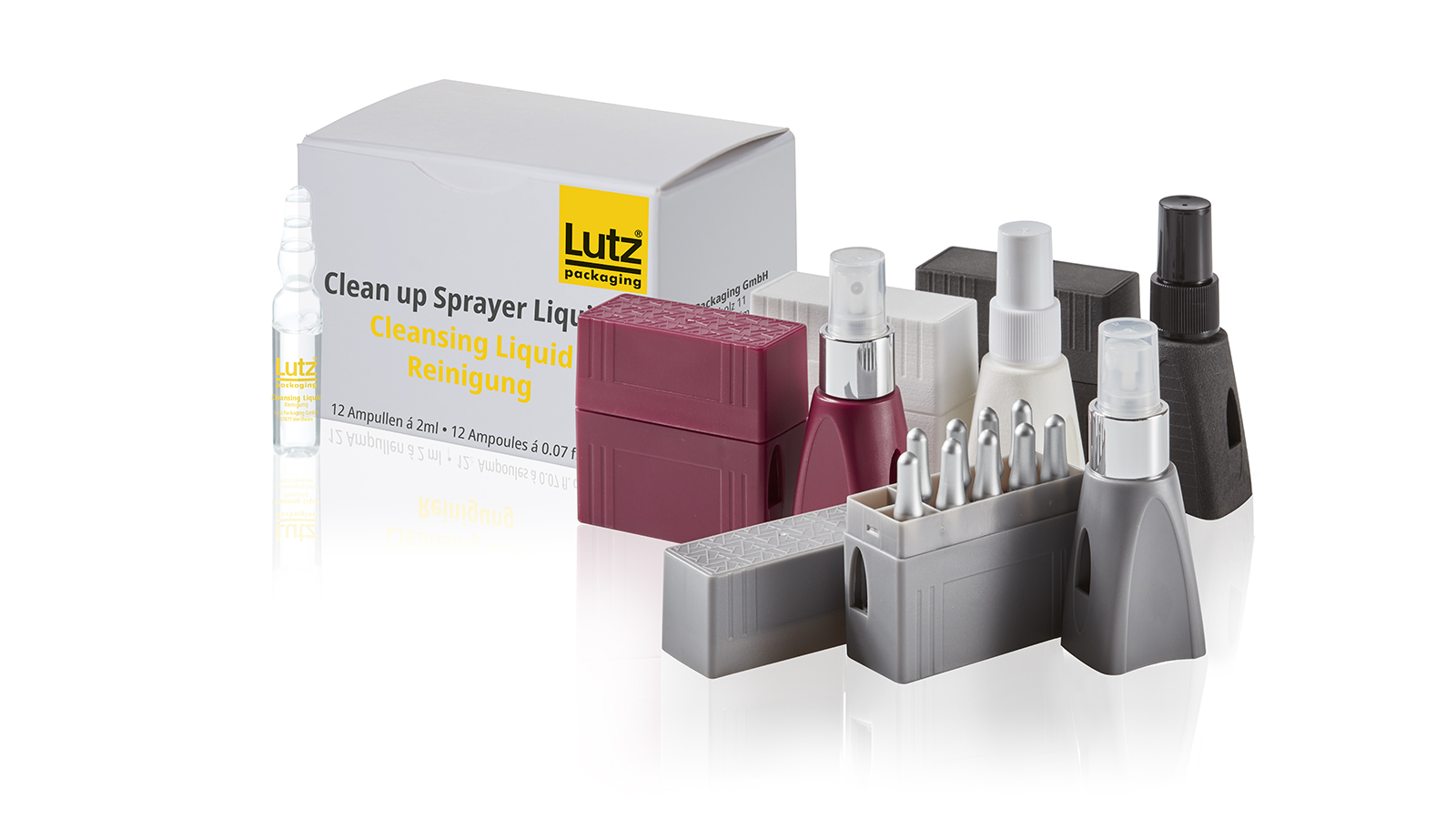
Easy Multiple Sprayer – Für ein sprühendes Erlebnis & multifunktionale Anwendung.

Der innovative Sprayer mit integriertem Ampullenbrecher wurde für das einfache & sichere Öffnen von Glasampullen sowie für das praktische Zerstäuben von unterschiedlichsten Flüssigkeiten entwickelt. Voraussetzung für die Sprayer-Anwendung ist eine flüssige Viskosität. Der Sprayer ist für 2ml Ampullen geeignet.  Das Clean up Sprayer Liquid: „Cleansing Liquid“ ist das optimale Zubehör für den Easy Multiple Sprayer. … Read more

Easy Multiple Sprayer – For a spraying experience & multifunctional application.

The innovative sprayer with integrated ampoule breaker was developed for easy & safe opening of glass ampoules as well as for practical spraying of various liquids. The requirement for the sprayer application is a liquid viscosity. The sprayer is suitable for 2ml ampoules. The Clean up Sprayer Liquid: "Cleansing Liquid" is the optimal accessory for … Read more

Dispenser technology without preservatives

Preservatives in cosmetic products have long had the reputation of not being good for the skin. But left out, the product runs the risk of becoming contaminated quickly. The combination of new technologies shows how the shelf life of the product can be extended without the use of preservatives.

Made from mushrooms

In order to improve the ecological footprint of products and production, the cosmetics industry is always looking for new packaging solutions. A new technology uses the mycelium, the roots of mushrooms. Jan Berbee explains this procedure.

The new solutions for skin care and make up

Even though there have hardly been any face-to-face meetings over the past two years, the demands placed on solutions for skin care and make up have continued to change, and contract manufacturers and private labels  have steadily developed new products. We can finally meet again, exchange ideas on site at COSMOPACK and find out about current trends.

What’s next for plastic packaging?

Sustainable developments | No matter what business you look at, our resources are limited. Of course, this also applies to the packaging area in the cosmetics industry. With plastic packaging in particular, the question of resource-saving techniques and processes therefore plays a major role. Dr Matthias Prox talks about current developments.

Improve recycling systems

Plastics | Recycled materials are playing an increasingly important role for brands and customers alike. Paolo Glerean talks about the possibilities of recycling plastic for the cosmetics industry.

We need more recyclates

Material | The pressure from consumers but also from politics is increasing: cosmetics brands must find ways to make their plastic packaging more sustainable. But changing virgin material to recycled raw materials poses challenges. Özlem Ece Tugal and Jakob Settele talk about their experiences and development results.

Noble and ecological accents

Sustainable decoration | Appealing packaging with an eye-catcher is needed to draw consumers in at first glance. However, metallic decorations used to require a lot of material. Paolo Grasso presents a new technology that offers great potential for improvement from an ecological point of view.

Inner values matter

When it comes to optimal use of airless systems, it is not only the technology itself that plays a role, but also the inside. Marco Costatino knows how important the filling and the formulation are.

Exciting evolution

The packaging of a cosmetic product has the task of protecting its content, while also making it available to the consumer. Airless systems combine safety and, at the same time, convenient delivery of the product. Anne-Laure Khouri explains the technology behind it and the latest developments.

Protecting resources

One way to develop sustainable packaging can be to do without fossil raw materials. Ines Kandel and Mark Vester report on the development of a sustainable alternative to conventional virgin plastic.

Truly sustainable?

Sustainable packaging should be as environmentally friendly as possible and may be made of recycled material. But how sustainable are the supposedly ecological forms of packaging? Malgorzata Chomiuk takes a critical look at a few raw materials and their recyclability.