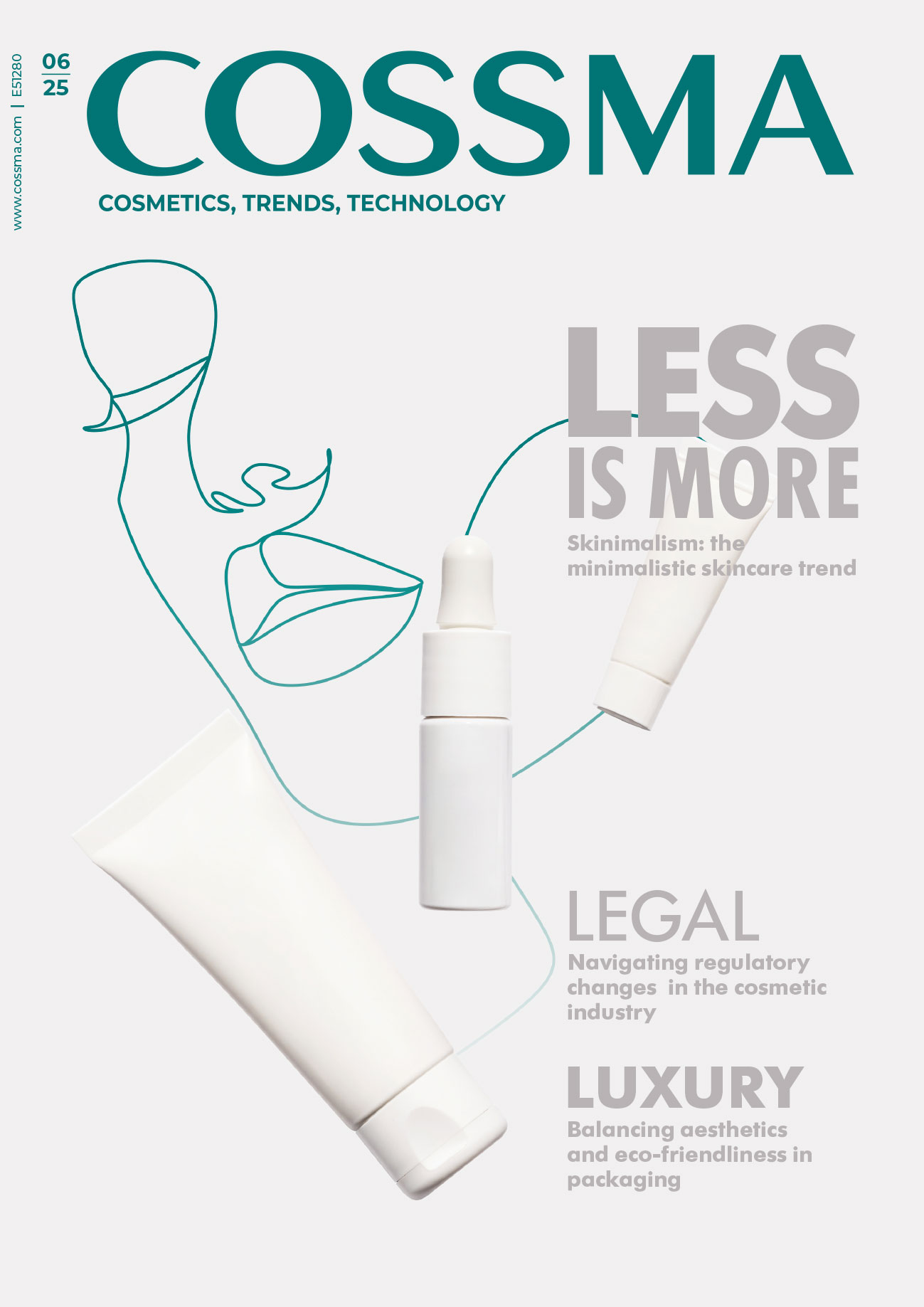
Issue 6 – 2025 Here is what you can look forward to in this issue: Less is more:Skinminimalism: the minimalistic skincare trend Legal: Navigating regulatory changes in the cosmetic industy Luxury:Balancing aesthetics and eco-friendliness in packaging Get an e-paper subscription Issue 6 – 2025 Here is what you can look forward to in this issue: … Read more

Did you hear that too? This outcry from society? Even the ARD Tagesthemen (the main German news show) reported on it! Children are now storming retail beauty departments and it’s super dangerous! I recently tripped over one of these little rascals. We both went down, but Lisa-Marie was caught softly by her diaper. No harm done! 

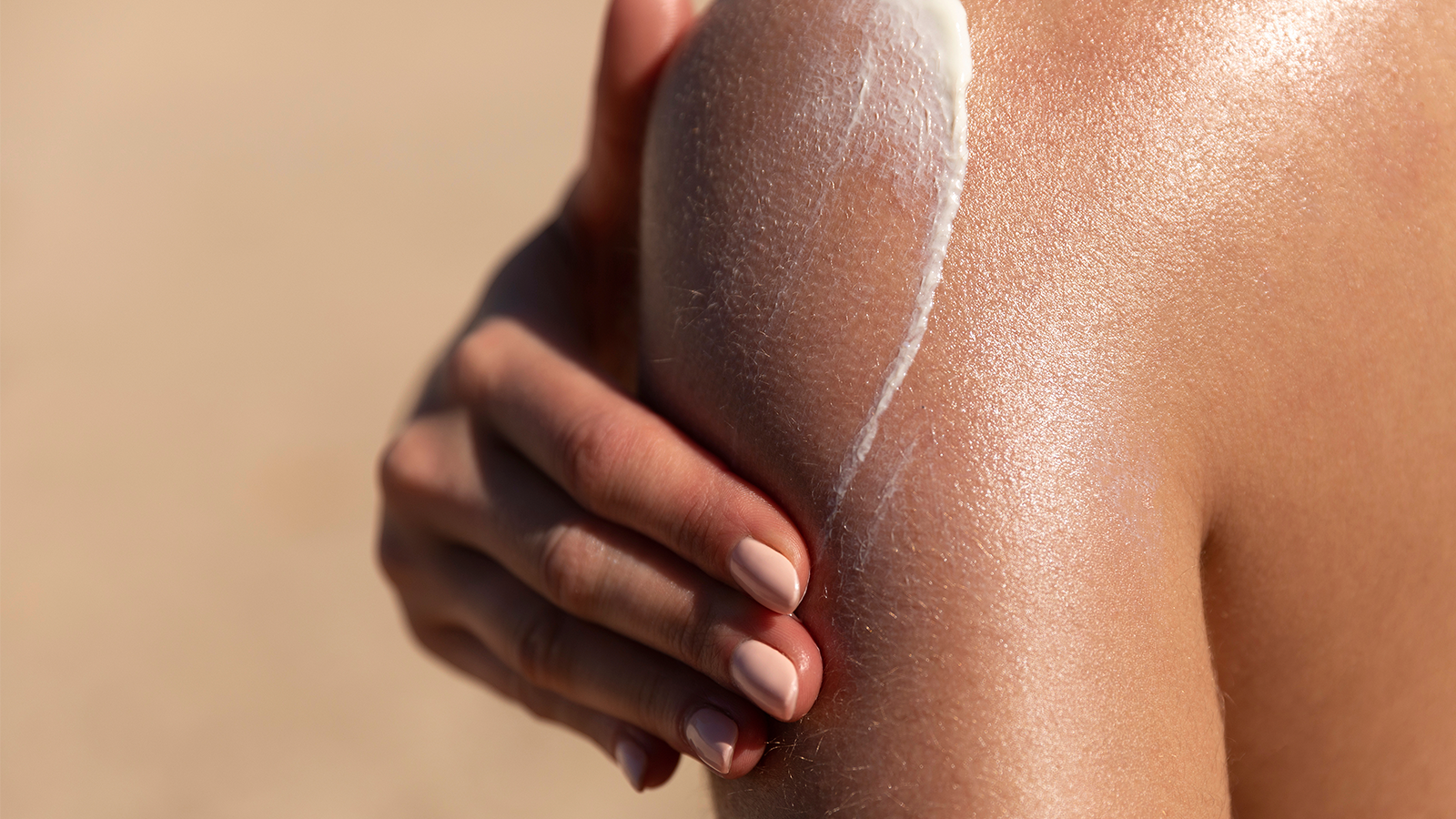
As the European Union strives for climate neutrality by 2050, the regulatory landscape there is evolving rapidly. To help brands and formulators prepare for the future of suncare, dsm-firmenich gives a brief guide to key aspects of the regulations to be aware of just now.

The online market for counterfeit skin creams and perfumes is growing rapidly. Companies whose products flood the internet as plagiarism lose reputation, customer trust and sales. In the coming months they will have to adapt to new distribution channels and locations for counterfeiters.

Certifications are one possible way to check a brands standards. Dr Barbara Olioso, the Green Chemist, talks about the importance of these certifications and how they influence 
the consumers.

Cannabidiol (CBD) has become increasingly important in the cosmetics industry in recent years. The natural ingredient can offer a range of benefits for skin and hair care and is being used in more and more products. This article looks at the benefits of CBD in cosmetics, current and future market developments, and the regulations governing the use of CBD in cosmetics in the EU.

For a product to be successful on the market, it must not only stand out for its effectiveness and safety, it must also explain what it can do. But the choice of product claims must not be made arbitrarily. Anna-Maria Kauschke explains which laws and regulations must be observed in Europe.

Legal | The Cosmetics Supervision and Administration Regulation (CSAR) has far-reaching implications for both the Chinese and international cosmetics markets. Seongmin Sohn knows its significance for ingredient regulations and interprets it in depth

National regulations in some places make it difficult to introduce sunscreens that are already classified as safe in other countries. Arnita Wofford reports on the difficulties of the current situation, also about how customer wishes can be fulfilled under these conditions.

A hot topic for cosmetics, the revision of the European Cosmetic Regulation (EC) No 1223/2009 is coming. Driven by the European Green Deal and the Chemical Strategy for Sustainability (CSS), its impact is expected to be significant. Caroline Bassoni shows the related concepts, associated risks but also some opportunities.

Ingredients derived from hemp and cannabis are becoming increasingly popular. As with many natural ingredients, there are weak points in the production process. The production of cannabinoids through fermentation processes in the laboratory makes it possible to ensure consistent quality in a sustainable way without the need for the cannabis sativa plant.

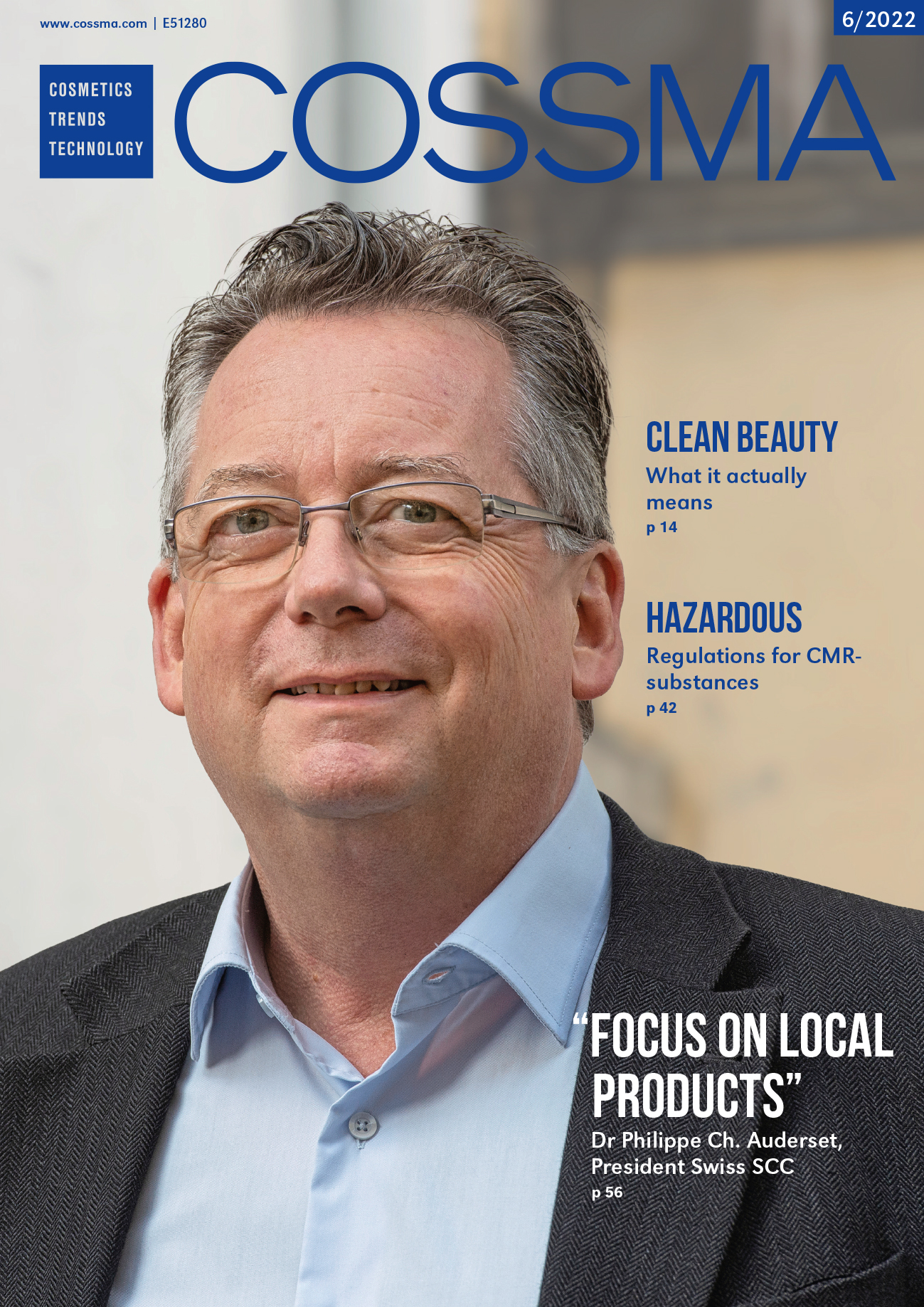
Issue 6 – 2022 Here is what you can look forward to in this issue: Clean Beauty: What it actually means Hazardous: Regulations for CMR-substances “Focus on local products”Dr Philippe Ch. Auderset, President Swiss SCC Get an e-paper subscription Issue 6 – 2022 Here is what you can look forward to in this issue: Clean … Read more

Risk assessments consider end use exposure but may not consider other stages of the product life cycle. Chemical hazard assessments provide a standard to compare human and enivronmental impacts. Chemicals with lower ineherent hazard will generally have less risk.

Since microplastics are a major environmental problem, the EU is currently preparing to introduce legal restrictions. The cosmetics industry is affected to a considerable extent. Sonia Antkowiak knows the problems to be expected and the first reactions to them.

Quality control is especially important in manufacturing companies. But what exactly does this entail and what are the effects of individual measures? Laura Polo knows the answers.

On 1st May, a new regulation for the placing of cosmetic products on the market came into force in China. The Cosmetic Supervision and Administration Regulation (CSAR) is not only the strictest regulation in China to date, but also provides for a partial ban on animal testing.

Cosmetic products from distant countries are very popular and generally find good sales in Europe. However, strict rules apply to imports to the EU. Sandra Haßler gives an overview of the most important points.

ISO 22716 on Cosmetic GMP still forms the basis of standards for producing high-quality and safe cosmetic products. The individual extension with selected management tools can be an efficient means to identify and eliminate sources of error.

Brenntag’s development team creates innovative textures with sensory profiles. With the approach described in this article the company provides support to their customers and also helps accelerate their customers’ development of cosmetic products.

Dr. Adolf Klenk talks about how the company’s hair organ culture model which helped the company study the effects of caffeine. Caffeine lengthens hair’s growth period as it improves the release of certain proteins. He also explains how caffeine performs in comparison with minoxidil and what potential he sees for future findings.