
Additional Figure: A Typical Test Method Design for Long and Short-term Protection of Cosmetic Products on Skin Exposed to Cigarette Smoke Under Controlled Conditions.
Additional Figure: A Typical Test Method Design for Long and Short-term Protection of Cosmetic Products on Skin Exposed to Cigarette Smoke Under Controlled Conditions.
On the occasion of the third annual Cosmetics Europe Week “Personal Care in a Changing World” taking place from 13-17 June 2016, in Brussels, the European cosmetics and personal care industry has announced positive growth. Loïc Armand, President of Cosmetics Europe, said “Our industry remains strong and shows signs of growth despite trying economic circumstances. … Read more
Zinc oxide has entered officially into Annex VI of the EU Cosmetics Regulation. Zinc oxide – in both its nano and non-nano form – is now approved for use as a UV filter in cosmetics in Europe. “UV radiation is responsible for various physiological effects in the skin. These include sunburn, premature appearance of wrinkles … Read more
Advertisement
This two-day event reacts on several legislative changes cosmetic industry has been facing recently. Within the new legislative package, including the new REACH and CLP, and the pressing trend of going completely cruelty free is encouraging the cosmetic industry to explore and discover alternative methods. Participants will discover answers to their key questions, learn how … Read more

Dr. Gerd Mildau from the CVUA Karlsruhe explains the Status quo on the subject of sun protection from the perspective of monitoring. COS1602_12_Mildau.pdf

The number of ethical labelling schemes is proliferating in the cosmetics industry. Growing consumer demand for eco-labelled products is behind this trend, however Organic Monitor questions the long term implications. Most label developments have been in the natural and organic cosmetics market. There are now over 30 symbols and labels that represent natural and organic … Read more

In its latest Opinion, the SCCS concluded that alpha-arbutin is safe at levels of up to 2% in face care products and up to 0.5% in body care products. In recent years arbutin has been the subject of safety discussion in the EU. Following the opinion on beta-arbutin, published in 2008 by the SCCS (SCCP/1158/08), … Read more
Advertisement

Join the workshop by Pfeiffer consulting on how to sell your cosmetic products in the European Union: The hands on workshop by Pfeiffer Consulting will enable safety assessors as well as CEO’s of US cosmetic companies planing to engage external safety assessors to fully understand the European Cosmetics Regulations 1223/2009. This workshop is also valuable … Read more
Advertisement
Meet with world leaders in the cosmetics and personal care industry at the Cosmetics Europe Conference from 16 to 17 June in Brussels, Belgium. The programme will cover: Trends and challenges in regulation for cosmetics and safety assessment The EU Cosmetics Regulation and future developments Research for alternative methods to Animal Testing SEURAT/ Long Range … Read more
Advertisement
Cosmetics Europe Week aims at giving an insightful learning experience and creating networking and business opportunities for all stakeholders interested in the cosmetics and personal care industry such as: Leading international scientists and regulatory experts, policy makers, suppliers of raw materials and packaging, consultants and service providers to the industry and distributors. International Scientific and … Read more

Organic Monitor’s next Masterclass aims to encourage green labels and certification schemes in North America. Although the number of green standards and labels in the personal care industry has mushroomed in recent years, adoption rates remain low in the US and Canada. Organic Monitor research finds the market value of certified natural & organic personal … Read more

Contrary to several statements, the current drafts of the Guideline on technical definitions and criteria for natural and organic cosmetic ingredients and products – ISO 16128 are not an initiative of the EU. ISO 16128 will, in case of its adoption by ISO, have no effects on the legal situation in the EU or the … Read more
Advertising industry self-regulator, the Advertising Standards Council of India (ASCI) has released its final guidelines for the advertising of skin lightening and fairness products following industry and public feedback to a draft it had issued earlier. This, industry observers believe, could go a long way in correcting the communication issued by makers of a growing … Read more

Croda Continues to Meet the Demand of the ‘Green’ Consumer with New Ecocert Certification

The cosmetics industry needs to take greater steps if it is to become more sustainable. This was one of the key messages from Sustainable Cosmetics Summit North America, hosted in New York last month. Over 160 senior executives convened in Manhattan over 3 days to discuss key sustainability issues. Some industry experts called for the … Read more

The insect repellent active substance IR3535 will be included on a list of approved substances of the EU Biocidal Products Regulation as of November 1, 2015. The decision regarding the Union List (Biocidal Products Regulation (EU) No. 528/2012) was made by the EU Commission in March 2014. It applies to all customers who use the … Read more
The EU Commission has just published its proposed measures designed to enhance the protection of consumers against potential fragrance allergens: some of these allergens will be banned, whereas others will be subject to compulsory individual labelling, as is already the case for 26 allergens. For some reason, the conclusion seems to have been drawn that … Read more
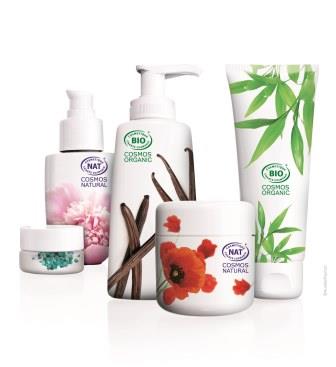
When Cosmebio launched its Bio label and ethical charter in 2002, the aim was to promote a natural alternative to standard cosmetic products. Today in 2013, the natural cosmetics market is plagued by false marketing claims and misleading labels ‐ mainly greenwashing, claims overstating the ‘green’ credentials of cosmetics, and the misleading advertising of so‐called … Read more

Gelita applied for a Health Claim regarding the beauty from within collagen peptide Versiol and its beneficial effect on skin health. Motivation was to clarify whether effects related to wrinkle reduction and higher elasticity of the skin are classified as health functions and consequently need a health claim. In EFSA’s scientific opinion regarding the 13.5 … Read more

In her article in COSSMA 5/2013, Andrea Weber, Head of the R&D centre at Babor points out why several interesting new actives are to be expected from ”blue biotechnology” which is the acquisition of new substances from marine plant life. Front cover picture: Max777, Shutterstock.com