Global plastic production has been growing for decades, booming from 1.5 million of tonnes in 1950 to more than 400 million metric tons in 2022 worldwide, just like the amount of plastic waste. The key to reduce this amount of waste is recycling. Aude Laclaire, Sustainability Manager at Albéa Tubes, talks about challenges and opportunities in integrating Post Consumer Recycled Content (PCR) in plastic packaging.
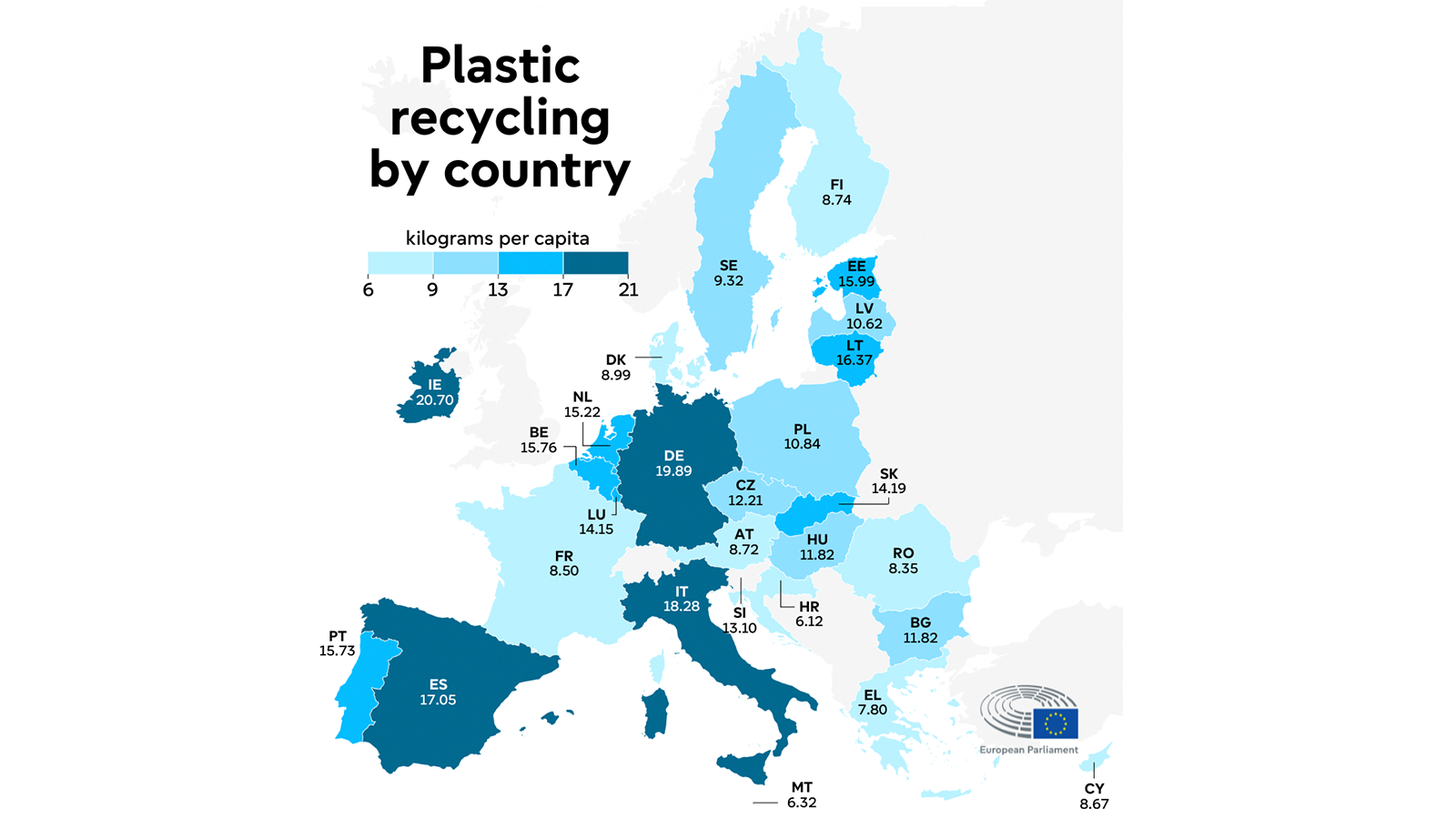
R ecycling rates vary a lot by location and application. The United Nations Development Program UNDP evaluated at the end of 2023 that only 9% of worldwide plastic waste was recycled. In Europe, energy recovery remains the most common way to dispose of plastic waste, followed by recycling. Currently, 25% of plastic waste generated is landfilled. Nearly a third of plastic waste is recycled with significant different rates from one Member State to another: While Slovenia and Lithuania are leading the way in the recycling of plastic packaging waste with more than 70%, France is the worst performer with a rate of less than 30%. The European Green Deal, officially launched in 2019, is a package of policy initiatives pushing the EU Member States into ecological transition. The ambition is to develop action plans at national level to reach Climate Net Zero emissions by 2050 and limit the global warming to 1.5°C. The plastic packaging industry is pointed out as one of the main contributors of climate change and significant efforts are expected from its stakeholders. The recently voted Packaging and Packaging Waste Regulatory (PPWR) is the toolbox of the European Green Deal to tackle the plastic pollution in nature and limit emissions of GreenHouse Gas (GHG). The first measure is to reduce plastic waste at its source. Indeed, the less plastic we use in packaging products, the less GHG we emit. This is under stood from all players and brand owners, and implementation is ongoing: we are all witnesses to the reduction of packaging in our daily lives for years now. The PPWR is meanwhile boosting the recycled plastic market, with the introduction of legal targets around recyclability and the incorporation of recycled content to push the plastic packaging industry towards less carbon-emitting non-fossil resins. The targets, shaped by packaging application and implementation, are said to grow from 2030 to 2040. All the industry undergo major transformations in their product portfolio, industrial equipment as well as in the design of packaging. These are major challenges, but also enormous opportunities that have been driving the transformation of our plastics industry for years and that the teams are tackling with method and determination. Many solutions are being developed to respond to all these challenges and make our plastic packaging industry more responsible. Nevertheless, despite all these innovation and R&D efforts, the adoption of these solutions from the market is still low.
Quality & price versus multi materials and decoration
One of the major challenges for the incorporation of recycled materials into plastic packaging is the quality and the price of recycled resins, compared to virgin (or fossil) ones.
PCR packaging can rival the look and feel of virgin materials
Indeed, plastic convertors who are pushed by the upcoming European regulation require larger and larger quantities of recycled plastics, manufactured with very strict and controlled specifications at a competitive price to guarantee product safety and access to the market. Whereas the plastic blends used to increase the performances or the functionalities of the packaging (sealing, barrier properties for example), as well as the decoration which is necessary to differentiate a packaging from another one (what we call desirability) make the recycling process complex and more expensive, it affects the quality of the finished product in the meantime. For all the above reasons, the demand for recycled plastics is growing rapidly but the offer is still low.
Food-contact materials (FCM) are not compliant with some applications
Many plastic packaging contain formulas that are not rinsed, for example toothpaste, ketchup, and dental adhesives. As a result, they intend to transfer part of their constituents to the formula and therefore to the consumer’s body. As PE and PP recycled resins and their additives could chemically interact with the product they are in contact with, the usage of PCR, the regeneration of this recycled PE or PP into a packaging means that traces of the previous content risk going into the consumer’s body as well. Because the Food Contact regulation is very strict, especially in Europe, this explains why Food Contact approved PE and PP resins are today not available from PCR. This is the biggest challenge around PCR incorporation, explaining why markets subsegment such like Food, Pharma, Medical and Oral care don’t foresee to incorporate lot of PCR in their packaging.
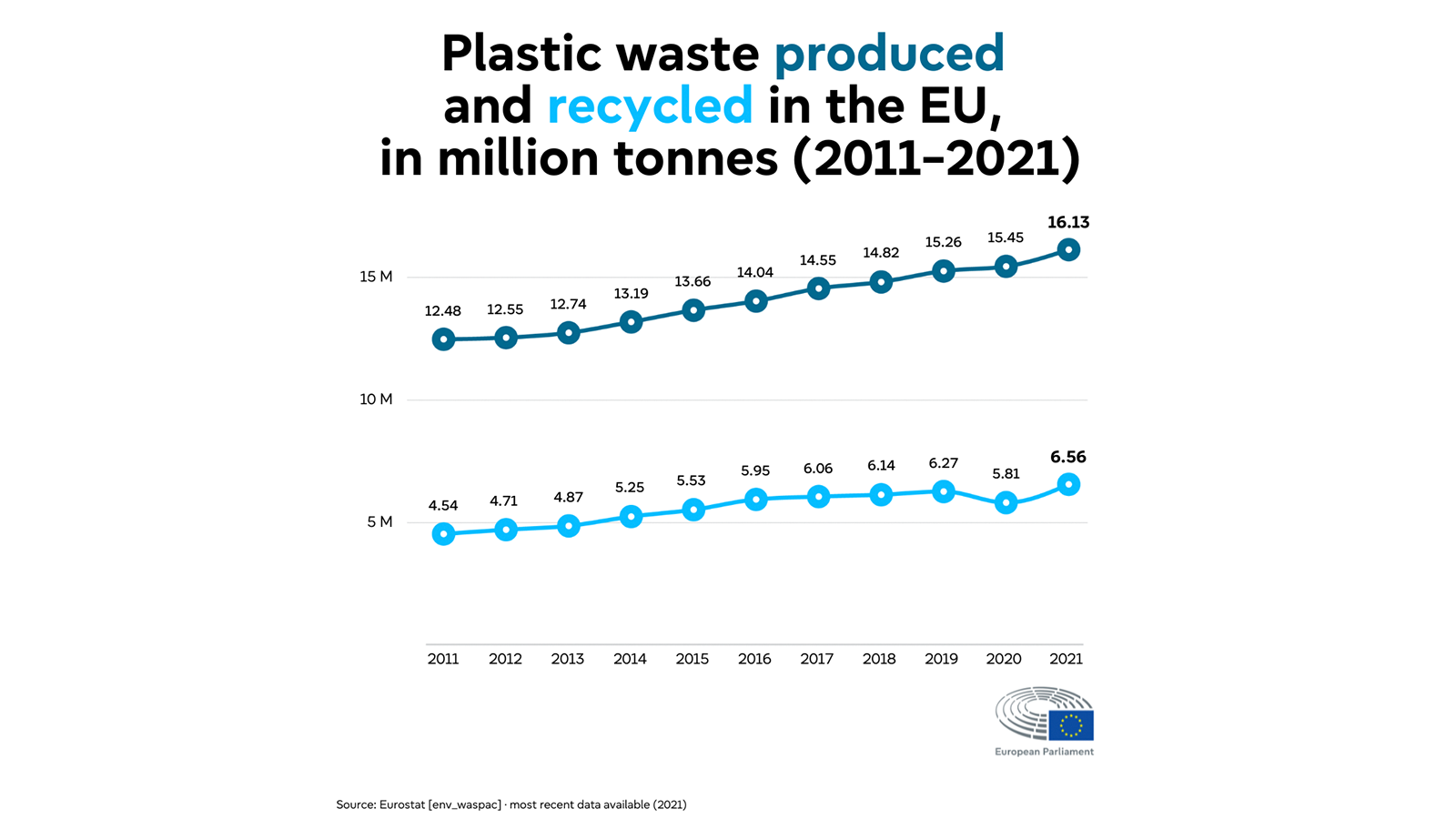
dark blue: Plastic Waste produced
light blue: Plastic Waste recycled
Small size of many plastic packaging
To close the plastic circular economy loop and develop more qualitative and quantitative PCR sourcing, more and more plastic wastes must be recovered. Another challenge is what the existing recycling infrastructures are able to capture. In that regard, size of the packaging is key. Indeed, almost all plastic packaging is today recycled through “mechanical recycling” if the end consumer disposes of it to the right bin and if it is collected, this means that each kind of material expectantly ends up in a separate area. This process works well with big items. Once it deals with smaller ones such as tubes for example, this works less well because the tubes can “fall out” of the process and never reach the area where they can then be turned back into PCR material. A work in progress, lots of investments are ongoing to manage this issue in the near future to make small items feeding the recycling streams.
Perspectives
The usage of recycled plastics induces several benefits: it leads to reduce the consumption of fossil-based resins and helps to reduce carbon dioxide emissions and plastic wastes. It also supports the plastic economy circularity and close the loop as polymers are long life materials. Finally, it reduces the pressure on finite resources fossil oils, gas and water. The journey towards integrating post-consumer recycled (PCR) materials into packaging begins with an effective sorting, ensuring that materials are properly separated and processed for their second life. However, the path does not end there; on top of all R&D efforts the plastic industry is
For recycling, the size of the packaging is key
implementing, it is crucial to cultivate an educational environment that empowers end consumers to embrace a circular economy mindset. By understanding the importance of sorting and recycling and the impact of their choices, consumers can contribute significantly to the use of PCR materials. And as the industry progresses, these efforts are complemented by technological advancements that enhance the aesthetic appeal of PCR packaging: especially chemical recycling offers an aesthetic finish similar to virgin plastic. The use of recycled materials is therefore no longer associated with a compromise in quality or design. Modern PCR packaging can rival the look and feel of virgin materials, making it an increasingly attractive option for brands and consumers alike. Finally, the tactile experience, or haptics, of packaging is gaining recognition for its role in consumer perception and inclusivity. The industry is exploring ways to ensure that PCR packaging not only looks appealing but also feels “right” and comfortable in the hands of all consumers, reinforcing their choice for more sustainable products. This attention to the sensory aspects of packaging design is a testament to the industry’s commitment to make sustainable choices attractive to end consumers.

Aude Laclaire
Sustainability Manager, Albéa Tubes,
www.albea-tubes.com