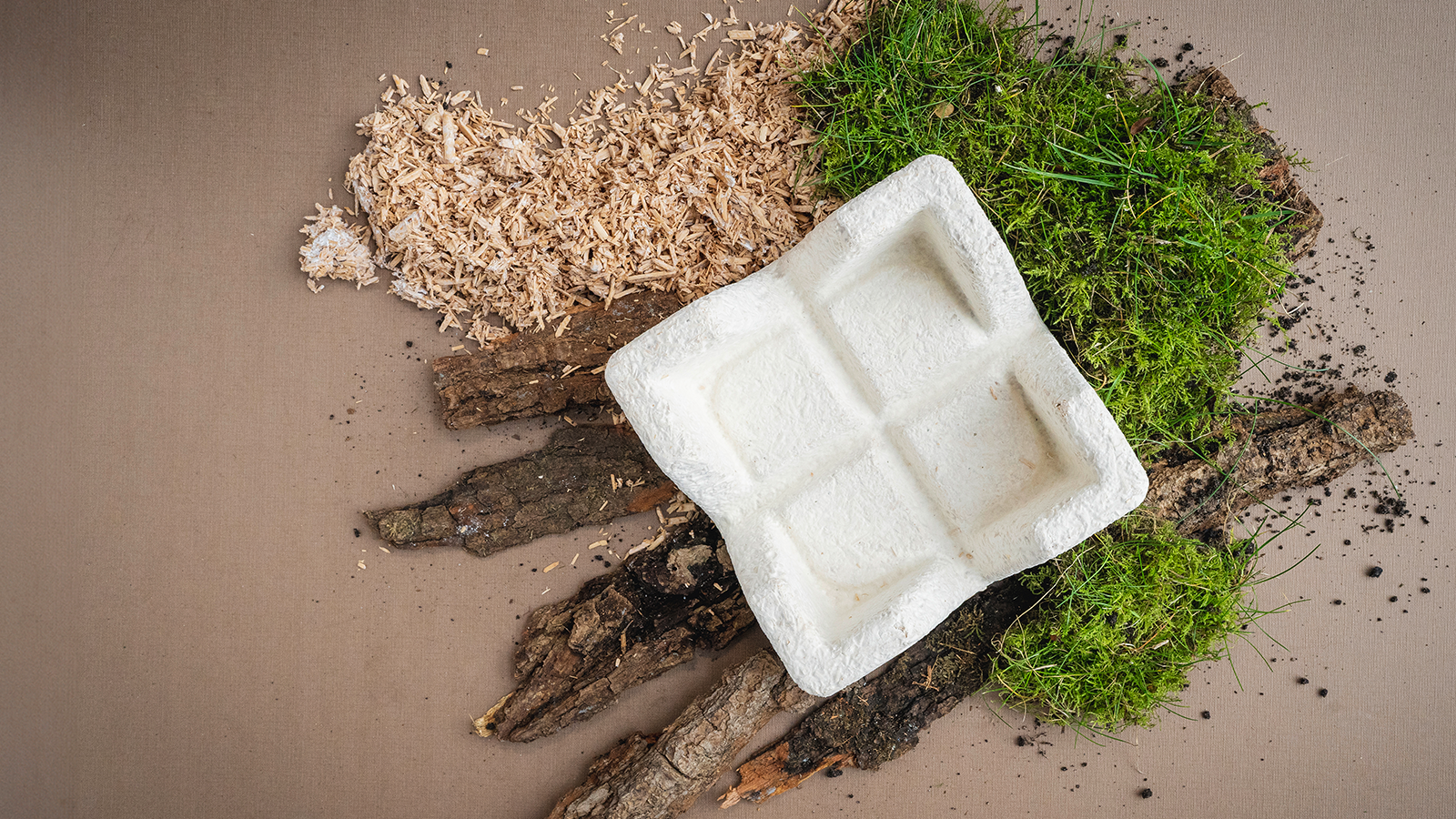
Mycelium Packaging offers a biobased alternative to traditional materials like Styrofoam and is used to create strong, protective packaging. For example, for heavy and sensitive household appliances, consumer electronics, cosmetics, spare parts, electrical devices and many more. It promises a reduced environmental footprint without compromising functionality or design.
Mycelium, the root part of fungi, is an excellent packaging material. It grows quickly and forms a strong product because of a material called chitin. This makes it suitable for packaging that is strong, versatile and environmentally friendly. Mycelium can grow into different shapes and forms, which means it can be molded into custom shapes without additional cutting. This reduces waste and makes production more efficient.

The packaging is made of Mycelium and hemp fibres.
What makes Mycelium Packaging special?
Combining strength with lightness, and soft yet protective qualities, mycelium packaging stands out as a versatile option. It is fully biodegradable and seamlessly returns to the earth, leaving no harmful traces. These features perfectly align with the increasing demand for sustainable and eco-friendly packaging solutions. Additionally, its aesthetic look and ability to be moulded into various forms make it an attractive choice for a wide range of packaging needs. Mycelium packaging also provides good thermal insulation, making it ideal for sensitive electronics or temperature-sensitive products.
• Eco-friendly: Mycelium packaging is natural and biodegradable, breaking down harmlessly in the envi – ronment.
• Sustainable: It uses only agricultural waste and mycelium.
• Safe: Mycelium packaging is plastic-free and contains no toxic chemicals.
CO2 Savings and Recycling Benefits
As the world seeks solutions for climate change, there’s growing interest in nature’s own methods for recycling carbon. Recycling carbon means capturing carbon dioxide (CO2) from the atmosphere and reusing it rather than allowing it to contribute to global warming. Plants, trees, and other green vegetation absorb CO2 during photosynthesis, converting it into organic matter while releasing oxygen back into the air. Hemp, used in mycelium packaging, is particularly effective at this, absorbing significant amounts of CO2 while growing. It captures the most CO2 per square acre of almost all crops while growing. Each mycelium package saves around 600 grams of CO2 for every litre of packaging. Once the packaging is used, it can be composted, breaking down into soil without leaving any waste behind. This natural cycle reduces pollution and waste, making mycelium packaging a simple but powerful way to care for our planet. The biodegradable nature of mycelium packaging stands out in an era where plastic pollution is a big concern. Styrofoam takes a long time to decompose, is toxic, and is made from non-renewable fossil fuels. Plastic packaging stays on our planet for centuries, leaking harmful chemicals. In contrast, mycelium packaging breaks down naturally, reducing landfill waste and ocean pollution.
Solution for future plastic regulations & health consequences
But it’s not just about the environment. The financial aspect of using plastics like Styrofoam might change soon. With potential new or increased taxes and bans on plastics, the costs will rise. The current pricing also doesn’t reflect the health consequences they bring. So, it’s time to make the switch to sustainable packaging.
Health risks:
• Cancer Risk: Styrene (used in Styrofoam) is identified as a substance that can cause cancer by the Environmental Protection Agency (EPA) and the World Health Organization’s International Agency for Research on Cancer (IARC). Prolonged exposure to Styrofoam could increase cancer risk.
• Hormonal Disruption: Styrene can disrupt hormone functions , causing problems with the thyroid, menstrual cycles, and increasing risks of cancers like breast and prostate cancer.
• Neurological and Liver Damage: Extended exposure to high levels of styrene has been linked to liver and nerve tissue damage, especially concerning for fetuses and young children.
Styrofoam production creates dangerous waste that harms not only humans but also our planet. It doesn’t break down easily, turning into microplastics that are hard to clean up and can end up in natural areas, being dangers to wildlife and nature.
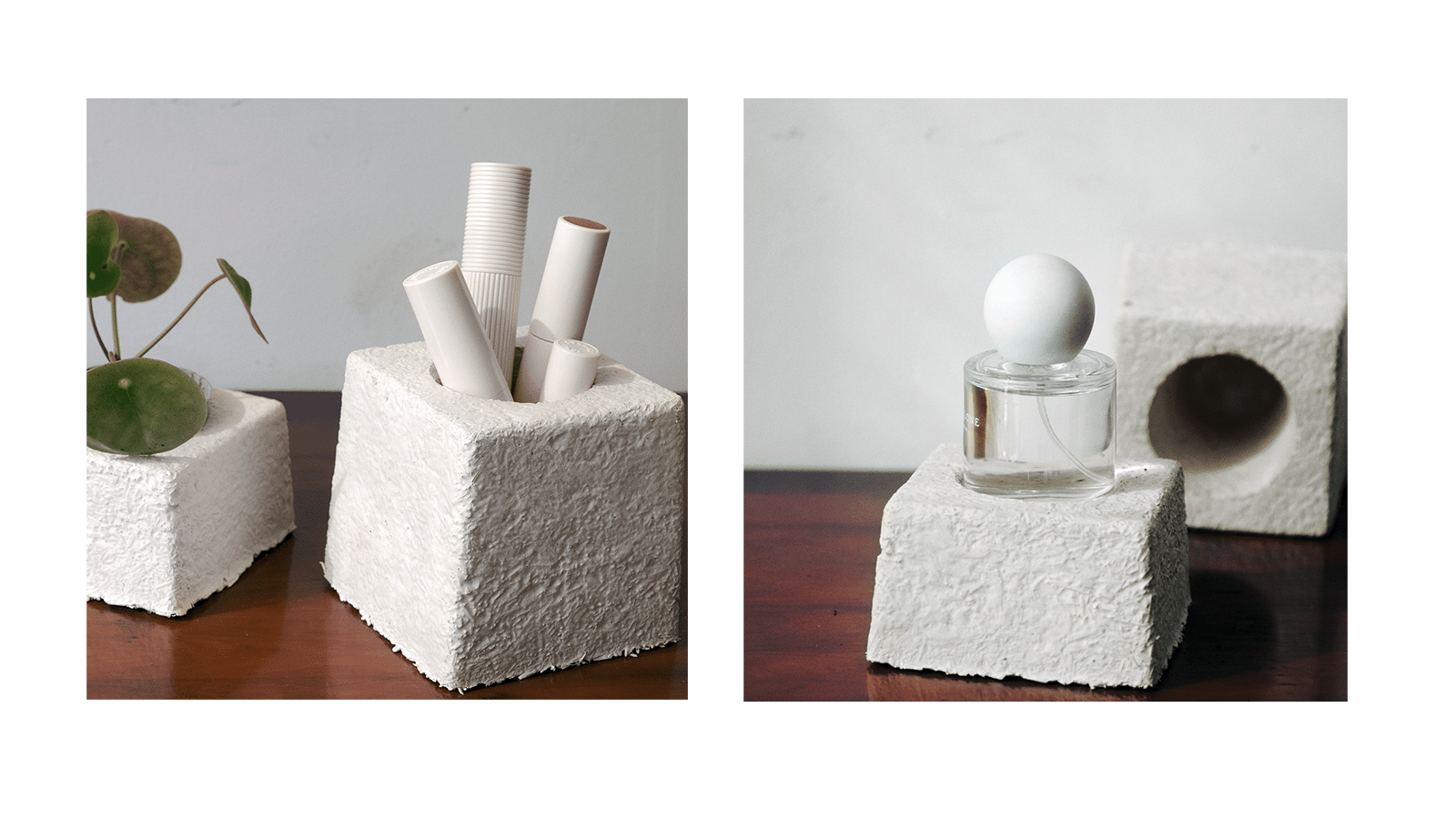
Mycelium can grow into different shapes and forms, which means it can be molded into custom shapes without additional cutting. Even after the initial transportation of products, the shapes can be used for storing or organising.

Mycelium offers secure protection of the product.
Industry applications and future prospects
Mycelium packaging is gaining popularity in various industries. The cosmetics industry for example benefits from its customisable shapes, the attractive appearance and the sustainable properties Mycelium packaging offers a powerful solution to the environmental problems caused by traditional plastic materials. Its unique properties, environmental benefits, and wide range of uses make it an excellent choice for the future of sustainable packaging. As industries and consumers seek eco-friendly options, mycelium packaging is ready to lead the way towards a greener, healthier planet.
References
1 https://ntp.niehs.nih.gov/sites/default/files/ntp/roc/content/ profiles/styrene.pdf
2 https://www.collegecentral.com/Article.cfm?CatID=hlt&ArticleID=3007
3 https://ntp.niehs.nih.gov/sites/default/files/ntp/roc/content/ profiles/styrene.pdf

Christina Thurner
Sales&Marketing, Grown bio, Heerewaarden, Netherlands,
www.grown.bio