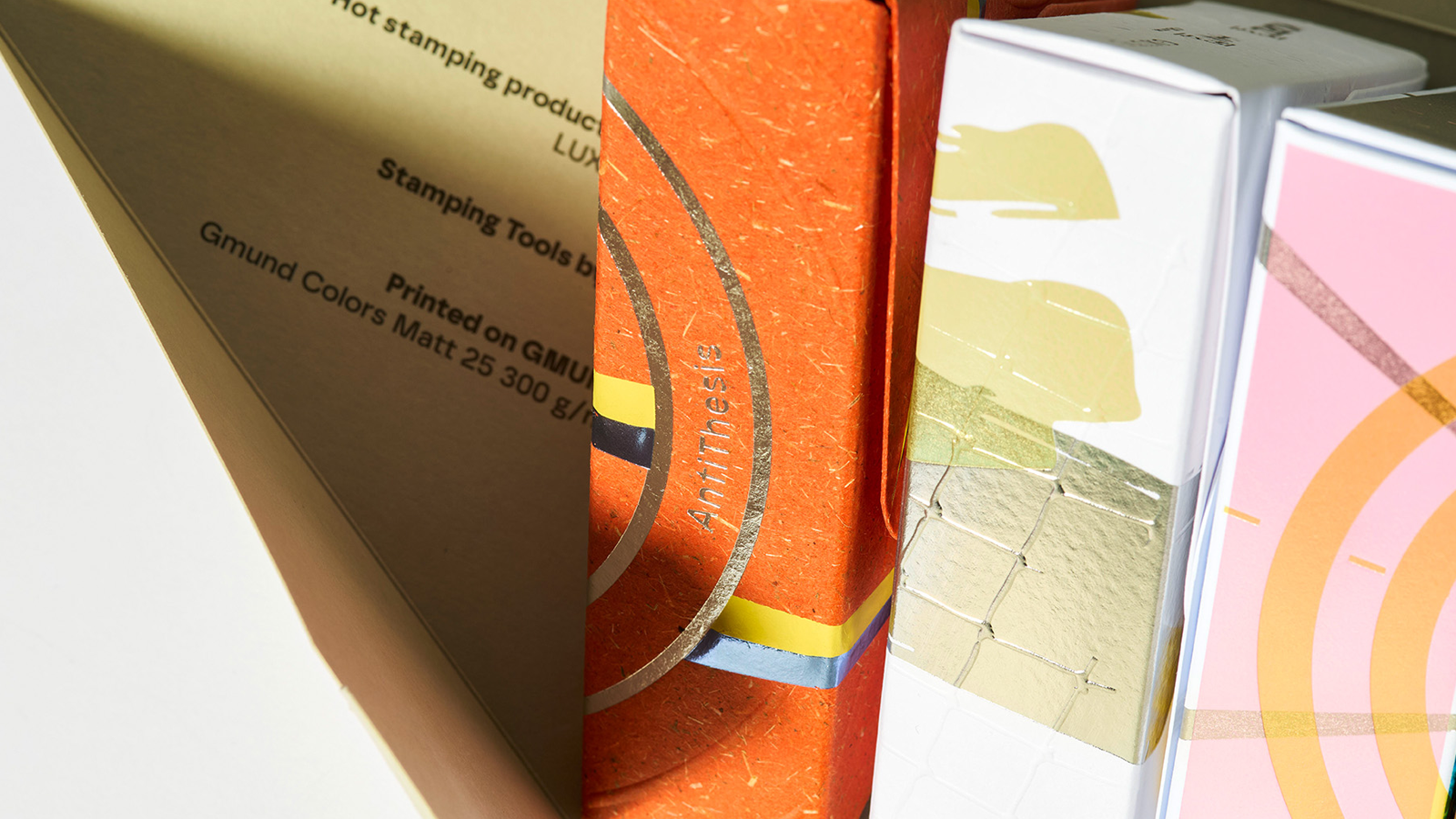
In today’s competitive beauty market, packaging has evolved far beyond its traditional role as a protective shell. It has become a multi-sensory interface, one that guides consumers through touch, light and structure while shaping perception at the very first contact.
Techniques such as embossing, tactile finishes and multi-dimensional effects are increasingly used not only to elevate visual appeal, but to create intuitive product navigation and emotional engagement. A recent collaboration between MM Packaging, Henkel, Leonhard Kurz and baries design GmbH demonstrates how tactile design can transform packaging into a powerful storytelling medium while reinforcing brand identity at the point of sale. The three partners along the supply chain presented the newly redesigned packaging of “Syoss Oleo Intense” hair coloration.
From Visual Communication to Physical Experience
For the redesign of “Syoss Oleo Intense” hair color packaging, the objective was clear: to make the product’s oil-based formula visible and tangible for consumers. This ambition reflects a broader shift in packaging design. Increasingly, brands are moving beyond purely visual communication toward physical interaction. By integrating tactile elements, packaging becomes an intuitive guide – helping consumers to better understand product benefits through touch, even before reading any claims.
The Role of Embossing in Tactile Navigation
The redesign began with a vision: a single drop of oil. A symbol of purity and nourishment, the conceptual design element evolved into a tactile storytelling device, enabling consumers to feel the oil’s beauty and presence through light, texture and dimensional effects. Initially brought to life from the creative packaging-design team at baries design, the concept needed an extraordinary 3D effect to deliver on such a brave and bold vision.
Embossing and multi-level relief structures play a central role in this transformation. By raising or recessing surfaces, embossing creates structured layers that enhance both visual depth and physical interaction. These techniques add a sculptural dimension to printed materials, making them more engaging, intuitive, and memorable. In the context of tactile navigation, such structures function as more than decorative features. They guide the consumer’s hand, drawing attention to key elements of the design and reinforcing the product story through physical cues. This combination of aesthetics and functionality is increasingly important, particularly in premium beauty packaging.
Engineering the Sensory Experience
Translating a bold creative concept into a scalable packaging solution required the integration of advanced finishing technologies. To achieve the desired three-dimensional effect, the “Trustseal” SFX solution from Kurz was selected.
The technology enables dynamic light reflections and depth, enhancing the illusion of fluidity and luminosity – key characteristics of the oil-based formula. Combined with embossing elements, the result is a multi-sensory surface that merges optical and tactile cues into a cohesive brand experience.
Precision and Craftsmanship at Industrial Scale
The technical realization of such a complex design was led by MM Packaging, requiring precise coordination across all partners. Within an ambitious eight-week timeframe, the team delivered a packaging solution that combined:
- Two hot-stamping applications
- High-precision printing and color control
- Exact cutting, creasing and gluing
- Responsibly sourced cartonboard material
This highlights a critical aspect of modern tactile packaging: innovation is not only defined by design, but by the ability to reproduce complex effects consistently and efficiently at industrial scale.
Collaboration as the Catalyst for Innovation
The success of this project underlines the importance of cross-industry collaboration. By bringing together brand owners, designers, technology providers and packaging manufacturers, it becomes possible to push the boundaries of what packaging can achieve.
This collaborative model not only accelerates innovation but also ensures that creative ambition and technical feasibility remain perfectly aligned throughout the development process.
Redefining Packaging Through Touch
As embossing technologies, tactile coatings and advanced finishing techniques continue to evolve, they are redefining packaging as an interactive medium. Packaging is no longer just seen, it is experienced. It communicates through texture, guides through structure and engages through physical interaction. This packaging redesign illustrates how tactile navigation in design can enhance usability, strengthen storytelling and elevate brand perception simultaneously. For beauty brands operating in increasingly crowded markets, the ability to create such multi-sensory experiences is becoming a key differentiator. The future of packaging, therefore, lies not only in what consumers see but in what they can feel.
Andreas Macku
Innovation Director Food & Specialities MM Packaging, Vienna, Austria, www.mm.group
Joana-Maria Bauchwitz
CEO baries design GmbH, Düsseldorf, Germany, www.baries.de
Michael Brocher
Global Business Development & Innovation Manager, Leonhard Kurz Stiftung, Fuerth, Germany, www.kurz-world.com