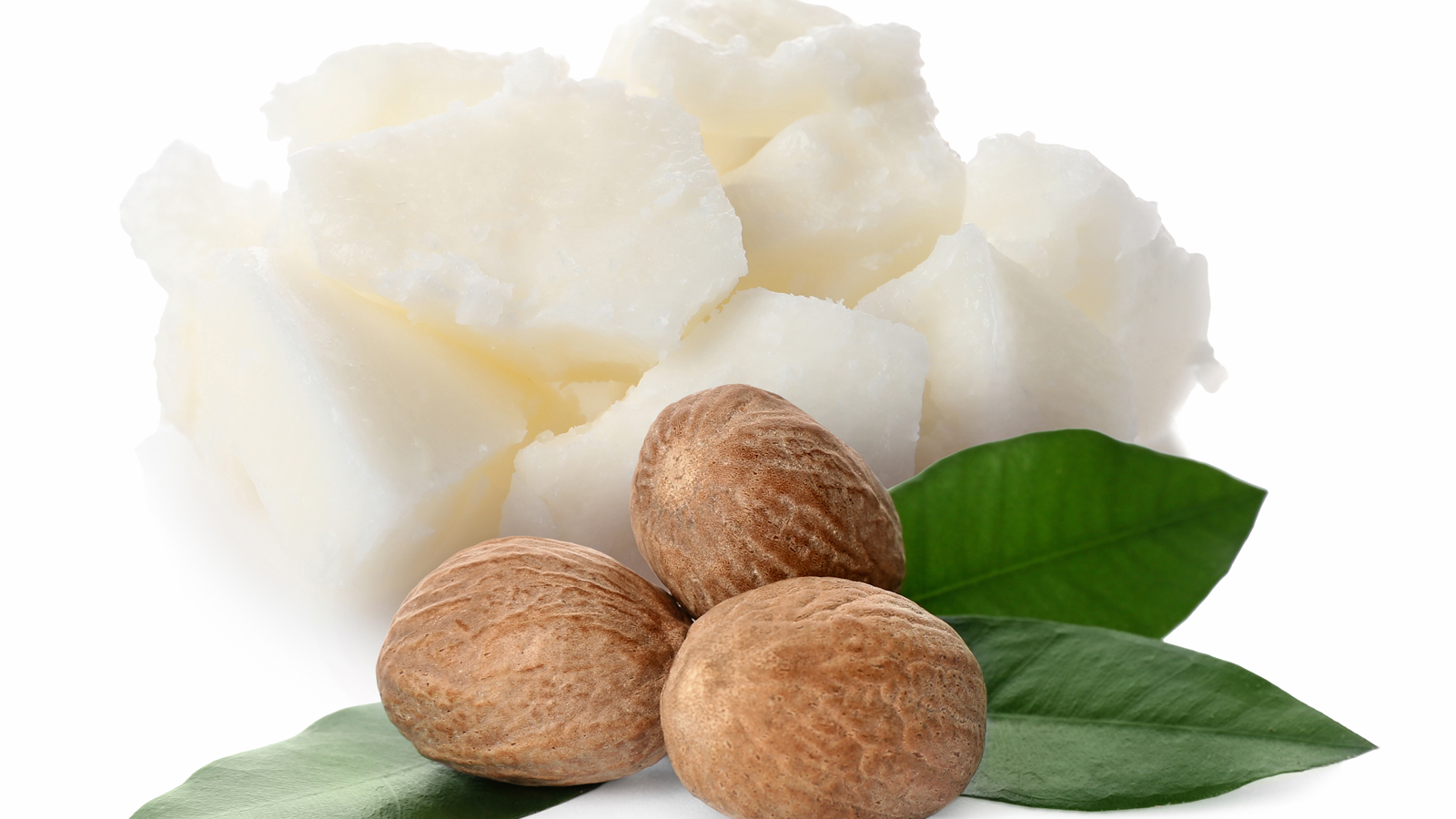
Formulating leave-on skin care requires balancing sensory performance, stability, efficacy at low use levels, and demand for traceable natural ingredients. Conventional shea butter is a well- established emollient, but its lipid profile can require additional formulation adjustments. East African shea butter offers a different lipid composition that may provide an alternative starting point for specific formulation needs.
Formulators working on leave-on skin care products face a consistent set of inter-related demands. Consumers want immediate comfort without residual heaviness, products stable across storage temperatures, ingredients that work at low concentrations, and traceable natural materials. When a starting emollient underperforms on any of these, the response is to add compensating ingredients such as a lighter co-emollient, a botanical active, a structuring wax, and formulation complexity grows. The question of whether a better starting lipid exists for specific applications is therefore a practical one. Shea butter from Vitellaria paradoxa subsp. paradoxa is the industry reference emollient in this category. It is well-characterized, safe, and available at scale. Its known formulation constraints (a relatively high melting point, a moderate oleic acid content, and a modest unsaponifiable fraction) are manageable, but they require active management. Vitellaria paradoxa subsp. nilotica, the East African subspecies wild-harvested from the Nile Basin region of northern Uganda and South Sudan, offers a measurably different lipid profile that is relevant to formulators on several of these points.
Subspecies and Analytical Distinction
Both subspecies belong to the family Sapotaceae and produce shea butter from cold-pressed or water-washed kernels. V. p. subsp. paradoxa spans the West African savanna from Senegal to central Uganda and accounts for virtually all commercial shea production.
V. p. subsp. nilotica is wild-harvested from a narrower Nile Basin range and produced in substantially smaller volumes. Multiple independent analytical studies have confirmed systematic differences in kernel lipid composition between the two subspecies across their respective geographic ranges. [1][2][3]
Fatty Acid Profile: The Primary Technical Differentiator
Studies of V. p. subsp. nilotica populations from Ugandan shea zones, including Lira, Pader, Katakwi and Arua place oleic acid (C18:1) at 55.54–57.63% of total fatty acids and stearic acid (C18:0) at 28.65–30.94%. [1] Analysis of 44 nilotica ethno-varieties across Uganda confirms oleic acid at 47–62% and stearic acid at 25–38%. [2] Near-infrared spectroscopic profiling of shea nut samples from across sub-Saharan Africa confirms significantly higher oleic acid and fat content in eastern versus western populations. [3] West African V. p. subsp. paradoxa typically yields oleic acid at 40–55% and stearic acid at 35–48%. [4]
These differences are functionally significant. Oleic acid (C18:1) promotes a solid-fluid phase separation within stratum corneum lipids, reducing the diffusional resistance to permeants, a mechanism established by Francoeur, Golden and Potts [8] and confirmed in subsequent work by Williams and Barry on fatty acid penetration enhancement. [9] A formulation lipid with a higher proportion of oleic acid therefore contributes more to the movement of co-applied actives into the upper epidermis than a lipid dominated by saturated fatty acids.
Stearic acid (C18:0) is the primary contributor to the high melting point and solid texture of West African shea butter. V. p. subsp. paradoxa melts at 32–38°C; V. p. subsp. nilotica, with its higher unsaturated fraction, melts at 28–32°C. The iodine value for Ugandan nilotica shea is 39–41 g I2/100g. [1] At skin surface temperature (approximately 32–34°C), nilotica shea transitions to a fluid state more readily, absorbs without the extended occlusive phase of higher-stearic lipids, and spreads with less resistance on application. For formulations targeting a non-greasy skin feel, this is a meaningful starting advantage.
Unsaponifiable Fraction
The non-saponifiable lipid (NSL) fraction of shea butter comprising triterpene alcohols, tocopherols, sterols and phenolics is retained in unrefined preparations and is the basis for the anti-inflammatory and antioxidant properties attributed to shea in dermatological literature. Akihisa and colleagues determined NSL at 2–12% of fat fraction across 36 shea samples from seven African countries, including Uganda and Sudan, with triterpene alcohols at 22–72% of the NSL fraction. Major triterpene alcohols identified were lupeol, butyrospermol, alpha-amyrin and beta-amyrin. [6]
Lupeol has been studied for activity relevant to inflammatory skin conditions. Bae and colleagues demonstrated that lupeol inhibited TNF-α/IFN-γ-stimulated keratinocyte activation in vitro and reduced atopic dermatitis-like inflammation in a murine model, acting through suppression of STAT1, p38, ERK and NF-κB pathways. [7] These are pharmacological findings – in vitro and in vivo – and do not constitute clinical evidence of efficacy in finished cosmetic products. They indicate the nature of the bioactive potential in the unsaponifiable fraction.
Maranz, Wiesman and Garti identified eight catechin compounds in shea kernels, with mean content of 4,000 ppm, and measured total polyphenols at 62–135 ppm across 40 Vitellaria provenances from 10 countries. [5] For formulators targeting sensitive or reactive skin, an emollient that contributes intrinsic bioactive content through its unsaponifiable fraction can reduce the requirement for supplementary botanical actives.
Formulation and Use Rates
Nilotica shea butter’s lower melting point and higher oleic acid content are most relevant in anhydrous preparations, water-in-oil emulsions, and oil-in-water creams where the lipid phase significantly influences skin feel. In anhydrous products, it produces a softer texture and faster melt-in than West African shea. In emulsified systems, the softer semi-solid state at ambient temperature influences emulsion firmness; lipid phase HLB and thermal stability should be evaluated during development.
For products intended for warm-climate markets, the proximity of nilotica shea’s melting point to ambient temperatures requires structural management. At sustained ambient temperatures at or above 28°C, a formulation with nilotica shea as the sole structuring lipid may soften beyond acceptable limits. This is addressed by blending with higher-melting waxes or harder fats, or with a proportion of V. p. subsp. paradoxa to raise the effective melting point. Both are routine approaches in natural lipid formulation.Use rates: 1–3% as a skin-feel modifier in light emulsions; 10–30% as a primary emollient in richer creams and body butters; up to 99% in anhydrous preparations. Standard temperature control during melt-and-mix processing applies; no unusual handling precautions are required.
Regulatory and Quality Considerations
The INCI designation Butyrospermum Parkii (Shea) Butter covers both subspecies. Subspecies-specific label claims require supply chain documentation, as the INCI name alone provides no differentiation. Nilotica shea butter from certified organic production is eligible for COSMOS, ECOCERT or USDA Organic inclusion, subject to chain-of-custody documentation and certifying body confirmation. Under EU Cosmetics Regulation (EC) No 1223/2009, shea butter presents no identified safety concerns at typical cosmetic use concentrations. Batch-specific ICP-MS data for Pb, As, Hg and Cd against Annex III limits is advisable for any wild-harvested lipid.
Production volumes of nilotica shea are substantially smaller than West African shea and the supply base is more geographically concentrated. Incoming quality specifications should cover oleic acid content, free fatty acids, peroxide value, moisture, unsaponifiable matter, color and microbiological parameters.
Summary
Vitellaria paradoxa subsp. nilotica is analytically distinct from V. p. subsp. paradoxa. Published data from Ugandan populations confirm oleic acid at 47–62%, stearic acid at 25–38%, and an iodine value of 39–41 – a profile yielding a lipid with a lower melting point, faster skin uptake, and greater skin penetration-enhancement potential than the West African benchmark. [1][2] The unsaponifiable fraction contains lupeol, butyrospermol and alpha-amyrin with published bioactivity in inflammatory skin models. [6][7] For formulators seeking to reduce compensatory ingredients, or for brands building on certified natural and geographically traceable materials, the peer-reviewed evidence base for V. p. subsp. nilotica as a technically differentiated emollient is well-established.
References:
1 Okullo JBL et al. Physico-chemical characteristics of shea butter (Vitellaria paradoxa C.F. Gaertn.) oil from the shea districts of Uganda. Afr J Food Agric Nutr Dev. 2010;10(1):2070–2084. [Oleic acid 55.54–57.63%; stearic 28.65–30.94%; iodine value 39–41 for nilotica populations in Lira and other Ugandan shea zones] https://doi.org/10.4314/ajfand.v10i1.51484.
2 Davrieux F et al. Fat content and fatty acid profiles of shea tree (Vitellaria paradoxa subspecies nilotica) ethno-varieties in Uganda. Forests Trees Livelihoods. 2012;21(4):267–278. [Oleic acid 47–62%; stearic acid 25–38% across 44 nilotica ethno-varieties] https://www.tandfonline.com/doi/full/10.1080/14728028.2012.755810
3 Davrieux F et al. Near infrared spectroscopy for high-throughput characterization of shea tree (Vitellaria paradoxa) nut fat profiles. J Agric Food Chem. 2010;58(13):7811–7819. [Confirms significantly higher oleic acid and fat content in eastern vs western shea populations] https://pubmed.ncbi.nlm.nih.gov/20518501/
4 Honfo FG et al. Nutritional composition of shea products and chemical properties of shea butter: a review. Crit Rev Food Sci Nutr. 2014;54(5):673–686. https://doi.org/10.1080/10408398.2011.604142
5 Maranz S, Wiesman Z, Garti N. Phenolic constituents of shea (Vitellaria paradoxa) kernels. J Agric Food Chem. 2003;51(21):6268–6273. [Mean kernel catechin content 4,000 ppm; total polyphenols 62–135 ppm across 40 provenances from 10 countries] https://pubmed.ncbi.nlm.nih.gov/14518954/
6 Akihisa T et al. Triterpene alcohol and fatty acid composition of shea nuts from seven African countries. J Oleo Sci. 2010;59(7):351–360. [NSL 2–12%; major triterpene alcohols: lupeol, butyrospermol, alpha-amyrin, beta-amyrin] https://pubmed.ncbi.nlm.nih.gov/20513968/
7 Bae S et al. Lupeol alleviates atopic dermatitis-like skin inflammation in 2,4-dinitrochlorobenzene/Dermatophagoides farinae extract-induced mice. BMC Pharmacol Toxicol. 2023;24(1):27. https://bmcpharmacoltoxicol.biomedcentral.com/articles/10.1186/s40360-023-00668-9
8 Francoeur ML, Golden GM, Potts RO. Oleic acid: its effects on stratum corneum in relation to (trans)dermal drug delivery. Pharm Res. 1990;7(6):621–627. https://pubmed.ncbi.nlm.nih.gov/2367329/
9 Williams AC, Barry BW. Penetration enhancers. Adv Drug Deliv Rev. 2012;64:128–137. https://doi.org/10.1016/j.addr.2012.09.032
Data note: Fatty acid ranges are from analytical studies of V. p. subsp. nilotica populations sampled across Ugandan shea zones including Lira district. The iodine value (39–41) is from Okullo et al. (2010) [1]. NSL ranges (2–12%) are from Akihisa et al. (2010) [6] and reflect broad geographic variation; formulators should use batch-specific CoA values for quality control.

Ladé Araba
Director, Omphalos Africa LLC, Dover, Delaware, USA, www.omphalos.africa