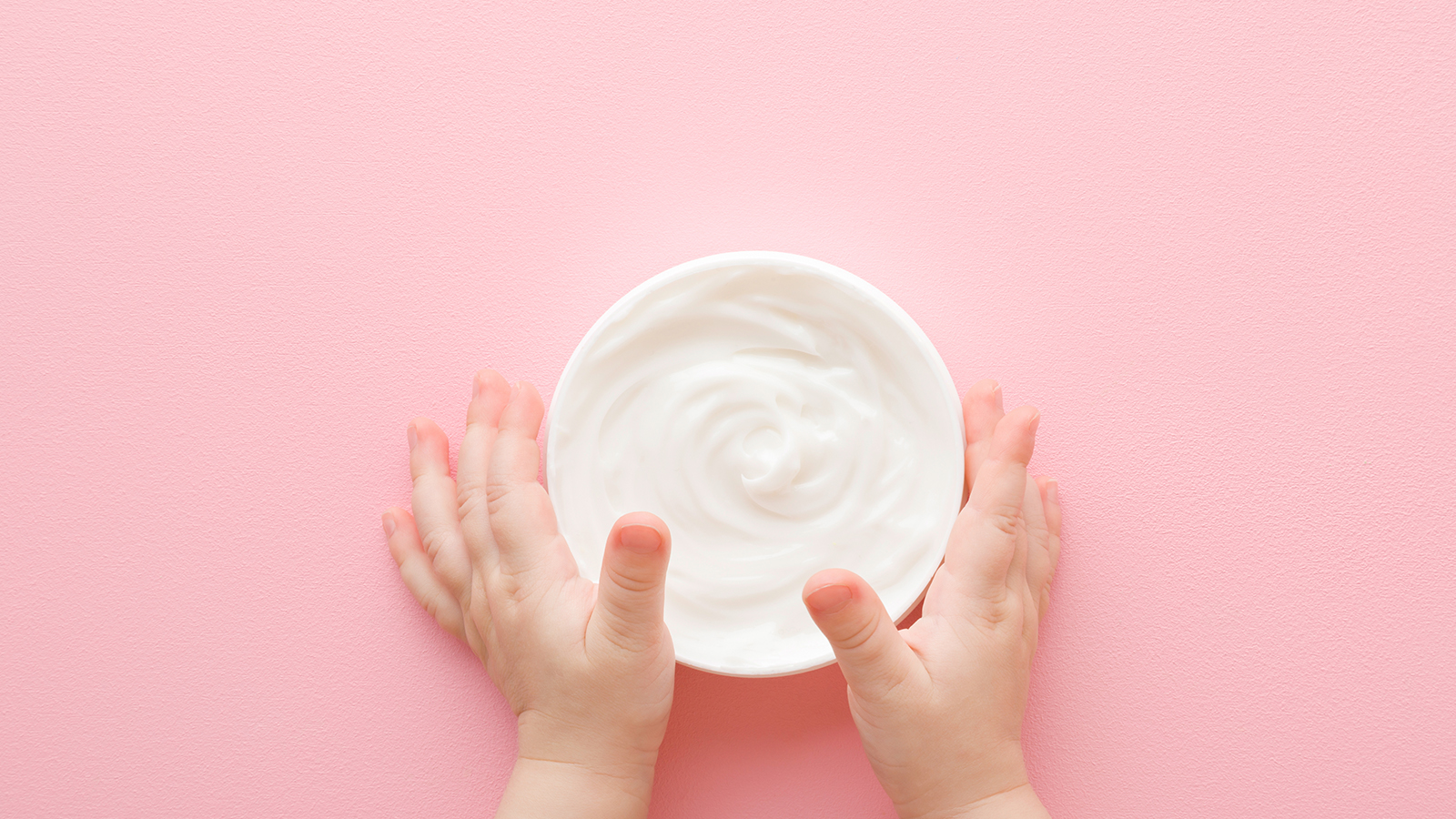
Although they are the smallest target group for the cosmetic industry, they require greatest attention in research and development, production and vigilance: newborns, infants and toddlers.
The range of cosmetics in supermarkets, drugstores and pharmacies are all-embracing and often overwhelming, even product classes for babies. The recommendations for the care and cleansing of the youngest skin or hair also seem to change constantly. This article will exemplify tips for products and their use, which have been confirmed by scientific research.
Special characteristics of baby’s skin
The sensitivity of this consumer group is described as a much higher ratio of skin surface area to body weight (SA/BW), which is almost three times higher compared to adults (SA/BW is 1.3).1 For ‘newborns’ under 6 months, it is represented over 2.3, for ‘infants’ from 6–12 months it is 1.8-1.6, for ‘toddlers’ from 1–3 years it is 1.6–
1.5. However, the Margin of Safety (MoS) for babies is also a suitable criterion for the special Cosmetic Product Safety Report (CPSR) due to different exposures, this ought to constitute >100. As a precaution, a dermal uptake of the substances of 55-100 % is assumed.
In addition, skin of the youngest is not yet fully developed, a minor protective function compared to adults must be mentioned. Right after birth, the epidermis of babies is thinned out and hydrated regarding contact lasting for months with the amniotic liquor. This means dehydration risk and very sensitive and dry skin. As the skin is so hydrophilic, the lipid film is comparatively thin and sebum production in babies is not yet functional. Furthermore, thermoregulation through sweating or goose bumps are not possible. The skin’s so-called acid mantle has to develop in the first years of life. In addition, melanin pigments are not yet formed while exposure to UV rays, which is why newborns have very light-colored skin that needs sun protection. The recommendations are suggestive of an exclusion of direct sunlight until the age of two, if possible.2To sum up: the barrier capacity against external influences is generally still inadequate in babies and young children.
Care of the diaper area
Another peculiarity of infant’s skin is the heavily stressed diaper area. There is a risk of infection from fungi and bacteria here due to the moist environment, treatment with wipes, rubbing of the skin, which can lead to diaper dermatitis.3 Oily products with added panthenol for a faster skin regeneration, zinc oxide or calendula extracts as antiseptic components are suggested.
Baby care recommendations
Care products should be used only on very dry or irritated baby skin. Shampoos ought to be used not before the first year of life, as the sensitive scalp shall not be exposed to heavy use after birth. Some parts of the body, such as the ears or umbilical skin, can be cleaned without using any products at all. Baths should be short and without many additives, according to advice for one bath per week, otherwise the skin can be washed with a moist and lukewarm washcloth.4
Rinse-off products are also preferred to leave-on products. For the treatment of injured baby skin, it is recommended to use medicinal products or pharmaceuticals. Cosmetics may only be applied to intact skin.
Relevant questions for research
Regulation (EC) 1223/2009 must be considered for newborns to infants regarding any cosmetics. Annex III also describes some precise age-appropriate limitations for some substances.
In addition, the Scientific Committee on Cosmetic Products and Non-food products (SCCNFP) recommends the use of preservatives with an explicit authorization according to Annex V, due to the high allergic potential.5 Nevertheless, good preservation or other protection against germs is important because babies’ immune systems are not yet fully developed. The Scientific Committee on Consumer Safety (SCCS) has also lowered the maximum values for microbiological quality to 100 cfu/g instead of 1000 cfu/g as for adults in the CPSR; Part A.
Essential oils should also be avoided; substances such as camphor, eucalyptus, thyme and peppermint oil (menthol) are strictly forbidden for children under the age of three and may be hidden in many raw materials of plant origin.6
In addition to allergies, the reason for this is the onset of the respiratory reflex, which makes it impossible to cough up and there is an acute risk of suffocation.Perfumes should be avoided if possible; the potential allergy risk must be considered. The use of phthalates and other endocrine disruptors is not suitable because of their hormonal properties; alcohols because of their irritant effect; mineral oils because of dangerous accompanying substances.7
Analysis for heavy metals, CMR substances, pesticide residues and hormonally active substances must be focused, especially for baby’s cosmetics. For the safety development of baby cosmetics, resorptive and exposure-related one should assume always worst-case scenarios.
Overall, cosmetics for newborns ought to be particularly mild and contain a few carefully selected raw materials. For example, gentle syndets can be preferred to real surfactants and moisturizing substances can be included in washing lotions. Shampoos or body cleansing products are supposed to be tested for ophthalmological compatibility. Databases such as the one from Johnsons can also be used to support the selection of raw materials.8
Special resorptions
Cosmetic products are often absorbed by newborns and infants not only dermally but also orally because of their playful exploration behavior by mouth. So creamed hands or feet can also come into contact with the oral mucosa. The first-pass effect in babies’ livers is not yet fully functional and the CYP enzymes cannot have a complete detoxifying effect. In addition, the blood-brain-barrier is more permeable, and the toxic effect of some substances is much higher for children and babies than for adults.9
Another oral absorption is possible through breastfeeding after prior nipple treatment with products. Cosmetics for nursing mothers should therefore be assessed and developed just as strictly as products for newborns, as they have the same potential for oral exposure.
An exemplary critical substance is lanolin, which also may contain diazinon due to the use of pesticides and therefore not be used for nipple care.10Consequently, most ingredients in baby cosmetics ought to be edible due contact to oral mucosa. Bitter additives are not very effective here as protection against swallowing.
Conclusion
Newborns, infants, toddlers (and breastfeeding mothers) are the most vulnerable consumer group for cosmetics. Products should be developed specifically for them and can usually be used by the most groups of people, too. Otherwise, adult products are not specifically suitable for the use by the youngest consumers and should be “kept out of reach of children”.
For better education, the information on the packaging should be clear and warnings providing possible misuse.
As a rule of thumb, the fewer raw materials are used in the product, the fewer potential sources of danger, residues or intolerances can occur in newborns and small children with cosmetics.
Finally, it should be noted that medical help should be sought for injured or dermatologically pathological skin, because the limits of cosmetics are exhausted here.
References:
1 SCCS notes of guidance 12th revision available at: https://health.ec.europa.eu/document/download/32a999f7-d820-496a-b659-d8c296cc99c1_en?filename=sccs_o_273_final.pdf, latest access: 04.03.2025
2 BfR press information available at: https://www.bfr.bund.de/de/presseinformation/2007/13/immer_auf_ausreichenden_sonnenschutz_achten_-9678.html, latest access: 04.03.2025
3 Advice of many cooperating organizations available at: https://www.haut.de/wp-content/uploads/haut de_haut_babypflege.pdf, latest access: 0.03.2025
4 Article of medicinal editors available at: https://www.apotheken umschau.de/familie/kindergesundheit/sinnvolle-babypflege-weniger-ist-mehr-789895.html#nicht-zu-oft baden, latest access: 04.03.2025
5 Positions Statement from SCCNFP available at: https://ec.europa.eu/health/archive/ph_risk/committees/sccp/documents/out152_en.pdf, latest access: 04.03.2025
6 FAQ of the BfR (germany) available at: https://mobil.bfr.bund.de/cm/343/fragen_und_antworten_zur_anwendung_von_aetherischen_oelen.pdf, latest access: 04.03.2025
7 FAQ of the BfR (germany) available at: https://www.bfr.bund.de/de/fragen_und_antworten_zu_endokrinen_disruptoren-50513.html, latest access: 04.03.2025
8 Databank with ingredients for baby cosmetics available at: https://www.johnsonsbaby.in/gentle-care standards/ingredients, latest access: 05.03.2025
9 Article of pharmaceutic editors available at: https://www.pharmazeutische-zeitung.de/pharm12-42-2001/, latest access: 05.03.2025
10 Science article available at: https://link.springer.com/article/10.1007/s001289900488, latest access: 05.03.2025

Eva Wiemann
Lemikos, Wiehl, Germany, www.lemikos.de