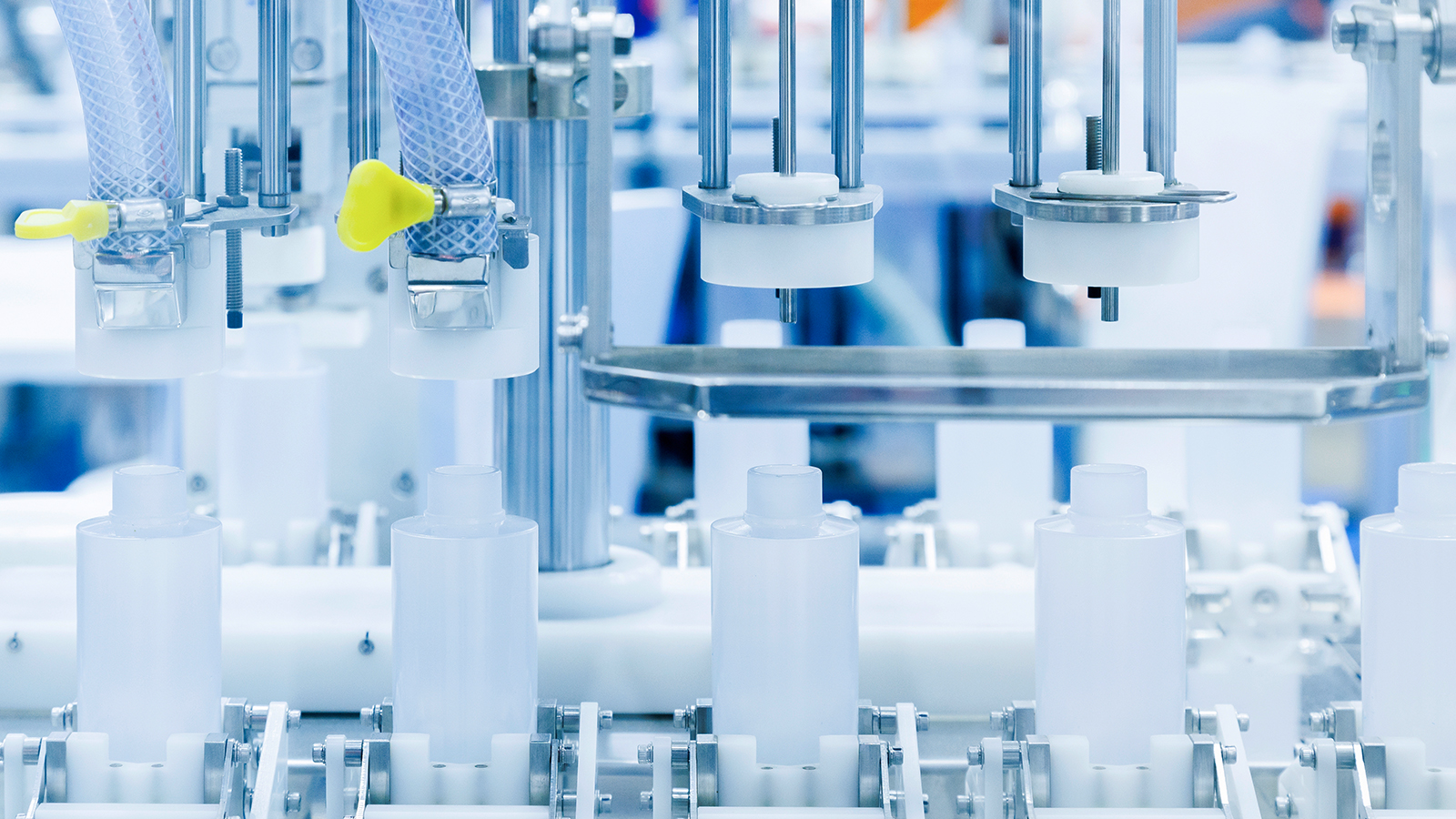
Cosmetic manufacturers are facing heightened scrutiny under evolving standards, such as the Modernization of Cosmetics Regulation Act (MoCRA) of 2022. To preserve market share and stand apart from competitors, cosmetic manufacturers need to quickly assess and implement Good Manufacturing Practices (GMP) by December 29, 2025. Achieving GMP standards by incorporating cleanroom technology is revolutionizing beauty salons, spas, and cosmetic manufacturing facilities. This shift is not just about compliance; it’s about leading the market with enhanced quality, safety, and innovation. Here are the 5 things you need to know to meet changing regulations.
What is GMP Compliance?
GMP compliance begins before a cleanroom construction begins. It starts with the cleanroom manufacturer partner’s responsibility to provide certificates of compliance and quarantine materials to avoid cross-contamination through the manufacturing process. Choosing non-porous surfaces and chemical-resistant materials ensures durability and ease of sterilization to eliminate microbial and bacterial growth during cosmetics production. Experienced cleanroom manufacturing partners will help guide cleanroom owners through the process, ensuring adherence to FDA standards to avoid costly delays. In addition to material selection, the construction process itself plays a role in achieving GMP standards. “The way cleanroom components are assembled and sealed is critical,” explains Mark Zabala, expert in cleanroom design, regulatory compliance and senior sales manager of modular cleanroom, SERVICOR, by Nortek Air Solutions. “Any gaps or joints left during construction can create potential contamination and structural risks. Modular cleanrooms made of steel help ensure structural integrity and allow for the best, customized fit for your facility.”
Designing for GMP Cleanrooms
One of the most crucial aspects of a GMP-compliant cleanroom is the elimination of surfaces and components that could harbor contaminants or interfere with cleaning procedures. “Flush walls and flush ceilings are foundational elements that significantly contribute to maintaining a contamination-free environment,” explains Zabala. “These surfaces are easier to clean and maintain, which minimizes the potential for microbial growth or particle generation.”In traditional cleanroom designs, walls and ceilings often contain joints, seams, and fixtures that can make comprehensive cleaning more difficult. With MOCRA and the shift toward more stringent GMP standards, cleanrooms must be designed to eliminate such risks. Flush walls and ceilings provide smooth, uninterrupted surfaces, allowing for more efficient cleaning and reducing areas where dust, bacteria, and other contaminants could accumulate. These design improvements also have a significant impact on the overall integrity of the cleanroom environment. “By eliminating gaps and joints, we remove the potential for build-up of contaminants,” says Zabala. “This not only enhances cleanliness but also supports a higher level of sterility for processes that require ultra-low contamination levels, such as aseptic filling or high-risk pharmaceutical production.”
Controlling Contamination at the Source
Once the shell of a cleanroom is constructed, airflow and HVAC (heating, ventilation, and air conditioning) systems are critical to maintaining the required classification level. Cleanroom environments rely on air change rates and filter air to ensure particulate contamination is kept to an absolute minimum. Modern GMP cleanrooms utilize high-efficiency particulate air (HEPA) or ultra-low penetration air (ULPA) filters that capture airborne particles and microorganisms. “The cleanroom’s air handling system must be capable of maintaining specific airflow rates and pressures, while ensuring uniform air distribution throughout the space,” explains Zabala. “Our solutions allow for the flexibility of ceiling components, while maintaining a smooth ceiling finish for that easy-to-clean requirement. Not every piece of equipment will live where originally designed, so the cleanroom should have the ability to adjust to these circumstances.”The design of airflow systems plays a key role in preventing cross-contamination and ensuring that contaminants are efficiently removed from the cleanroom environment. High-velocity airflow across the cleanroom’s work areas helps push contaminants away from the critical zones and toward the air escape/return. It is also important to have the forethought on where workstations and technology will be placed inside the cleanroom, ensuring that it is not blocking the critical airflow that helps maintain the cleanroom standards. Furthermore, pressure differentials between adjacent cleanroom areas are important for controlling the flow of air. Positive pressure in sterile zones helps prevent the entry of contaminants, while negative pressure in potentially hazardous areas ensures that any contamination remains contained and operators are protected.
Advanced Monitoring and Data Logging
Nearly all cosmetic manufacturers (80–90%) are investing in improving research and development (R&D) in 2025. As manufacturing technology and equipment evolves, enhanced methods of monitoring and controlling the environment are needed to ensure the cleanroom is operating at its designed classification level. One of the key components of a modern GMP cleanroom is an advanced monitoring and data logging system that continuously tracks environmental parameters such as temperature, humidity, particle counts, pressure differential, and access control. These systems not only ensure compliance with GMP guidelines but also provide real-time insights that can help identify and address potential issues before they escalate.“The environments in a cleanroom are constantly changing,” said Zabala. “Real-time monitoring is critical in maintaining compliance with GMP standards. By using automated monitoring systems that log data continuously, operators can track trends and take proactive steps to ensure that the cleanroom environment is consistently within acceptable limits.” For instance, if particle counts exceed a certain threshold, or if temperature and humidity levels deviate from the specified ranges, the system can trigger alarms, allowing for immediate corrective actions to be taken. “GMP regulations place a significant emphasis on documentation and traceability,” adds Zabala. “Data logging systems not only improve cleanroom performance but also support accountability. If an issue arises, operators have the historical data to understand the root cause, which is invaluable during regulatory inspections.”
Validation and Continuous Improvement
Once a cleanroom is built and operational, validation is necessary to ensure that it meets the rigorous GMP standards. Validation involves a series of tests and measurements to verify that the cleanroom’s environmental conditions are within the required parameters and that all systems are functioning properly.“Validation is a critical step in ensuring that the cleanroom meets GMP standards,” says Zabala. “It’s not just about checking off boxes to get up and running; it’s about ensuring that all environmental conditions are controlled and monitored, and that the cleanroom is fully capable of supporting the production of high-quality, safe products.”
A Holistic Approach to Cosmetic Manufacturing GMP Cleanroom Compliance
Achieving the new GMP standard cleanroom requires a multifaceted approach that includes advanced design features, continuous monitoring, stringent material selection, and rigorous validation. Key elements such as flush walls and ceilings, real-time data logging, optimized airflow, and HVAC systems all contribute to maintaining a sterile, contaminant-free environment that meets GMP guidelines.The above considerations must be accompanied by accurate and specific Standard Operating Procedures (SOP). The perfect cleanroom can be designed and installed, but an imperfect SOP can impede those efforts. A professional is recommended to help set proper SOPs throughout. Gowning, cleaning, preventative maintenance, and cleanroom behavior are all pieces of the puzzle. As the cosmetics regulatory landscape becomes more complex, cleanroom design and construction are no longer just about creating spaces free from contamination. It is an ongoing process that demands constant attention, periodic reassessment, and a commitment to operational excellence. By embracing the latest cleanroom technologies, materials, and monitoring systems, cosmetics manufacturers can ensure that their producing quality, safe cosmetics that not only meet current GMP standards but also support future growth and innovation.

Mark Zabala
Expert in cleanroom design, regulatory compliance and senior sales manager of modular cleanroom, SERVICOR, Nortek Air Solutions, Orkarche, US, www.nortekair.com