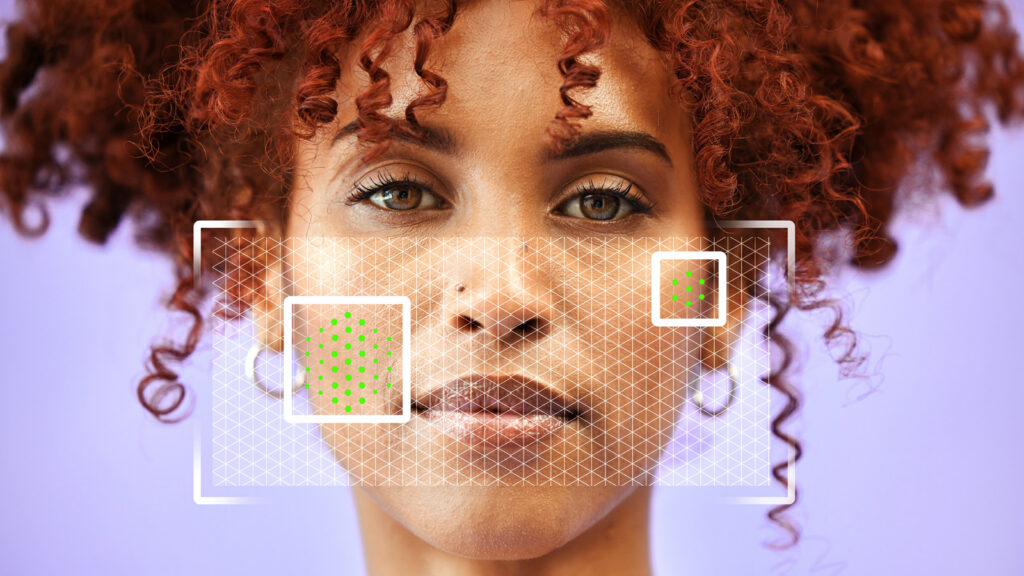
Artificial intelligence is opening up new possibilities for the objective assessment of skin in cosmetic research and product development. Instead of relying primarily on visual grading, AI-based image analysis can quantify changes across multiple skin parameters and potentially enable larger, more diverse and decentralized studies. In this interview, Anastasia Georgievskaya, CEO and Co- Founder of Haut.AI, discusses how AI- supported measurement is being applied in clinical studies and how the technology could influence efficacy testing and product development across the cosmetics value chain.
COSSMA: Your platform measures 48 skin biomarkers right now. Which endpoints are currently most relevant for evaluating cosmetic ingredients and finished formulations, and what can objective AI-based measurement reveal that traditional visual grading may miss?
Anastasia Georgievskaya: The most useful endpoints depend on what a product is designed to do. Currently, our Clinical Studies Software measures endpoints including wrinkles, pigmentation, texture, redness, acne and pore appearance, all of which are highly relevant because they can be measured objectively and tracked over time. The bigger shift is moving from subjective scores to standardized measurements. AI can apply the same measurement criteria to every image, reducing the grader variability that can obscure real product effects.
Haut.AI reports ICC repeatability values of 0.97–0.98 across five facial skin endpoints. How were these results validated, and what steps does Haut.AI take to ensure reliable measurement across different ages, skin tones, skin conditions, and geographic populations?
The results were validated in a clinical study with Institut d’Expertise Clinique (I.E.C.), where we tested the repeatability of our tool in both a standardized environment and in the highly heterogeneous conditions of participants’ homes.
Reliability also starts with how the algorithms are developed. We balance our datasets across different ages, skin tones, skin conditions and geographic populations to help ensure the technology performs reliably across diverse users. We are deeply convinced that AI should be fair and should not introduce bias into the insights it provides about someone’s skin. We have also published our position on this topic because we believe transparency around how these systems are developed is important.
Traditional studies often involve relatively small, controlled cohorts. How could studies involving hundreds or thousands of participants change the way ingredient manufacturers substantiate efficacy claims?
A traditional efficacy study typically enrolls fewer than 50 participants. Expanding that to hundreds or thousands gives researchers a much broader view of how a product performs across different consumer groups, rather than having meaningful differences disappear into broad averages. More data also provides truer results versus a small dataset with skewed outliers.
Larger cohorts can also make it easier to identify patterns across skin characteristics and track changes over time–something that is difficult to do at scale with traditional manual grading. For ingredient manufacturers, that means stronger, more representative evidence to support efficacy claims and a better understanding of who responds to a product and how.
Can the software help distinguish the effect of a specific active ingredient from influences such as the formulation base, skincare routine, lifestyle, climate, or participant compliance?
AI does not replace rigorous study design or statistical controls, but it can make measurements more consistent. When every participant is assessed against the same objective criteria at every timepoint, researchers have cleaner data to analyze. Combined with strong study design, participant surveys, longitudinal measurements and consistent assessments can help researchers distinguish a product’s effects from other factors that influence the skin.
At-home image capture introduces variables such as lighting, camera quality, angle, and user behavior. How does your “Live Image Quality Assurance” technology standardize image capture and identify submissions that are not suitable for analysis, helping ensure consistent data quality for clinical studies?
Remote research only works if the images are reliable. Our “LIQA” (“Live Image Quality Assurance”) technology evaluates each image at the point of capture and guides participants toward submitting standardized images, so unsuitable images are identified before they enter the analysis pipeline. In clinical studies, around 95% of the images collected this way are suitable for analysis, both by our models and by expert graders. In validation, at-home images delivered grading quality comparable to technician-captured photographs and agreement with the expert consensus panel held whether the image came from medical-grade equipment or from a participant’s own phone. That is what makes remote and hybrid designs viable rather than a compromise.
How can ingredient suppliers use the platform during early-stage R&D–for example, to compare concentrations, delivery systems, ingredient combinations, or different formulation formats?
The value comes from introducing objective measurement earlier into the decision-making process. This is already how global active ingredient suppliers use our Clinical Studies Software. Teams can compare formulations or ingredient approaches using quantitative skin measurements rather than relying solely on subjective assessments. Additionally, our platform collects data points daily instead of weekly, offering stronger projections and deeper analysis. Research and development teams can then test, learn and make decisions faster, potentially identifying promising approaches before investing heavily in later-stage development.
What opportunities does the technology offer packaging manufacturers? Could it be used to investigate how dispensing systems, application methods, dosage, airless packaging, or single-dose formats influence product efficacy and user compliance?
Packaging is part of the product experience. Researchers configure surveys alongside image capture at the design stage, so participants can report on the usability of the packaging while their skin is being measured objectively at the same timepoints. That gives you usability feedback and efficacy data from the same study and lets you compare dispensing or application systems against measurable outcomes rather than assumptions. The measurement itself is of the skin, not the pack, so what a study tells you about packaging depends on how the groups are set up.
Could the platform enable combined formula-and-packaging studies that compare how different applicators or pack formats affect product distribution on the skin and visible results over time?
Yes, in principle. Standardized AI measurement gives you a common framework for evaluating the full product experience rather than the formula in isolation, and once the measurement is consistent, comparing applicators or pack formats becomes a study design question rather than a measurement problem.
You describe the generated evidence as “claims-ready.” What does “claim-ready” mean in practice, and what additional clinical, regulatory, statistical, or ethical review is required before companies can use these results for cosmetic claims in markets such as the EU and the US?
“Claims-ready” means that the study outputs are structured to support the evidence-generation process behind a claim; it does not mean that a claim is automatically approved. Companies still need to conduct the appropriate clinical, statistical, regulatory and ethical reviews based on their market and the specific claim. At Haut.AI, our role is to make the underlying skin measurements more objective, standardized and scalable.
If AI-enabled studies become faster, larger, and less expensive, how might this change collaboration between ingredient suppliers, packaging manufacturers, formulators, testing institutes, and beauty brands over the next five years?
At Haut.AI, we believe the industry will collaborate more closely around shared, measurable evidence. Faster and more scalable studies can help ingredient suppliers, formulators, testing institutes and brands use the same objective measurements earlier in the development process. We are already seeing what that shift looks like operationally. Study setup has gone from a typical 2–4 months to 2–3 days, a reduction of more than 90%.
Across a typical program of six studies per year, the platform delivers three times the average return on investment. When setup stops being the bottleneck, R&D moves from periodic, relatively small studies toward a continuous proces.
Interview mit

Anastasia Georgievskaya
CEO and Co-Founder, Haut.AI, Tallinn, Estonia, www.haut.ai