In beauty and wellness, promising more is no longer enough. Consumers are becoming increasingly interested in what products can demonstrably deliver, from proven efficacy and measurable results to functional design and transparent communication. As evidence increasingly shapes perceptions of value and trust, the industry is moving from aspiration towards substantiation. This article looks at the forces behind this shift and how they are influencing product development, packaging and the consumer experience.
Consumer expectations around beauty, wellness and packaging are shifting towards greater transparency, functionality and demonstrable performance. Products are increasingly expected to offer more than an appealing concept or aesthetic positioning: consumers want to understand what a product does, how it works and what supports the claims made about it. This development is also changing the role of packaging, which is increasingly being considered not only as a means of communication, but as part of the product experience and, in some cases, its functionality. These developments were at the centre of a presentation by Christopher Sanderson, Co-founder and Chief Creative Officer of The Future Laboratory, at London Packaging Week. Under the title “Meet the New Consumer: Packaging for the Age of Functional Health,” Sanderson examined how changing expectations around efficacy, evidence and transparency are influencing beauty, wellness and packaging. His analysis provides a perspective on a market in which function is becoming increasingly important to both product development and consumer perception.
A reset in beauty and wellness
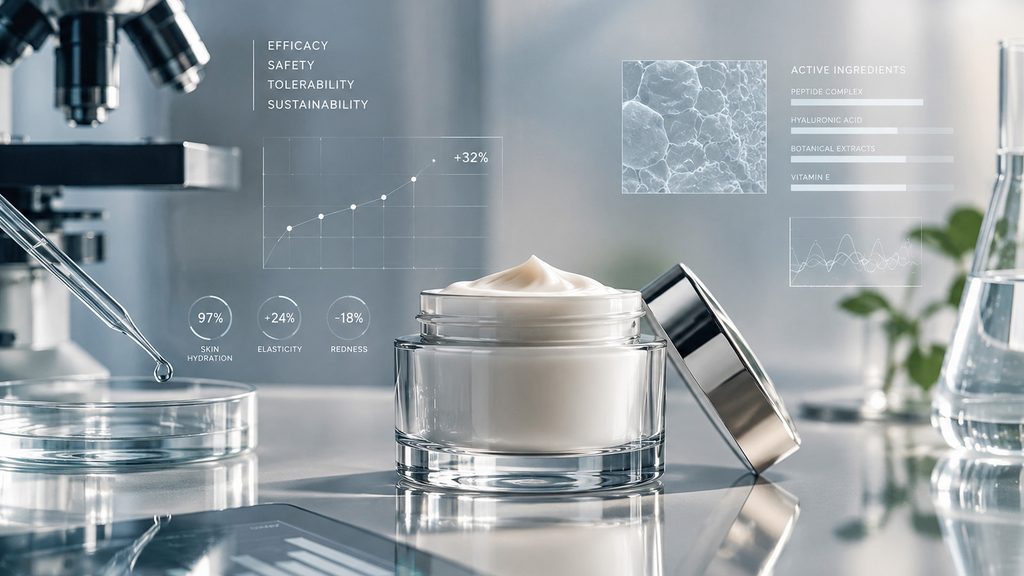
This acceleration is particularly visible in beauty and wellness. Both categories are currently undergoing a fundamental reset centered on efficacy. For decades, beauty marketing relied heavily on suggestion and aspiration. That approach is increasingly being replaced by demands for demonstrable results. Ingredients such as retinol and peptides were early indicators of this development. More recently, GLP-1 medications and semaglutides have begun to change how consumers think about consumption, health, and personal transformation. The implications extend far beyond skincare. Clinical effectiveness is now cited as a leading purchase factor by nearly half of consumers in the UK and US. Under this pressure, established branding terminology is losing authority. Terms such as “natural” and “clean” remain descriptions rather than verifiable proof points. Without supporting evidence, such claims are becoming less persuasive.
The changing role of influence
The shift toward evidence is also changing how trust is distributed. Influencer marketing remains relevant, but the significant growth of celebrity influence observed over the past decade appears to have peaked.
Celebrity endorsements are unlikely to disappear completely. However, consumers seeking trustworthy wellness information are increasingly turning to verified experts, accredited peer communities, and clinical data instead of conventional influencers. Brands are also conducting more of their own research by collecting and analyzing data with the help of artificial intelligence and other digital tools. This enables research to be conducted at a scale that was previously difficult to achieve. The result is a different approach to marketing. Science is no longer being used merely as a promotional device. Instead, verified expertise, evidence, and transparency are becoming elements of a broader trust architecture.
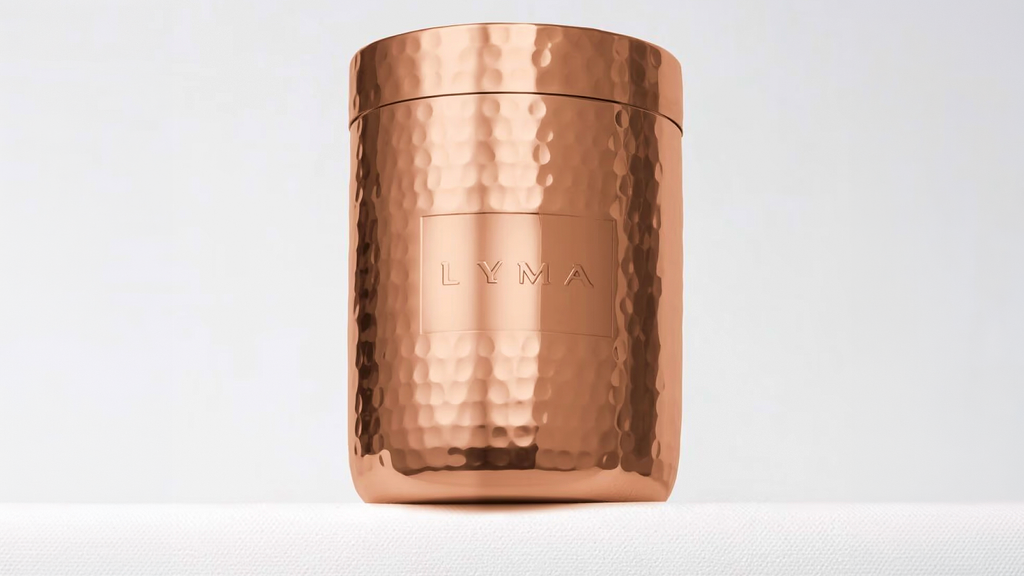
photo: LYMA
LYMA’s antimicrobial copper vessel combines packaging with a protection system for the product inside.
A market shaped by diffusion
This reframing also extends to business models. Beauty Pie, for example, uses a membership system designed to remove traditional retail markups. Its model focuses on the product itself, working with established laboratories and manufacturers while reducing additional costs associated with conventional brand positioning. Identity and design are not eliminated in this process but recalibrated. Many products remain carefully packaged, while the main value proposition lies in clarity and transparency.
Across the wider market, the dominance of traditional players is being challenged by the growing number of smaller brands with highly specific areas of expertise. It has become easier to move from an idea to product development and market launch. At the same time, it has become increasingly difficult to attract and retain consumer attention.
The quantified self and the data challenge
A similar tension is emerging in personal health data. There are now more than 287 million quantified-self users worldwide, while the biohacking market is projected to reach $100 billion by 2034. However, the accumulation of data has developed faster than the ability to interpret it. Consumers are collecting large quantities of personal health information without always understanding how to use it meaningfully. The opportunity lies less in surveillance than in reflection. Engagement increases when data reveals previously unnoticed patterns in personal behavior. Spotify Wrapped provides a useful model because it transforms accumulated information into an accessible reflection of individual habits. Trust nevertheless remains a major barrier. Consumers are not yet fully comfortable allowing AI systems to handle sensitive personal health data. Overcoming this concern will represent the next important threshold for the sector.
Toward a functional aesthetic
The growing emphasis on performance does not mean that beauty will disappear from packaging design. Instead, beauty will increasingly be expected to serve a purpose. Every touchpoint, from packaging to the product itself, must reinforce the intended function. That purpose is also becoming less fixed as the market moves toward customizable systems involving blending, layering, and personalization. Consumers no longer want only to purchase a predefined product. They increasingly expect to influence what it becomes and how it performs for their individual needs. The future of packaging will therefore be defined by more than surface, signal, or storytelling. It will be defined by evidence – functional, measurable, and visible at every relevant touchpoint.

Christopher Sanderson
Co-founder, The Future Laboratory,
London, UK,
www.thefuturelaboratory.com