The perfumery business is performing well, largely because it is benefiting not just from the opening of new markets, but also from the growth of niche brands, which are seducing growing numbers of consumers. In this context, packaging is part of the equation. Standard or bespoke? It is a legitimate question.
Niche brands, closely watched by luxury’s heavyweights as gems to be grown, base their models on dynamic growth. Their backdrop is the internet, where knowledgeable, demanding consumers make their choices from an extremely competitive offer.
This means brands need strong to offer strong differentiation via their commitments, their quality and the creativity of their offer, and this stands true throughout the value chain
This is where packaging comes into play as a clear added value. Its development must be swift and effective for moderate volumes that fluctuate widely; an agile operating model is key.
From container to packaging
In marketing school, we are taught that packaging has a practical role: to contain, to preserve, to protect – but that is not all. It informs the consumer, indicating certain legal elements, and is an object of seduction, inciting desire. Its shape, its materials and its feel all create an experience and inspire the act of purchase. Who hasen’t chosen a bottle of wine for the originality of its label, a makeup compact because it is attractive? Fragrance is no exception, quite the contrary. Bottles battle to be the most audacious, and the cap becomes an object in its own right. Designers go to town, forcing manufacturers to push the limits of what is technically possible.
A pack, but not at any cost
Niche brands have a specific model: their teams are usually small, their budgets limited and times-to-market short, and most of all, they often have a strong commitment to sustainability, from ingredients to packaging. This transparent approach naturally attracts brands toward local sourcing and eco-design, which become an integral part of the sales pitch. In this context, the development of a specific glass shape can be slow and costly, with requirements for large volumes. The same is true for the cap, and for the secondary packaging (box, coffret…). From a development standpoint, niche brands demand the best compromise between speed, cost and flexibility, but with no concessions on creativity and image. Faced with growth in demand, the biggest glassmakers have chosen to develop standard ranges, simple, effective ready-to-go solutions, with some offering lightweight glass, refillable solutions and recycled content. Then, it is up to brands to find their cap and elaborate their décor. Some fragrance houses choose this solution for limited editions, test runs or seasonal capsule collections.
Standard: a dirty word?
A so-called “standard” pack is designed and produced to correspond to a broad selection of tastes. The standard pack has two major benefits: it is justified by a simple shape that will seduce the broadest possible range of consumers. Choosing a standard product means significant savings on tooling and development, shorter lead times and less risks when it comes to sourcing and quality. When we look at fragrance launches on the market, some, no less striking in their creativity, are nevertheless born from standard products, both bottles and caps.
Nice-based Coverpla has built its positioning on a mix-and-match concept with varying degrees of personalization. The concept is simple. An emerging brand launches a fragrance or even a full product line. Aided by the team at Coverpla, it chooses from an offer of around 100 bottles within the company’s catalog, all distinctive for their original shapes, glass weight or eco-design… the same can be said for the cap, by playing with size, volume and material (Surlyn, PP, zamak, wood…) and the pump, chosen for its color and spray density, and the pump cover. Coverpla’s products offer European quality and the company guarantees their sourcing. They are available from stock or quickly to order, even in small quantities. The term “ready-to-go” illustrates the essence of these standard products.
Did I hear you say personalization?
Once the mix & match combination has been chosen, personalization comes by way of printing and décor (screen printing, hot stamping, coloring, material effects…). Coverpla performs these operations in-house, guaranteeing compatibility testing and piloting complex finishes hand-in-hand with its European partners. The added value of personalization offers a strong identity to a standard product. In the case of bespoke developments (products or décor), the team accompanies brands by putting its expertise and partner network at their service.
A wealth of choice
Since the launch of a premium fragrance is a long-term strategy, the biggest houses do not even ask the question: they develop their own glass shapes, design the cap, and impose their color references. They invest heavily in the value chain and control each step. Such major developments channel a brand’s storytelling and target a strong impact on the market.
A massive promotional campaign broadcasts the product’s image and justifies its price. That is the argument for packaging. Such developments can take up to two years, and this is nothing unusual for the major perfumery brands. But niche brands, we have seen, have a diametrically opposed model: speed, efficacity, cost, quality, commitment and transparency. While they naturally opt to personalize a standard pack, they do not exclude bespoke solutions once their reputation is established and reach scale.
Dare to compromise
Do we really need to make a choice between bespoke and standard? Sometimes, brands opt for hybrid solutions. They associate a standard bottle with a custom cap, for instance. The Italian brand “Egoscentrique” is one good example: it chose a Coverpla bottle to match a cap with a strong identity. The product resembles a sculpture where it is impossible to distinguish between the bottle and the cap.
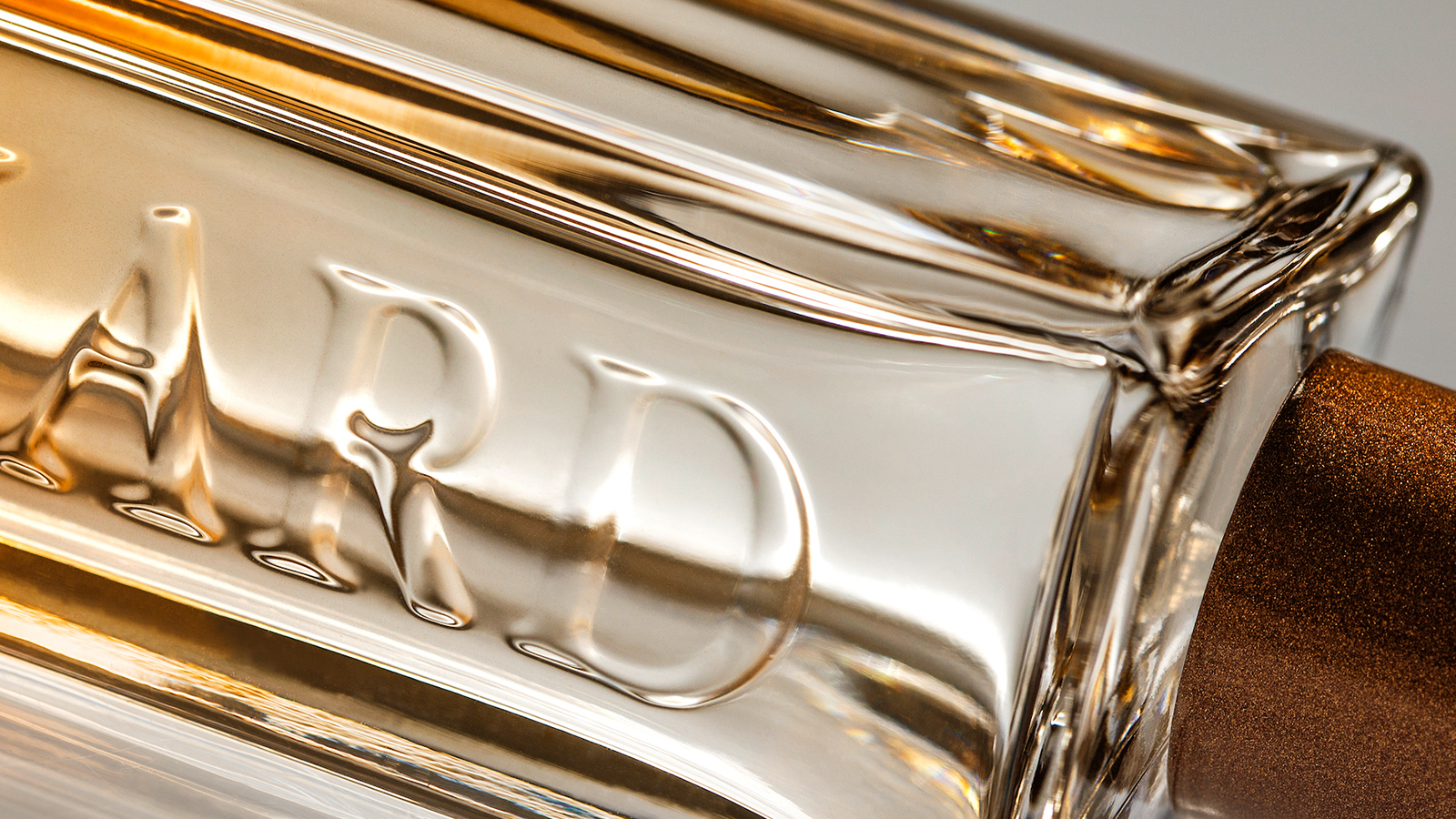
Transforming the neck of a bottle to make it refillable is a common request, and in certain cases, Coverpla invests alongside its customers in the development of new products or references that subsequently become part of its catalog. In-mold engraving is another example. “Maison Galimard” chose this solution for its “Eaux de Parfums” and “Parfums for men”. Its name thus appears embossed onto the “Soni” bottle, giving it a strong identity. The same is true for caps, for which certain brands choose to personalize the color in line with their brand identity, with others opting for engraving (+ photos). That is the audacity of a hybrid solution for a 100% winning strategy.
Sébastien Saussereau
CEO, Coverpla, Nice, France,
www.coverpla.com