The evolution of contemporary dermo-cosmetics is closely linked to the transition from conventional extraction methods to controlled biotechnological processes. Among these, precision bio-fermentation represents one of the most advanced responses to the need to combine high biological efficacy with stringent environmental sustainability criteria and rigorous chemical standardization across batches.
Conventional extraction techniques relying on chemical solvents or invasive thermal processes present well-documented limitations: variability in phytocomplex composition due to climatic and seasonal factors, potential degradation of heat-labile molecules, and the ecological impact of solvent wastewater disposal. In contrast, precision bio-fermentation harnesses the metabolic activity of selected proprietary microbial strains to transform plant matrices into high-value active ingredients, biotransforming complex macromolecules into lower-molecular-weight fragments with significantly increased bioavailability and transcutaneous penetration.
From a sustainability standpoint, this platform is fully aligned with circular economy and upcycling principles. Many starting materials are agricultural by-products from the food industry – notably cladodes of Opuntia ficus-indica recovered after fruit harvest and seasonal pruning from Italian integrated farming – valorizing agricultural waste through traceable supply chains. Processes operate in closed, controlled bioreactors, drastically reducing land and water consumption and yielding readily-biodegradable ingredients.
The Precision Bio-Fermentation Technology Platform
The process comprises four sequential and controlled stages:
Strain selection: specific, non-GMO bacterial strains are selected based on their unique enzymatic profile and demonstrated ability to biotransform the target plant matrix, generating bioactive secondary metabolites absent from non-fermented extracts;
Plant matrix preparation: the substrate, often derived from standardized agricultural by-products, is introduced into the fermentation system under controlled conditions;
Controlled microbial culture: microorganisms secrete extracellular enzymes that break down plant cell walls and cleave glycosidic bonds, releasing trapped active ingredients and generating new bioactive secondary metabolites with enhanced skin bioavailability;
Filtration and purification: the microbial biomass is separated through filtration and sterilization, yielding a purified ingredient free of living cells and compliant with global regulatory frameworks.
Trichological Application: Scalp Barrier Modulation and Homoestasis
The scalp is a particularly complex and fragile skin ecosystem, characterized by a high density of hair follicles and sebaceous glands and an epidermal barrier inherently more permeable than other body areas. When its microenvironmental balance is disrupted by environmental stress, pollution, or hormonal fluctuations, a chronic inflammatory cascade is triggered, leading to barrier dysfunction, disordered desquamation, and dandruff. The aetiology involves three interconnected factors: individual predisposition to inflammatory responses, sebaceous activity, and uncontrolled proliferation of lipophilic yeasts of the genus Malassezia. Unable to synthesize long-chain fatty acids de novo, this microorganism depends strictly on exogenous cutaneous sebum lipids; through extracellular lipases and phospholipases, it hydrolyses sebum triglycerides, releasing irritating oleic acid. Its penetration into the stratum corneum alters intercellular lipid architecture, induces inflammation, accelerates keratinocyte turnover, and produces visible desquamation.
Precision bio-fermentation has enabled the development of a bio-fermented phytocomplex derived from the cladodes of Opuntia ficus-indica (INCI: Opuntia ficus-indica stem extract), engineered through the metabolic activity of the proprietary non-GMO strain Bacillus subtilis RB1. Sourced from Italian integrated farming as an upcycled by-product, the cladodes are processed exclusively by aqueous extraction, preserving the full biochemical fingerprint linked to the specific Italian soil and climatic profile.
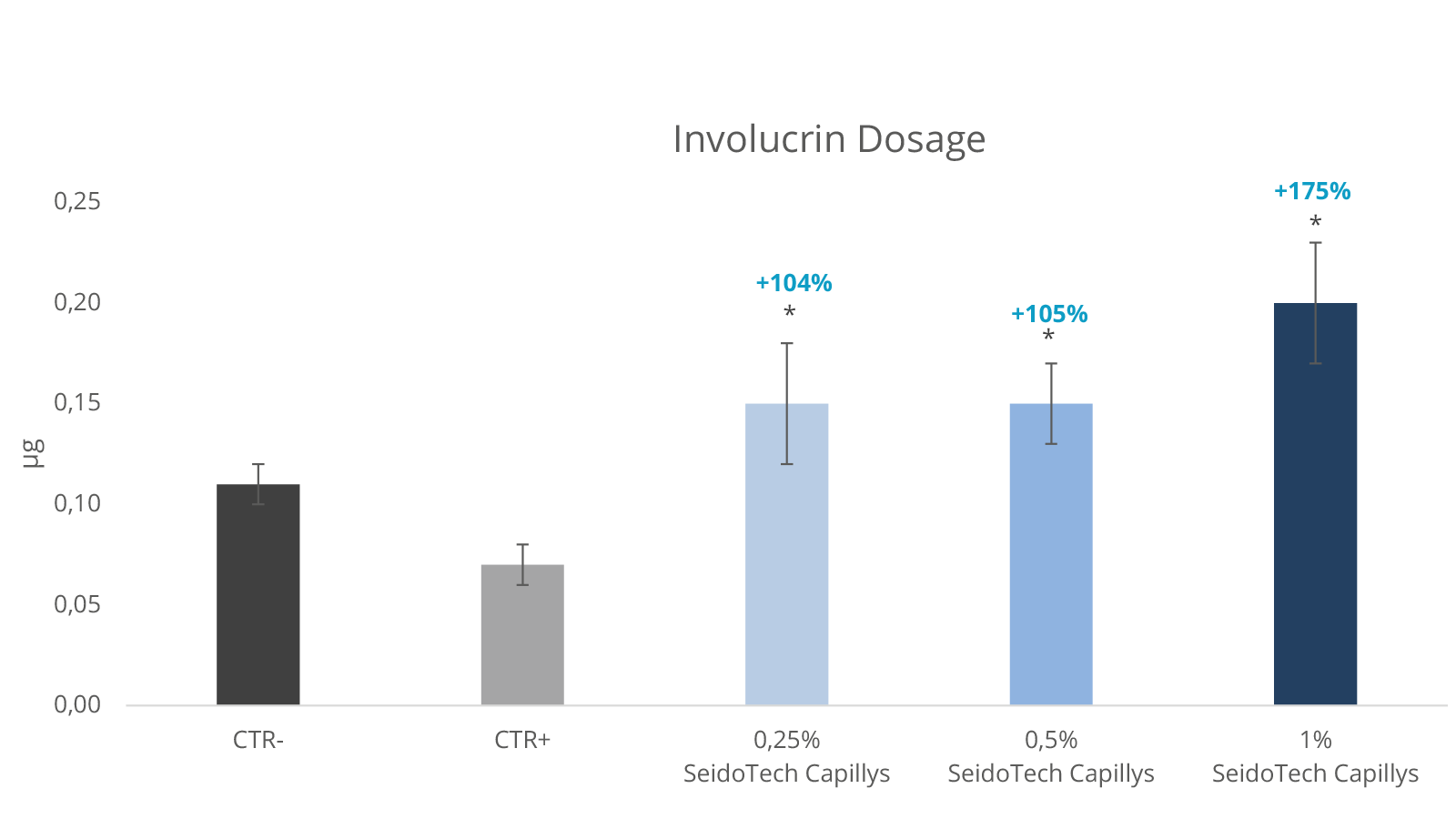
This active ingredient acts through three scientifically validated mechanisms: antioxidant activity (ROS neutralization) protecting the hair follicle microenvironment; anti-inflammatory modulation (TNF-□ down-regulation) arresting the cytokine cascade at its source; and barrier modulation through up-regulation of involucrin, a key structural protein of the cornified cell envelope. As reported in figure 1, in vitro testing on human epidermal keratinocytes (ELISA) demonstrated a dose-dependent involucrin increase of +38% at 0.25%, +46% at 0.50%, and +174.5% at 1% compared to non-fermented Opuntia ficus-indica extract at equivalent concentrations (p<0.05), directly evidencing the biological value added by the fermentation process. Involucrin acts as a transglutaminase substrate, covalently binding membrane proteins to form the highly insoluble cornified cell envelope, strengthening corneocyte cohesion, reducing transepidermal water loss (TEWL), and stabilizing the barrier against chemical, physical, and microbiological aggressions including Malassezia.
Further mechanistic evidence was obtained through transcriptomic analysis (GSEA – Gene Set Enrichment Analysis) on human epidermal keratinocytes, using DESeq2, edgeR, and limma-voom pipelines, comparing oleic acid-stressed keratinocytes with and without the bio-fermented extract. Results demonstrated modulation of the oxidative phosphorylation pathway, restoring mitochondrial bioenergetics and mitigating hypoxia-associated damage and interferon-mediated inflammatory responses at the genomic level.
Dermo-Aesthetic Application: Periocular Homeostatis and Microcirculation
The periocular region represents a uniquely demanding target. Histologically defined as transitional skin, it presents an average thickness of less than 0.5 mm with extremely low dermal collagen and elastic fiber density, a reduced stratum corneum, and scarce sebaceous glands, resulting in a deficient hydrolipidic film and constitutional predisposition to dehydration. Continuous biomechanical stress from blinking and facial expressions rapidly manifests as two categories of visible imperfections: periorbital bags from localized oedema, caused by lymphatic or microvascular stasis or orbital fat herniation; and dark circles, with multifactorial aetiology combining melanin hyperpigmentation and haemodynamic stasis, compounded by extravascular haemoglobin degradation products including iron pigments and biliverdin.
The same precision bio-fermentation platform has enabled the biotransformation of Vitis vinifera leaves via the proprietary strain Lactobacillus plantarum PBS067, breaking down polyphenolic complexes into biologically active, low-molecular-weight molecules with enhanced capacity to interact at the microvascular and extracellular matrix levels.
This bio-fermented phytocomplex exerts synergistic action across three mechanisms:
- Stimulation of microvascular function and lymphatic drainage, reducing capillary permeability and promoting interstitial fluid reabsorption to diminish periorbital bag volume;
- Antioxidant reduction of local oxidative stress, limiting melanin oxidation and haemoglobin degradation by-product accumulation to reduce dark circle intensity
- Stimulation of fibroblast activity, increasing extracellular matrix density to improve skin elasticity and smooth periocular fine lines.
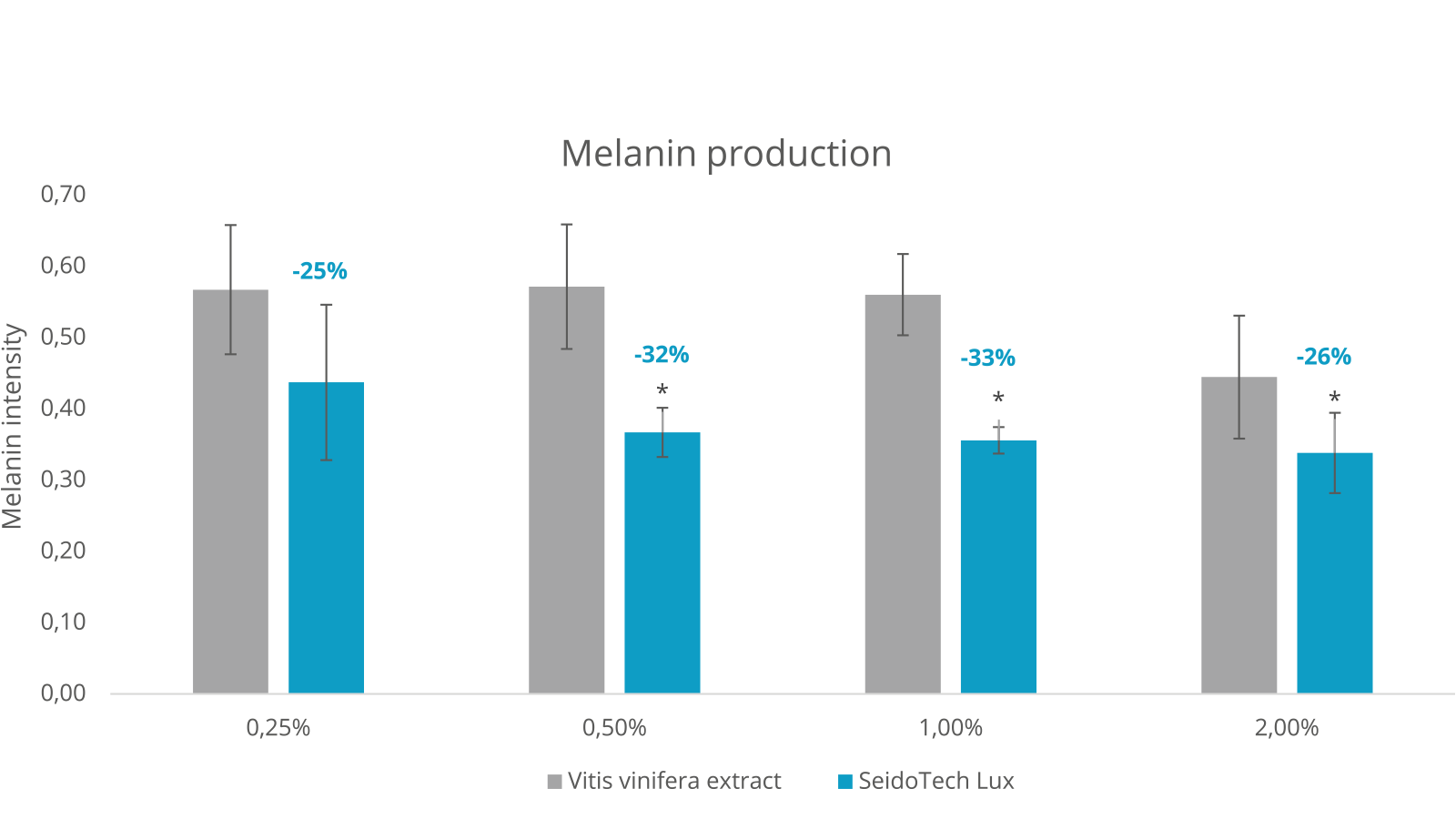
Figure 2 shows the results from the in vitro test about the tyrosinase modulating activity of the fermented active ingredient compared to the unfermented supernatant.
Efficacy was validated in randomized clinical studies on 120 subjects: colorimetric, profilometric, and clinical grading assessments confirmed statistically significant reductions in bag volume and dark circle intensity, with increased hydration and periocular radiance.
Conclusion
Precision bio-fermentation technology fundamentally redefines the design of functional cosmetic actives. The guided biotransformation of Opuntia ficus-indica via Bacillus subtilis RB1 and of Vitis vinifera via Lactobacillus plantarum PBS067 produces phytocomplexes with scientifically demonstrated superiority over conventional extraction: involucrin stimulation validated at the transcriptomic level, anti-inflammatory and antioxidant synergy targeting the root causes of scalp dysbiosis, and clinically proven periocular efficacy across vascular, pigmentation, and matrix dimensions. Rooted in upcycling, circular and traceable supply chains, and solvent-free aqueous processing, this biotechnological platform meets the cosmetic industry’s growing demand for actives that simultaneously deliver measurable therapeutic performance, dermatological safety, and genuine global sustainability.
References:
1 Borda LJ, Wikramanayake TC. Seborrheic Dermatitis: Pathogenesis and Treatment. Am J Clin Dermatol. 2015;16(6):509–33. DOI: 10.1007/s40257-015-0158-z.
2 Trüeb RM, Henry JP, Davis MG, Schwartz JR. Scalp condition impacts hair growth and retention via oxidative stress. Int J Cosmet Sci. 2018;40(6):556–570. DOI: 10.1111/ics.12501.
3 De Angeli E, et al. The Role of Skin Barrier in Seborrheic Dermatitis. J Cosmet Dermatol Sci Appl. 2014;4(4). DOI: 10.4236/jcdsa.2014.44034

Giorgio Carelli
Product Manager, Roelmi HPC, Origgio, Italy,
www.roelmihpc.com