
Over the years, sun care has developed to be a concept that goes far beyond tan supplements.
The importance of sun protection has become even more prominent, as UV-induced damage can cause skin cancer. So minimising the risk of sun burn is imperative. However, protecting the skin is not easy, and these are several things to bear in mind:
- even the most effective sun blockers cannot provide 100 % protection
- UV rays might cause DNA damage, even when the SPF works
- we do not know how long sunscreen products work in real life with particular individuals
- tanning and obtaining a dark complexion is always a risk
- there should be no whitening of skin, even in water
Multifunctional products with SPF combine several benefits, such as colour correction or coverage of blemished skin, even in colour cosmetics. Consumers are aware that too much UV light can damage DNA and destroy cells1.
Sun rays also provide heat, which is an effect of infrared rays (IR). Too much can cause damage.
Holistic sun care addresses all these aspects, in detail:
Sunscreens
Sunscreens are ingredients that absorb UV light at specific wave lengths, UVA (290–400 nm) and UVB (290–320 nm). Not only sunscreens provide an SPF, but natural oils, too. But, as this SPF rarely exceeds 52, it alone is not enough.
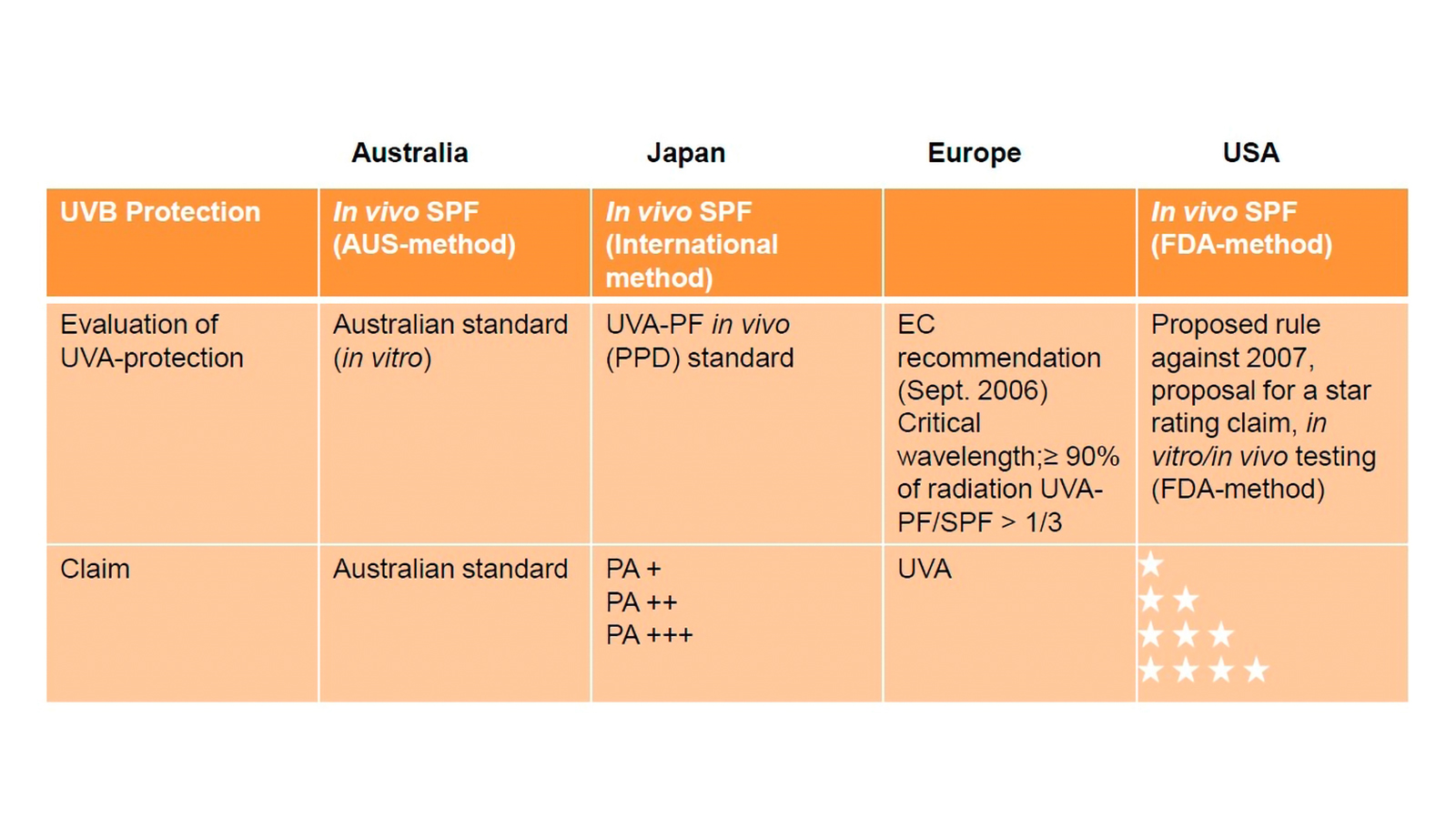
In the EU, the SPF against UVA must amount to at least 1/3 of the SPF of the product to carry the specific UVA seal3:
In other regions of the world there are different classifications and labels.
In Europe only 25 UV-filters are approved4. Not all of these are used frequently. The selection provided by Ashland’s Escalol product range provides a mini tool box to combine the different UV-filters, see table on page 18.
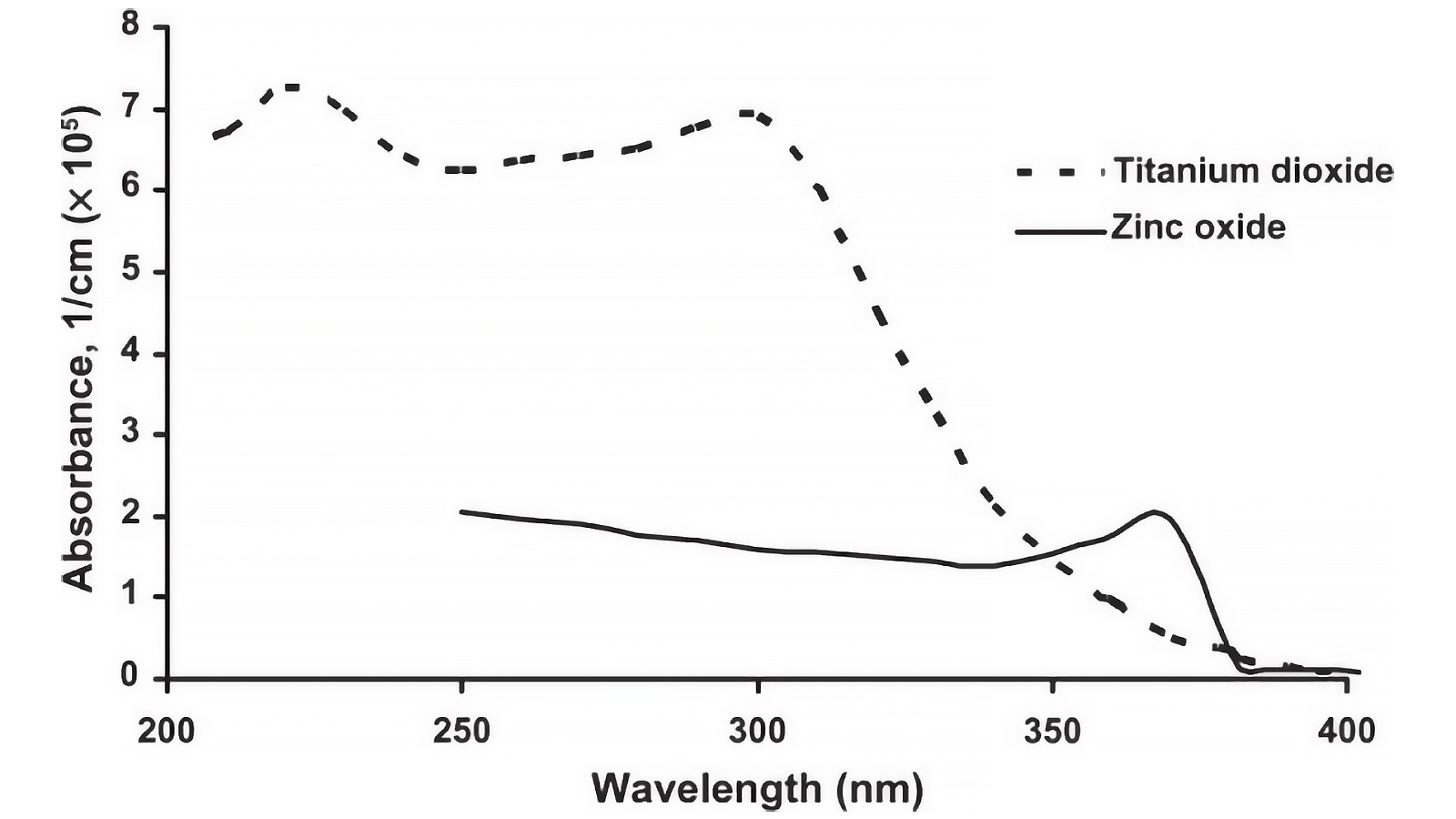
In addition to these UV filters, there are inorganic pigments, titanium dioxide and zinc oxide. Both minerals provide protection in the UVB range. Zinc oxide can provide even better UVA protection5 , see figure below. It can, however, be absorbed by the skin and metabolised, which compromises the long-term SPF. In this case coated minerals can be the solution.
Grant offers a broad range of coated material (non-nano), which can be used directly in sunscreen products*.
SPF boosters
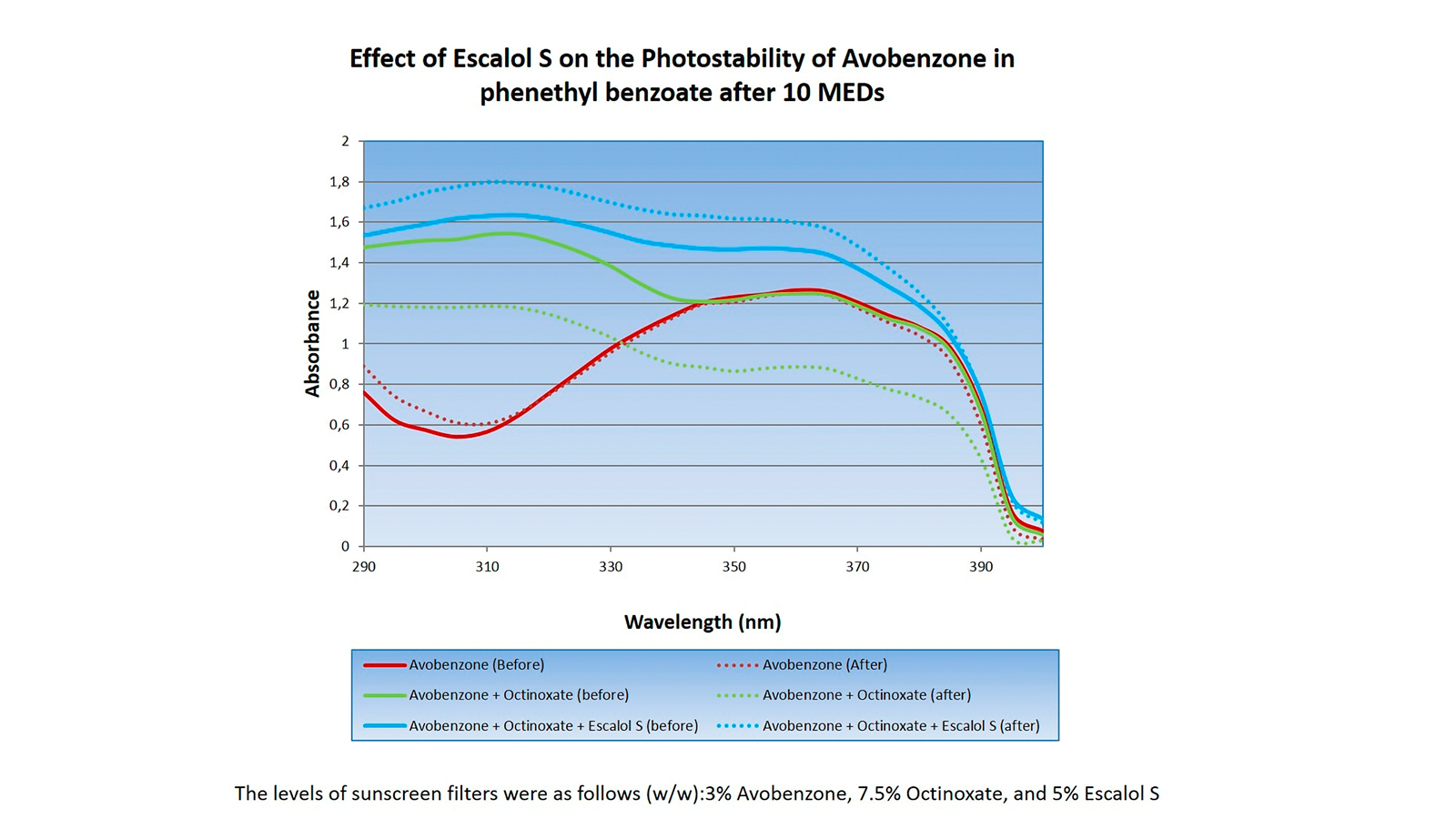
SPF boosting is based on synergies. Escalol S from Ashland boosts SPF synergistically with other SPF filters, both in the UVA and UVB range6, see figure on page 19. Selachyl Alcohol V from Nikkol, a w/o emulsifier and precursor of lamellar liquid crystal structures, may boost SPF and facilitates a homogeneous dispersion of titanium dioxide7. When sunscreens are easily distributed, the product’s efficacy is maximised.
LexFilm Sun from Inolex homogeneously disperses sunscreens in products. It combines a film former (Polyester-7) in an emollient (Neopentyl Glycol Diheptanoate), which creates waterproof sunscreen films on the skin.
Actives for protection against UV damage
Peptides are commonly known as wonder drugs in skin cosmetics, even in sun care. Survixyl IS from Ashland has been clinically tested in protecting the epidermal layers against UV-induced damage.
Chronogen from Ashland improves the natural self-protection of the skin and the regeneration of DNA after UV damage. Ashland’s Caspaline 14 reduces TEWL and the amount of damaged cells during sun exposure.
Protection against UV-induced erythema can be provided by Stearyl Glycyrrhetinate from Maruzen.
Vital ET from Ashland significantly reduces skin irritation and red spots. Telosense from Ashland protects against UVB-induced damage and increases skin moisture.
VC-IP from Nikkol penetrates the skin and protects against UVA and UVB. It supresses melanogenesis, even under chronic UV exposure.
Zinc-Glycine Complex from Nikkol helps to activate the protective mechanisms of cells such as the suppression of intracellular ROS-expression and increase of metallothionein (MT).
Water and salt water resistance
Some formulation technologies help to create water-resistant formulations that can be compatible even with salt water.
Typical sunscreen formulations create hydrophobic films on the skin, which can cause an undesirable whitening effect in contact with water.
Ashland’s Hydrosheer concept avoids this undesirable effect. Its specialty polymers form clear films in the presence of water, e.g. Advantage Plus. □It can balance the dielectric constant of ester-based emollients. Similarly, a combination of Allianz OPT and cross-linked FlexiThix polymer works in gels. In emulsions, a combination of a thickener such as Carbomer together with a complex emulsifier can create a lamellar gel, e.g. ProLipid.
Emollients and film formers
Ingredients that form protective layers on the skin and make them soft are called emollients. Film formers enhance these properties.
Innovative concepts include compatibility with nature. Lexfilm Sun, a compound from Inolex, contains the emollient LexFeel 7. Additionally, there is Vellaplex, a natural film former that is readily biodegradeable and is delivered with a Cosmos Certificate.
Silicones such as Dimethicone from Wacker provide skin feel, good spreadability and long-lasting coverage. For natural cosmetics, there are alternatives, reflecting at least the skin feel of standard dimethicones. Inolex offers LexFeel N at different viscosity levels.
Combining emollients with film formers is a way to make protective layers more persistent and/or modify their appearance. Advantage Plus from Ashland, for example, reduces shine on skin. Antaron Sensory polymer, also from Ashland, adds a desirable sensory feel and decrease in shine, enhancing the water-resistance in sun care formulations.
Moisturisers
It is impossible to avoid water loss while exposing bare skin to sun light. Moisturisers such as hyaluronic acid (HA) work in different levels of the skin. Chemically modified HA can even repair the barrier function. Bloomage is a source of HA-Types, even pharmaceutical grades. Kewpie Corporation offers different HA derivatives.
There are also peptides that can both moisturise and protect the skin against the effects of UV rays, e.g. Prolixir S20 from Ashland.
Actives for skin cell cleansing
Ashland’s Serenityl, an extract from the condurango vine, has been explored as a multifunctional ingredient. Particularly noteworthy is that it maintains the autophagy process, which continuously clears damage from skin cells8.
Tests results* showed an increase in LC3 of 28% and of LAMP2 by 16% in ex vivo human skin treated with 1% Condurango extract.
Thus far, the benefits of this extract have been explored in anti-pollution concepts focusing on cigarette smoke. It was tested on the LAMP2 autophagy marker in ex vivo skin from different donours at 21, 41 and 62 years of age. The application in sun care products is a new potential for this multifunctional ingredient.
Numerous options for holistic sun care
There is a multitude of different possibilities to provide holistic sun care. Sunscreens and other functional ingredients counter the effects of UVA and UVB-rays, as well as heat and infrared rays. To protect skin from water loss and to maintain the barrier function of the skin is a must in state-of-the-art sun care. Cosmetic aspects such as avoiding whitening are offered by specific product technologies.
Active ingredients can protect the skin from a potential UV overdose. Ultimately holistic sun care has much in common with anti-pollution and anti-ageing concepts, which can be adapted to this case.

Author:
Dr. Nora Schiemann,
Regional Technical Manager,
IMCD, Cologne, Germany
www.imcdgroup.com