In recent years, the packaging sector has come under increasing scrutiny, as brands seek to reconcile aesthetic expectations, technical properties, regulatory constraints, and environmental responsibility. This growing focus has accelerated the exploration of alternative materials and production methods.
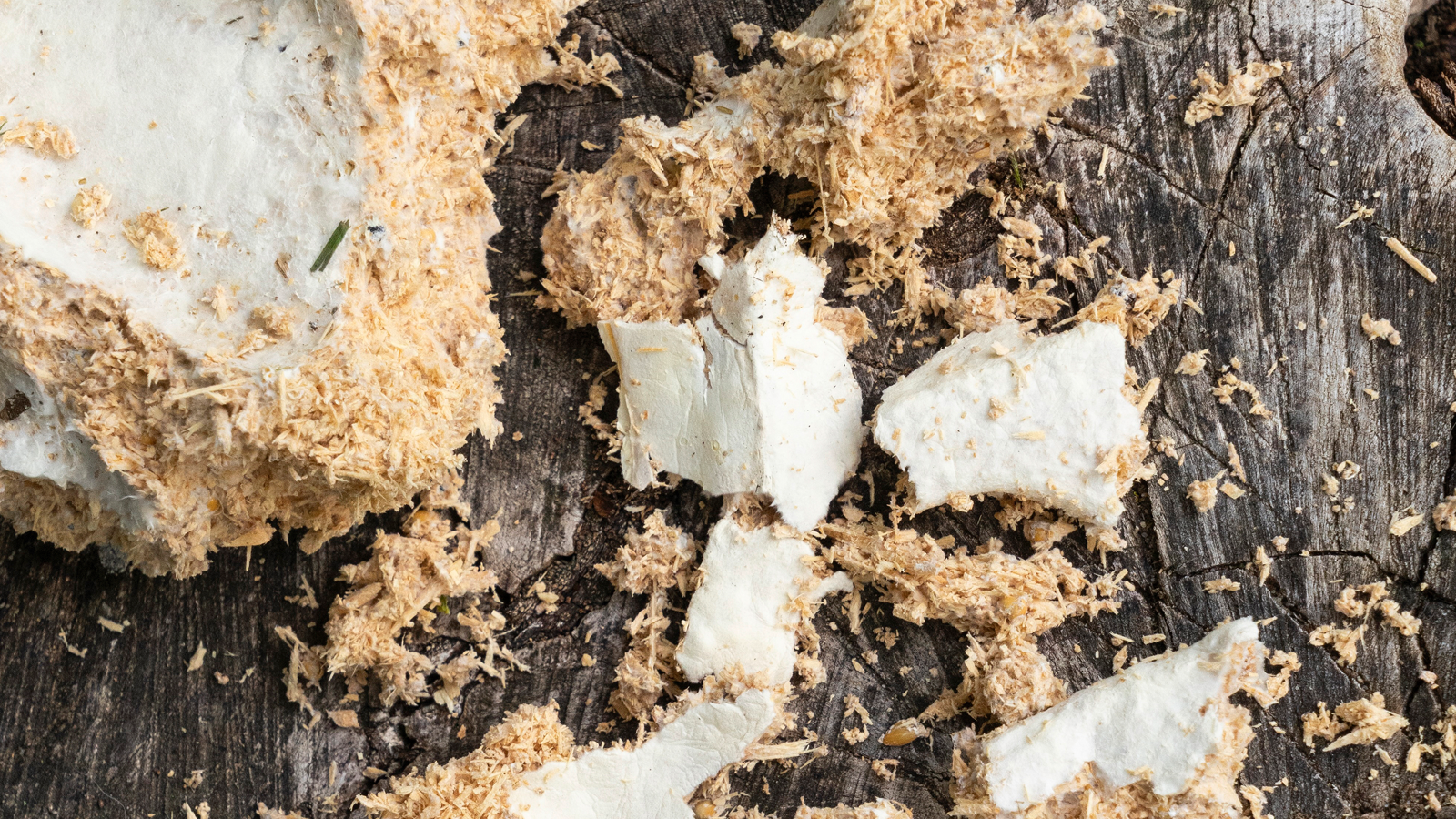
Within this landscape, Permafungi has been exploring the potential of bio-based packaging, thanks to their growing expertise in mycelium: the root-like network of fungi. By cultivating this natural binder on organic residues, they contribute to the emergence of a new category of materials that sit at the crossroads of design, biology, and circular economy principles.
Packaging Industry at a Turning Point
Driven by increasingly-stringent regulations and heightened consumer awareness, the packaging industry is undergoing a profound transformation. This shift is particularly complex in the cosmetics sector, where packaging plays a central role in shaping perceived product value. Materials that currently claim to be sustainable, such as recycled plastics, glass, and paperboard, still present significant limitations. Their production often remains energy-intensive; recyclability is imperfect, and some may contain persistent substances of concern. Additives such as fluorinated compounds (PFAS), often referred to as “forever chemicals”, are increasingly scrutinized for their environmental persistence and potential health impacts.
More broadly, environmental externalities are still rarely reflected in material costs. In this context, bio-based materials such as mycelium can significantly reduce environmental impact, with up to 95% lower CO2 emissions than plastics and around 50% compared to paper-based materials. In this context, the concept of “smart eco-packaging” is evolving beyond impact reduction. It now calls for a fundamental rethinking of how materials are designed, used, and reintegrated at the end of their life cycle.
The Limits of Conventional Approaches
Despite ongoing progress, most packaging systems remain fundamentally linear: extract, produce, consume, and discard. Even when recycling is implemented, materials often degrade in quality and require significant energy input to be reprocessed. Cosmetic packaging must also meet specific technical requirements, including product protection, chemical neutrality, visual appeal, and transport performance. These constraints can slow down the adoption of alternative materials, which are sometimes perceived as less standardized or less predictable. Economic pressures further complicate this transition, as brands must balance long-term sustainability commitments with short-term cost and operational considerations.
Mycelium: The Emergence of a New Material Category
Within this evolving landscape, mycelium-based materials represent a notable shift. Unlike conventional materials that are manufactured through extractive and transformative processes, mycelium is cultivated.
Acting as a natural binder, mycelium can grow around organic substrates such as wood residues or client production residues (e.g., grape marc, coffee grounds, etc.), forming solid structures within about ten days. This growth process requires minimal water and energy usage and does not rely on chemical additives.
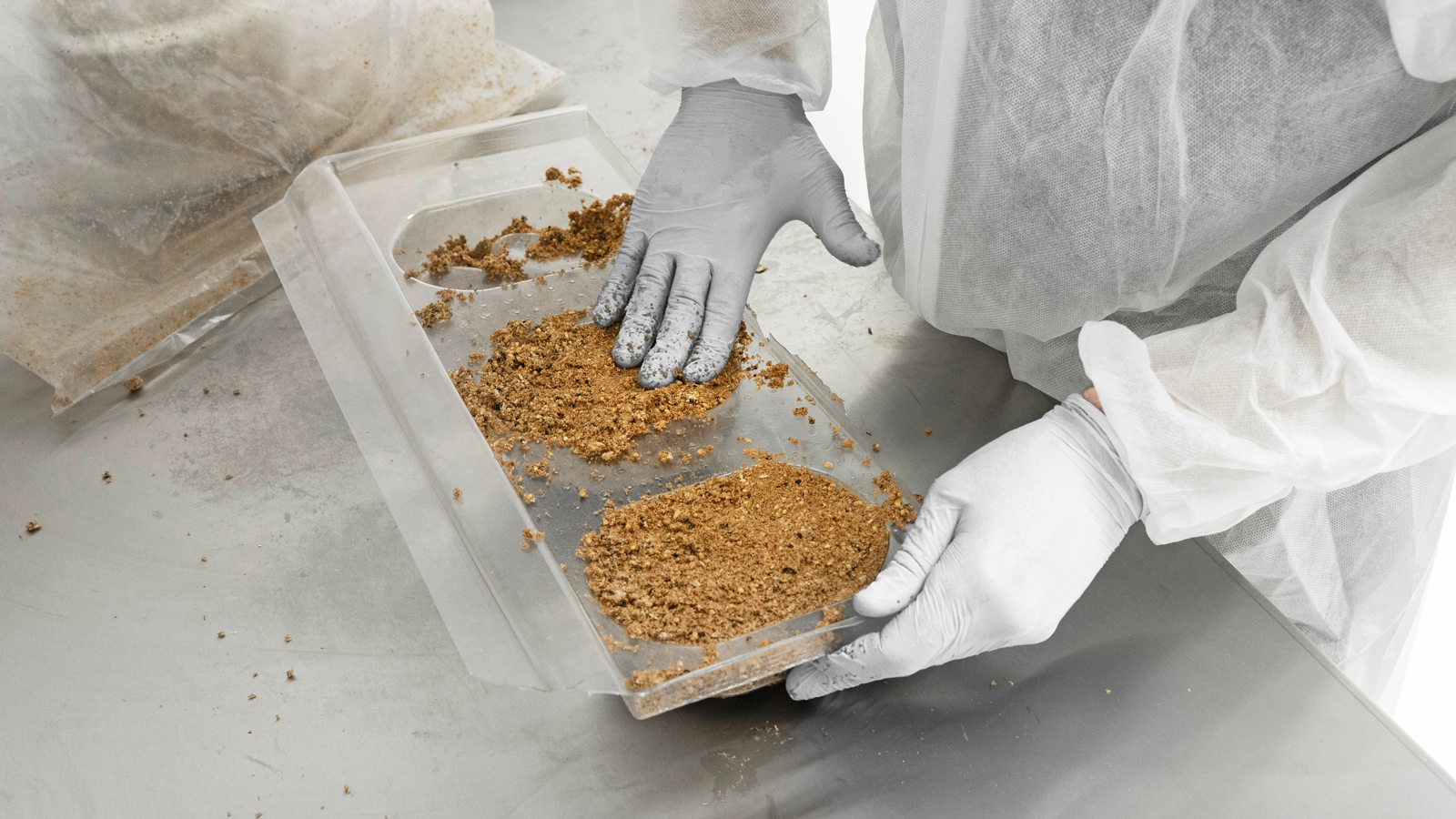
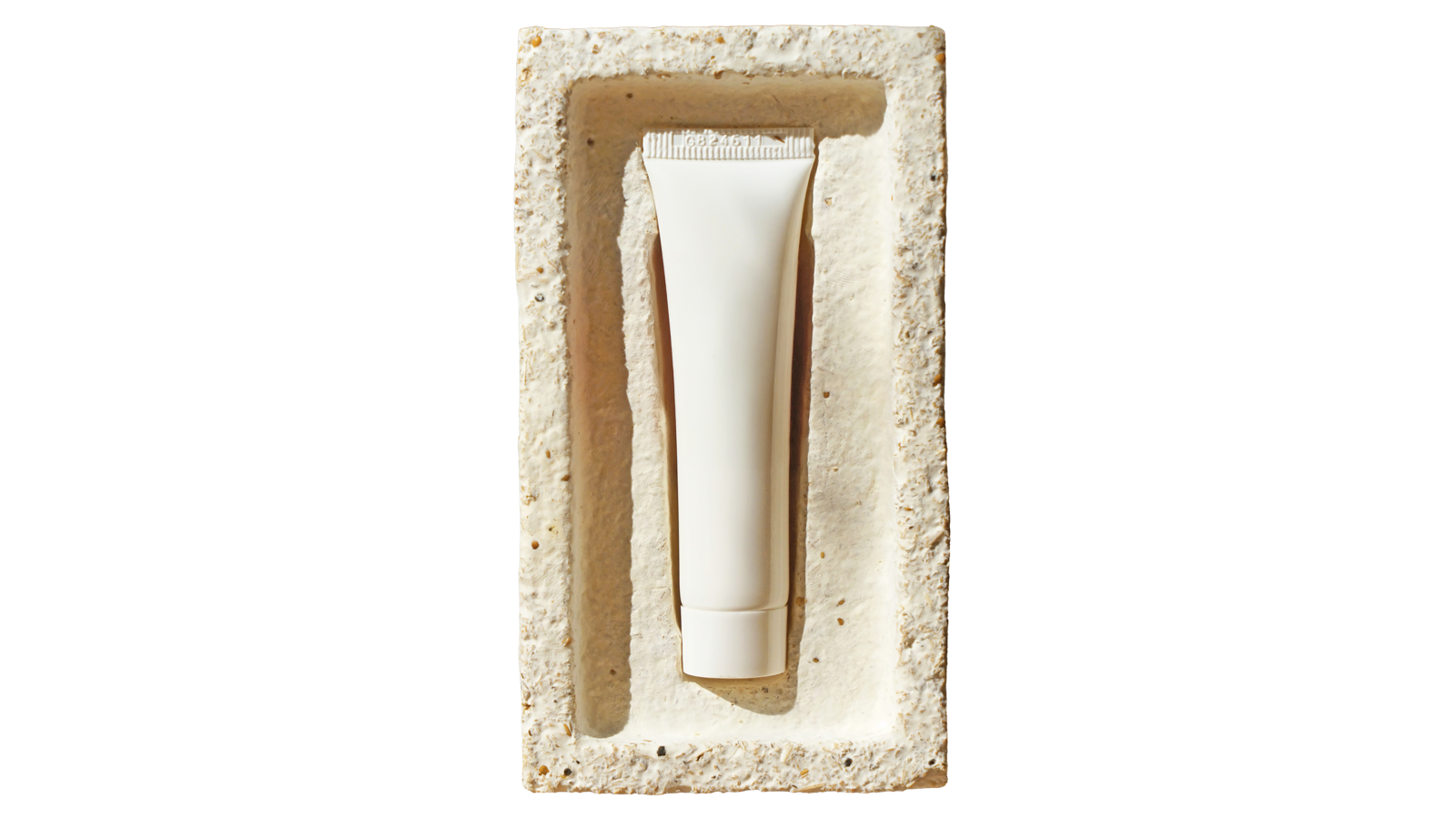
Organic matter, such as sterilized sawdust, is combined with fungal mycelium and placed into reusable molds, where it grows at ambient temperature. After a growth phase of a couple of days, the material is dried to halt development, resulting in a stable, inert, and functional form. Unlike materials that depend on industrial furnaces and high-temperature processing, mycelium is dried through simple ventilation over less than a week. This approach significantly reduces energy demand while preserving the material’s intrinsic properties. Inspired directly by natural processes, this method reflects a biomimetic approach: materials are “grown” rather than manufactured, leading to substantially lower environmental impact compared to conventional options like molded plastic or paper-based packaging. The resulting material is lightweight, protective, biodegradable, and visually distinctive, with a soft, slightly fibrous texture and natural tones.
Biomimicry as a Design Principle
Biomimicry draws on solutions refined by living systems to develop innovations that are both efficient and resource conscious. Mycelium illustrates this principle clearly: by transforming organic residues into robust and compostable materials, it demonstrates that performance and sustainability can coexist. Such approaches contribute to the development of materials that are not only functional but also aligned with the cycles and balances of natural ecosystems.
Local Production and Circular Systems
Beyond the material itself, mycelium encourages a rethinking of production models. Today’s packaging supply chains are often globalized, complex, and vulnerable to disruption. Mycelium-based materials, by contrast, enable localized and circular production systems. By valorizing readily available organic residues, such as sawdust or agricultural by-products, they operate within regional resource flows rather than relying on imported raw materials. This territorial approach can help reintroduce productive activities into highly service-oriented urban areas, while fostering more resilient ecosystems where material flows are reintegrated locally rather than exported or discarded. In this model, circularity becomes operational; materials originate from organic residues and, at the end of their life, can return to the soil, contributing to regeneration rather than pollution.
In addition, Permafungi’s production unit has a significant capacity, supported by a new 1,400m² facility, operational for nearly a year, equipped with new machinery and designed around an optimized production flow that enables the efficient transformation of recovered materials into 100% biodegradable finished products. The building is designed to minimize its environmental impact, incorporating solutions such as solar panels and rainwater harvesting.
Packaging as a Brand Experience
In the luxury cosmetics sector, packaging extends far beyond its protective function. It contributes to the sensory and narrative experience of a product. Natural materials offer distinct opportunities in this regard. Their visual and tactile uniqueness creates a different type of connection with the object. A mycelium-based package does not merely contain a product; it embodies a story of transformation, natural processes, and temporality. This opens new perspectives for coherence between product and packaging. It also suggests potential loops of valorization, where organic residues from cosmetic production, such as plant-based ingredients, could be reintegrated into packaging materials.
The question of end-of-life is also reframed. For short-use packaging, the focus shifts from “how to recycle” to “what purpose can it still serve.” Biodegradable materials may return to the soil, enriching it rather than contributing to waste streams or downcycling processes. Under appropriate conditions, such materials can biodegrade within a matter of weeks, contributing to a regenerative cycle instead of accumulating in the environment.
Outlook and Ongoing Developments
As with any emerging material, the integration of mycelium-based solutions into established industrial systems is a gradual process. More broadly, the transition toward sustainable materials across the packaging sector remains influenced by structural factors, including existing industrial infrastructures, cost frameworks that rarely account for environmental externalities (such as environmental impact, pollution, or broader socio-economic effects like deindustrialization and job losses), and the continued reliance on well-established materials. While these factors can make innovative materials appear more costly at first, they do not fully reflect their long-term value. Within this context, mycelium-based materials are progressively gaining traction, supported by advancements in production processes, growing ecosystem collaboration, and increasing interest from brands seeking to explore new, more regenerative material pathways.
Conclusion
Mycelium illustrates a fundamentally different approach to packaging; not as a static industrial product, but as part of a broader living system. At the intersection of material science, design, and ecology, it challenges the traditional divide between aesthetics, performance, and sustainability. In a context where the luxury sector is being called to reinvent itself, such materials offer a compelling perspective, one in which packaging can be both desirable, unique and functional, while remaining aligned with the principles of the natural world.

Victoria Maertens
Communication Manager, Permafungi, Brussels, Belgium, www.permafungi.be