
Growing old without looking old: To date, the eternally sparkling fountain of youth has been no more than a beautiful dream. But in this respect, we can do more than we may think. Studies prove that by living a healthy lifestyle, it is possible for us to turn back the “age clock” of our cells. After 15 years of research, Beiersdorf AG, one of the pioneers in the field of skin epigenetics, achieved another milestone in terms of anti-aging with its patented Skin Age Clock technology.
The small light beside the door flashes green. The specially coded company ID of Dr. Elke Grönniger, Laboratory Manager, Skin Aging in the Applied Skin Research department, clears the way to one of the centerpieces of Beiersdorf AG. Only a few people have access to the rooms on the fifth floor of the research centre where a part of the team of a total of about 20 scientists has been working on the “epigenetics of skin” for the last 15 years. The international cosmetics company (known for brands such as NIVEA, Eucerin, La Prairie, etc.) with headquarters in Hamburg, Germany, is one of the first companies to carry out intensive research into the complex epigenetic mechanisms of skin aging – and how to turn back the skin’s “age clock.”
Epigenetics – an international trend
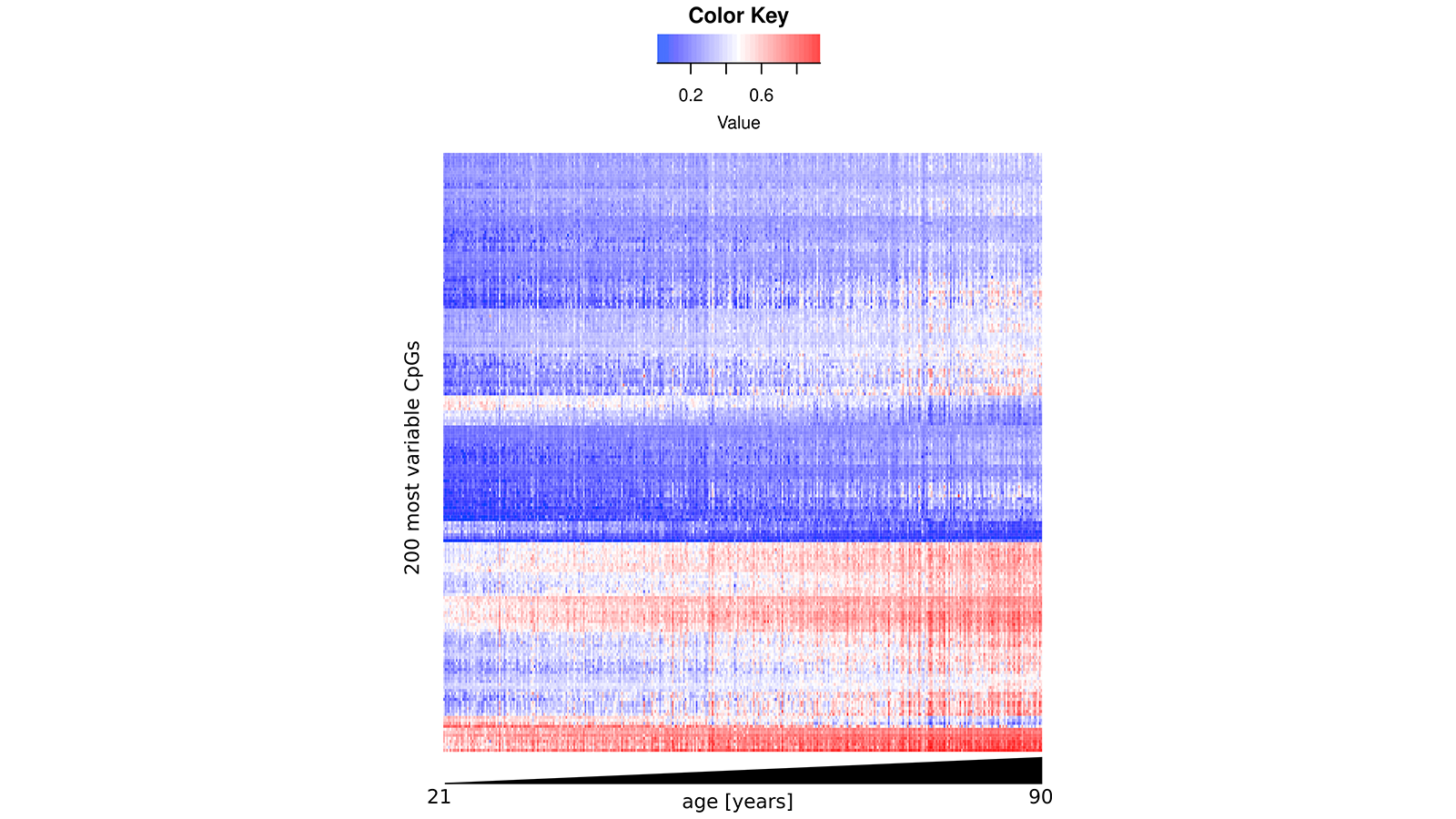
The word epigenetics consists of the Greek prefix “epi,” which means “on” or “additional,” and “genetics.” In fact, epigenetics is a kind of additional genetics. It is regarded as the link between external influences, such as nutrition, UV radiation, environmental pollution, and stress, and our genes. Epigenetics also determines the conditions under which certain genes are silenced and when they are reactivated. All of this takes place with no changes (mutations) in the genetic information in the genome. Instead, small, chemical molecules are attached to the DNA. Unlike mutation, this process, known as methylation, can be reversed. The pattern of epigenetic markers changes in a characteristic way as the body ages.
It has been known for more than 80 years that there are mechanisms in our body that allow us to develop differently in spite of our defined genetic make-up. Back then, the structure of human DNA, within its roughly 23,000 genes, was still unknown. British developmental biologist, geneticist, and philosopher Conrad Hal Waddington (1905–1975) is regarded as being a pioneer of epigenetics. But it wasn’t until the beginning of the 2000s that, with the growing importance of the life sciences, that epigenetics became a focus of international research.
850,000 methylation sites in the genome analysed
Dr. Elke Grönniger wrote her doctoral thesis on epigenetic changes with regard to skin aging in cooperation with the German Cancer Research Center (DKFZ) and has worked as a biochemist at Beiersdorf since 2008. The laboratory she works in at the company looks exactly as you would expect it to look: skin cultures are incubated at 37 degrees Celsius; the scientists then use these to develop 3D skin models in cell culture flasks in order to conduct their series of tests. “We reproduce human skin in vitro here,” Grönniger explains. Another room feels more like a small data centre where the focus is on processing data by means of algorithms. At the heart of the epigenetics laboratory are high-tech cluster computers and special chips that are used to measure DNA methylation biomarkers.
Our skin cells “use” more than 15,000 genes. You can imagine this as an individual skin code, which the cells read out when carrying out their tasks, such as renewing and repairing cells and producing important structural proteins like collagen. As we grow older, and depending on various external factors, certain blockades form on the skin code. These methyl groups reveal a specific epigenetic pattern. “Using chip-based methods allows scientists to measure about 850,000 methylation sites in the genome. This helps us understand which blockades are responsible for skin aging,” says Grönniger, pointing to a thick pile of printer paper for demonstration purposes. “One skin sample gives us 850,000 pieces of data that would fill 18,400 DIN EN ISO 216 pages. That corresponds roughly to the volume of 19 ring binders.” Since starting its epigenetic research, Beiersdorf has analysed more than 1,000 skin samples from subject groups and, in this way, has gathered important knowledge about the individual skin aging processes.

15 years of research results
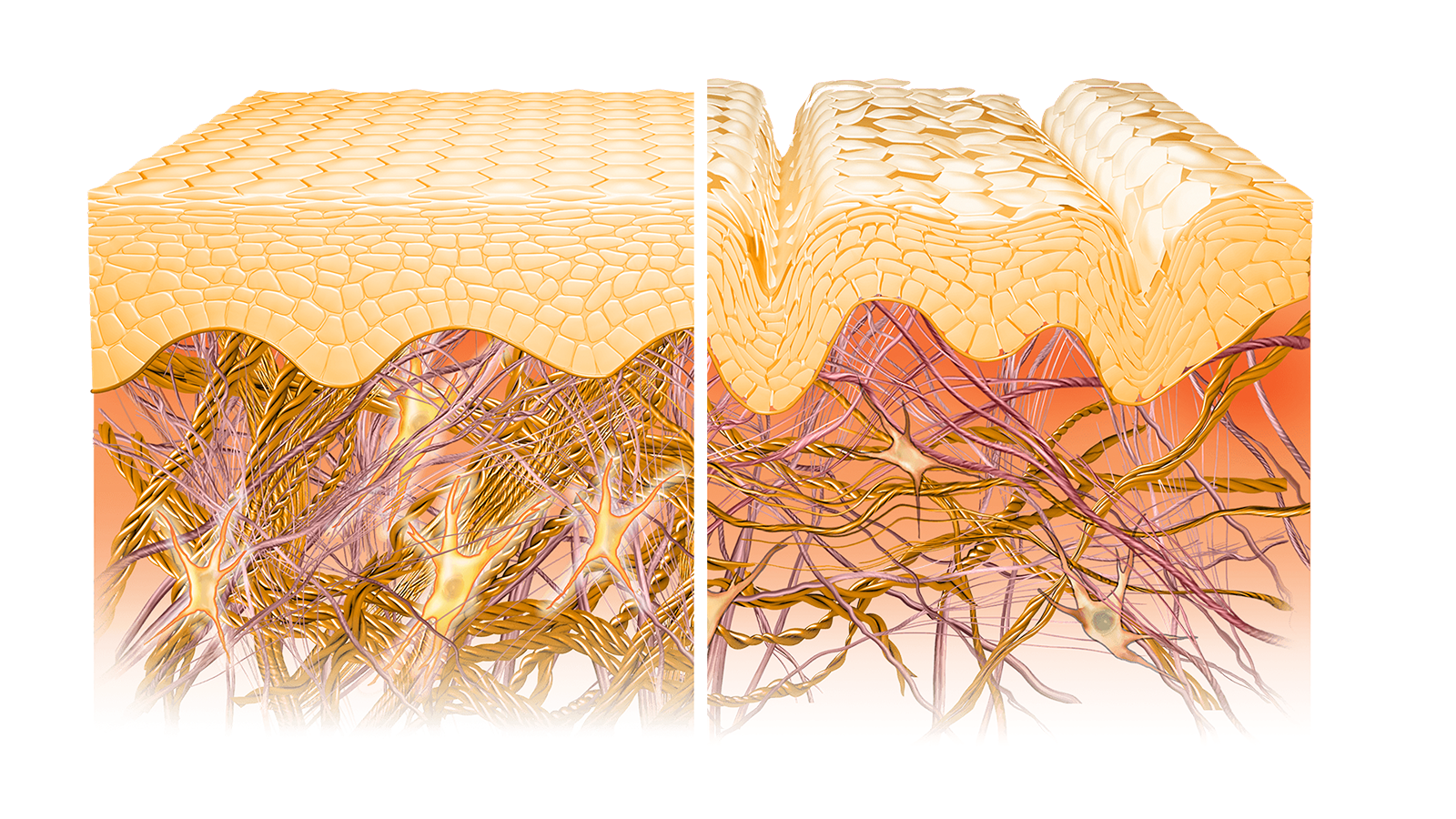
Beiersdorf began its epigenetic skin research back in 2008. From the very beginning, Beiersdorf scientists and their external collaboration partners uncovered remarkable results: for example, they were able to show that, during skin aging, hypermethylation of the DNA occurred at certain gene loci.2,3 “The results that we obtained in our initial study gave us a better understanding of how intrinsic and extrinsic skin aging is regulated and how significant the individual environmental factors for aging are,” explains Dr. Marc Winnefeld, Head of the Applied Skin Research Department, who has initiated the epigenetic research at Beiersdorf. “Back then, we obtained important starting points for new methods to fight age-related epigenetic modifications and to develop more effective products in terms of skin protection in the future,” explains the biologist with a doctor’s degree and author of numerous scientific publications. Beiersdorf recently started a close collaboration with the German Cancer Research Center (DKFZ) on an institutionalized basis: at the start of July, the two partners established a Joint Innovation Lab based at the DKFZ in Heidelberg, Germany. In the newly founded laboratory, in which €4.8 million will be invested over a period of four years, the teams of scientists plan to collaborate and research how age-related epigenetic changes affect cellular processes, discover which signs of aging are associated with this and how the epigenetic clock in skin cells can be turned back.
A Skin-Specific Age Clock
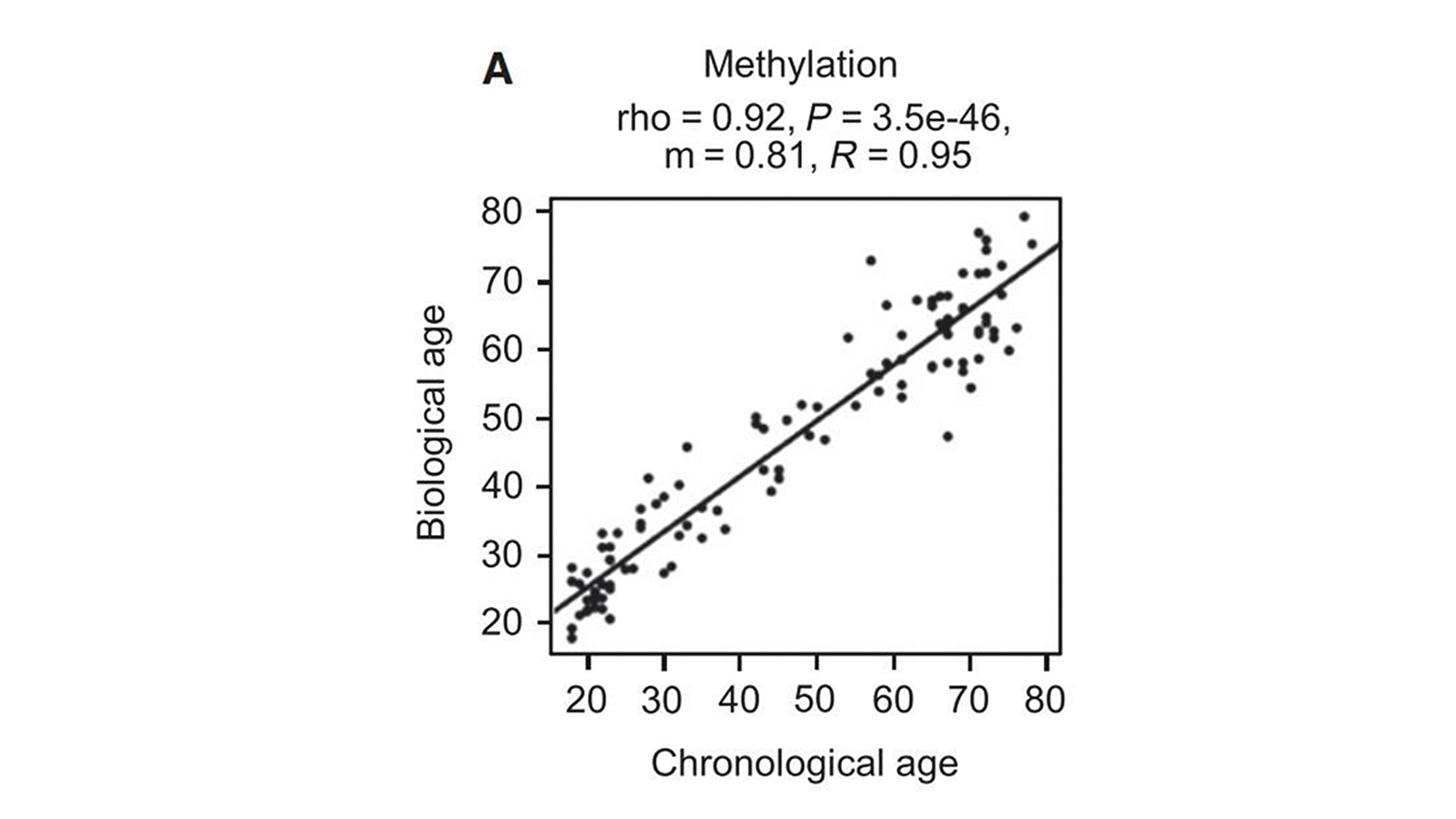
The researchers also generated a large set of human epidermis methylomes (N=108) and analysed them, using array-based profiling of 450,000 methylation markers in various age groups. Data analysis confirmed age-related methylation changes that could be used to predict the chronological age of sample donors with high accuracy.1
Already in 2012, the research group supervised by Dr. Marc Winnefeld and Dr. Elke Grönniger identified the first model active ingredients with epigenetic activity. Since then, the experts have investigated more than 50,000 substances and extracts. From 2016, the team worked intensively to develop a skin-specific “age clock” technology. The big breakthrough came at the end of 2021, when Beiersdorf was granted a patent for this “age clock.” The algorithm behind this Skin Age Clock technology, which is constantly “trained”, is a milestone in anti-aging research for human skin. By reading out the epigenetic patterns, age scientists can predict the biological age of the skin very precisely. They are also able to identify and select active ingredients and create product solutions that modulate the epigenetic pattern positively. The ambition is to not only slow down the aging processes but also turn back the biological clock and, as a result, improve the functions of the skin cells. According to Dr. Gitta Neufang, Corporate Senior Vice President Research & Development at Beiersdorf AG, who is also in charge of more than 1,000 researchers throughout the world, epigenetics is a very dynamic field of research with enormous potential – and it means an important step for the next major innovations in the field of skin rejuvenation. The goal is not only to balance out the deficits of the skin cells, but to fundamentally rejuvenate them.
Summary
Even in the future, the dream of eternal youth will not be fulfilled by simply applying a skin cream. However, as a result of the steadily increasing expertise in the field of epigenetics, it may be possible to drastically change the ways in which the skin ages. The Skin Age Clock technology developed and patented by Beiersdorf creates important conditions for measuring skin aging exactly and integrating active ingredients in creams that turn back the skin’s “age clock” – visibly rejuvenating the skin.
References:
1 Bormann, F., et al.: Reduced DNA methylation patterning and transcriptional connectivity define human skin aging. Aging Cell. 2016 Jun;15(3):563-71. doi: 10.1111/acel.12470. Epub 2016 Mar 23. PMID: 27004597; PMCID: PMC4854925.
2 Grönniger, E., et al.: Aging and Chronic Sun Exposure Distinct Epigenetic Changes in Human Skin; Plos Genetics, 2010 (6); www.plosgenetics.org.
3 Grönniger, E., Winnefeld, M.: Sonneneinfluss im neuen Licht; labor & more, 2010 (4), 48-50
4 Raddatz, G., et al.: Aging is associated with highly defined epigenetic changes in the human epidermis; Epigenetics & Chromatin, 2013 (6:36)

Gunnar von der Geest
Freelance Journalist, specialising in research and development and corporate brand history, Hamburg, Germany.
www.beiersdorf.com