
With skin cancer rates still growing globally, increasing sunscreen effectiveness represents an attractive prevention strategy. Sunscreens and UV protective day creams are characterised by the Sun Protection Factor (SPF) and the degree to which they can protect against UVA radiation. Ideally a given SPF should also cover the UVA range equally well, but historically sunscreens were developed to protect only against sunburn, and thus a UVB-biased protection profile was sufficient. With the acknowledgement that UVA radiation is also harmful, UVA protection has improved over time, but is often still far from ideal1. In 2012, Tewari et al concluded that UVA1 may be more carcinogenic than had previously been thought2.
In the development of efficient sun protection products, regulatory, market, technical, sensory and other requirements must be considered. Hanay summarised these parameters in a very informative article “Current Formulation Aspects for Sunscreens”3. She emphasises how important the relationship is between the selected UVB/UVA filter platform and the galenic of the formulation to optimise protection performance, rheology, film forming and sensory aspects. Sunscreen development can be complex and cost intensive. There are three types of methods available to assess sunscreen performance; their characteristics are summarised in Table 1.
In vivo methods
The in vivo SPF method (ISO 24444 and US-FDA 2011) is the gold standard in sunscreen assessment. In medicine and statistics, a gold standard test is usually a diagnostic test or benchmark that is the best available under reasonable conditions4. Ten human volunteers are required in the standard test, but this does not yet guarantee that other SPF testing institutes come up with the same result. Nevertheless, the current SPF methods lead to reliable values when sufficient data are available, e.g. from three test institutes. Because SPF in vivo testing is time and cost-intensive there have been attempts to replace it by simpler methods, at least in the screening and development phase.
In vitro methods
Alternative methods via in vitro transmission measurement are still being developed. Results can show a bias and, additionally, a “matrix component”, meaning they are too high or too low depending on the nature of the sample. This can be caused by different interactions of sunscreens with the skin and or the substrate, as the two surfaces still differ remarkably in terms of surface topology and surface properties5; it is difficult to find a substrate that mimics skin sufficiently well. In vitro SPF method deployment at ISO was restarted and led to the creation of a technical report on the survey of statistical methods and definition of criteria to validate a new in vitro method. Cosmetics Europe continues to try to validate an SPF in vitro method in parallel6.
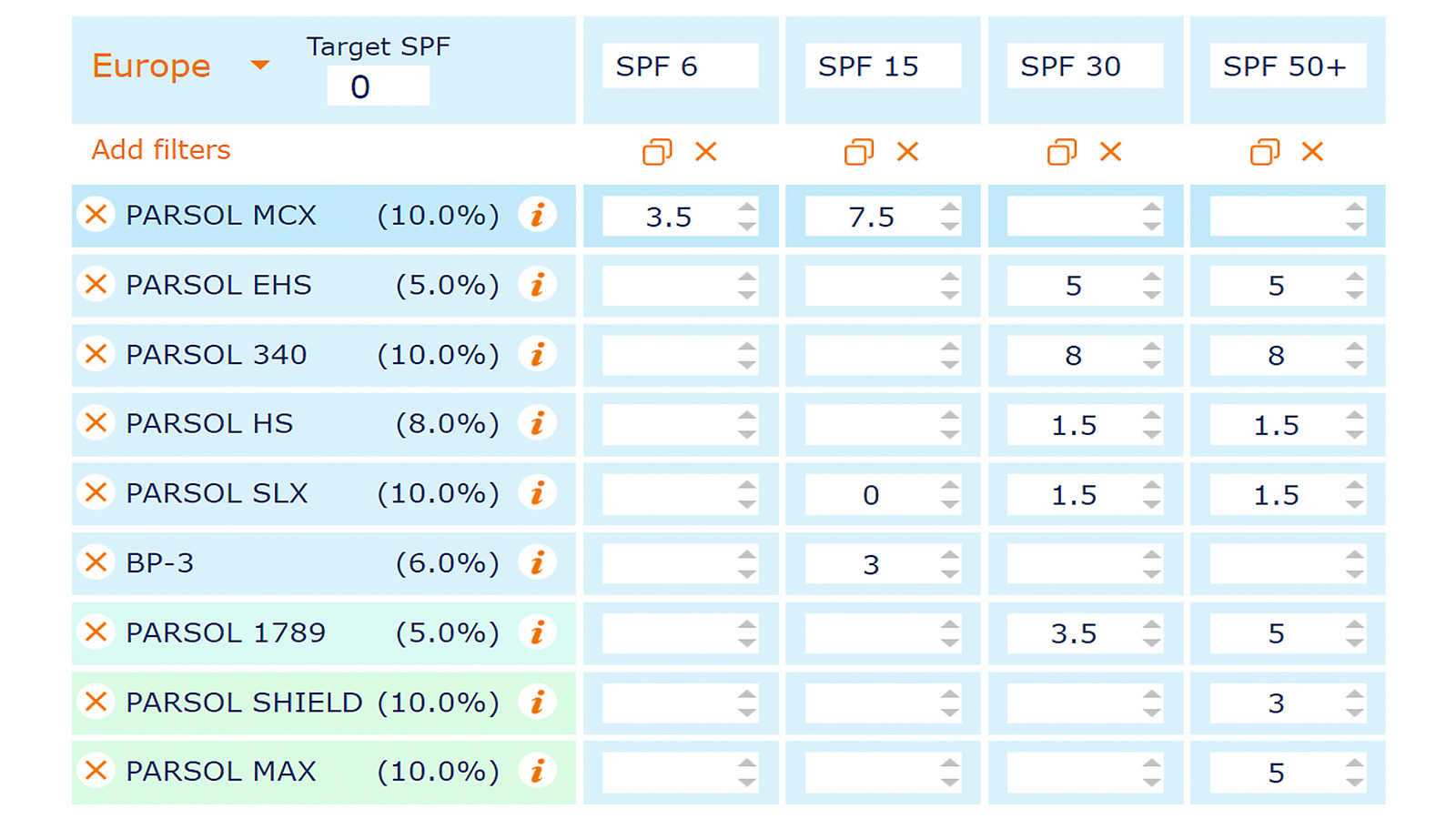
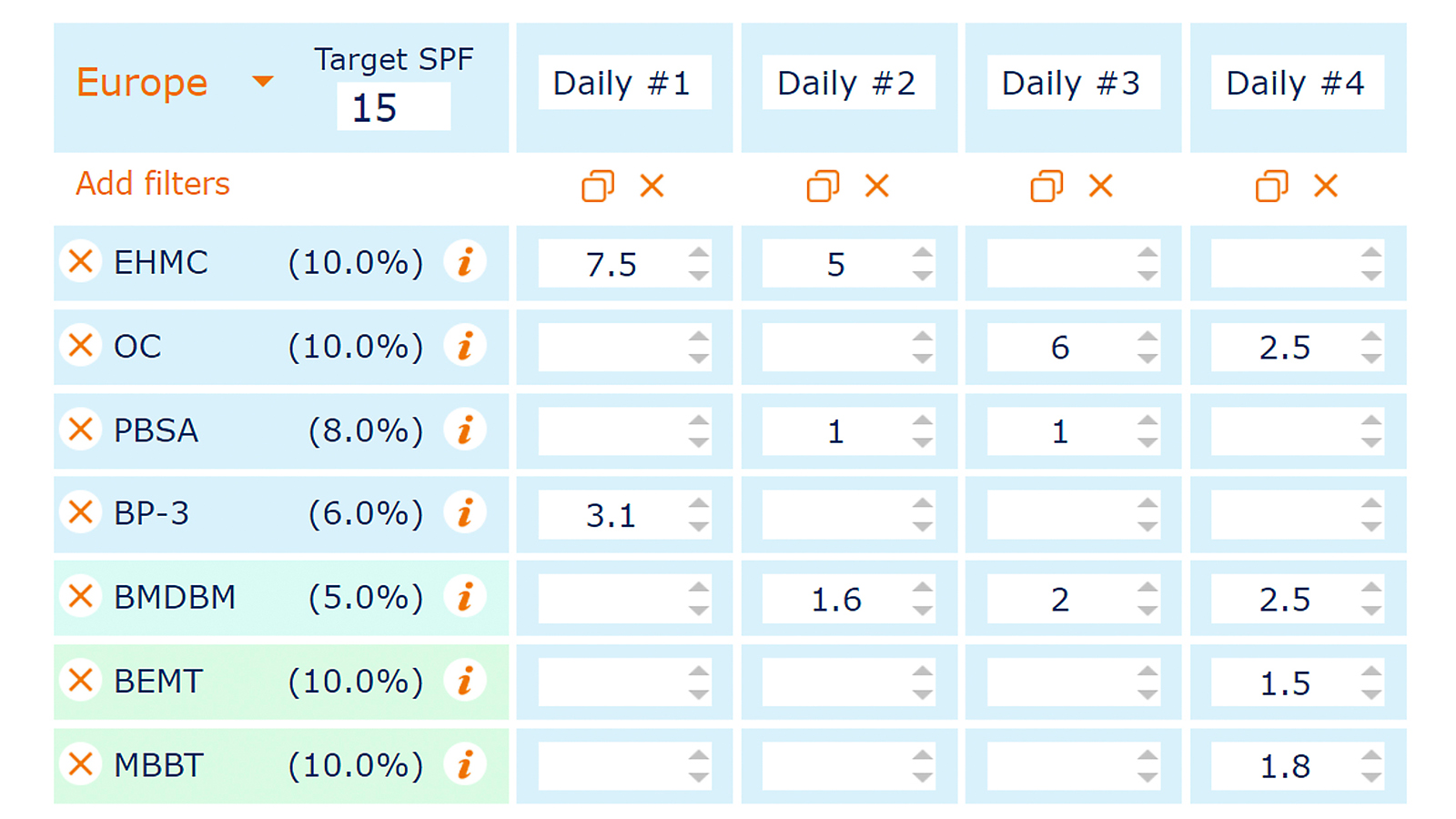
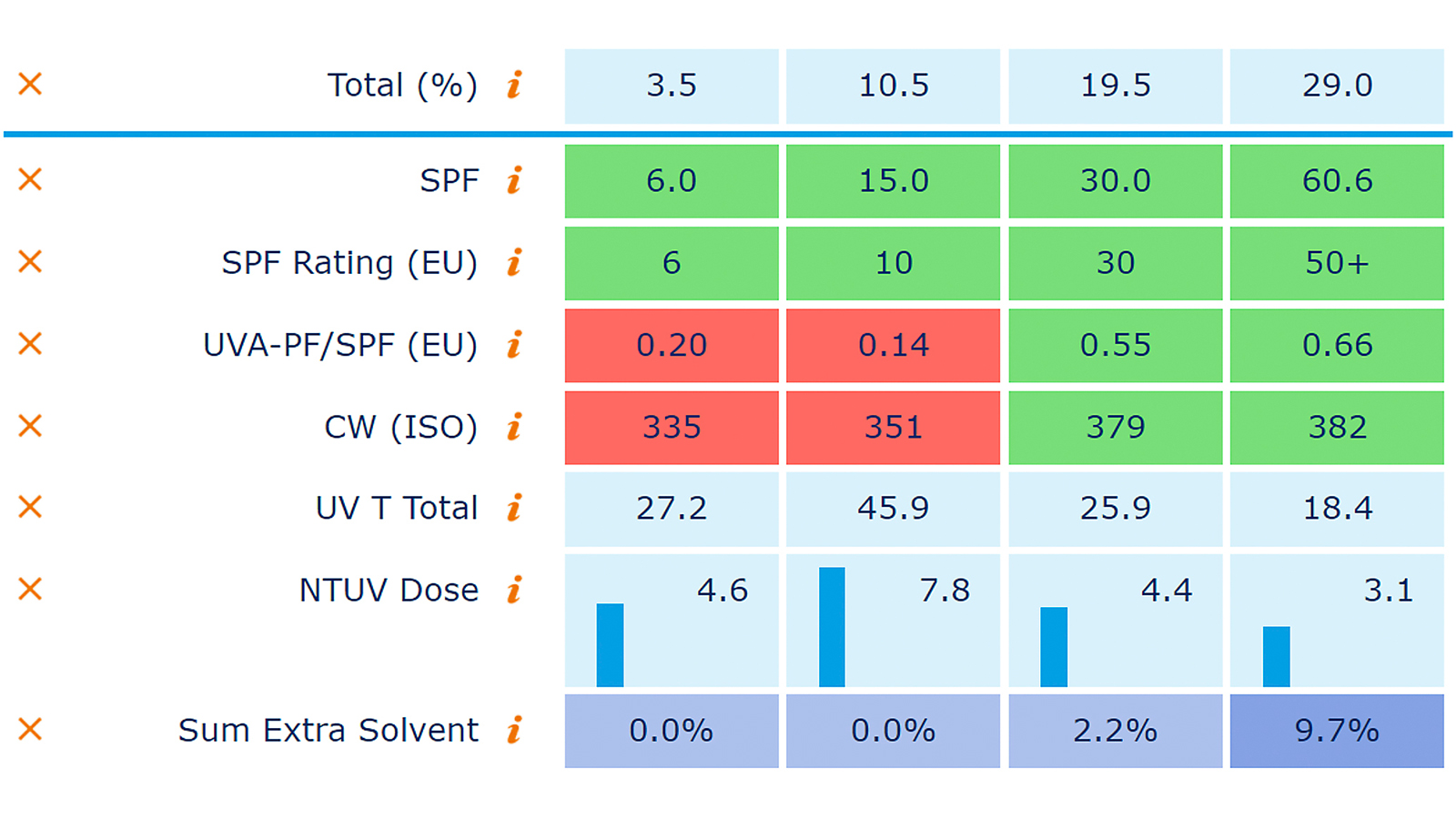
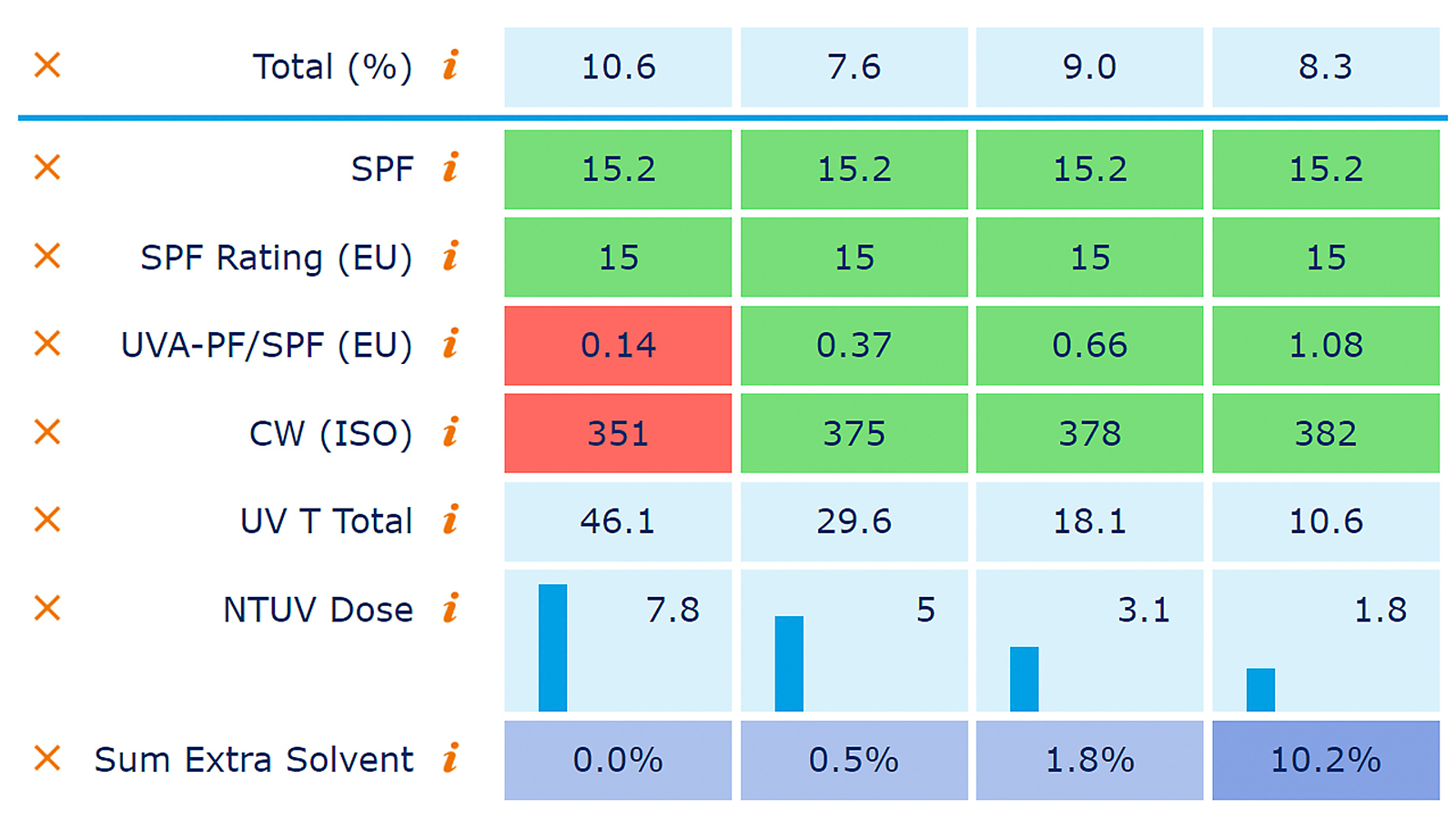
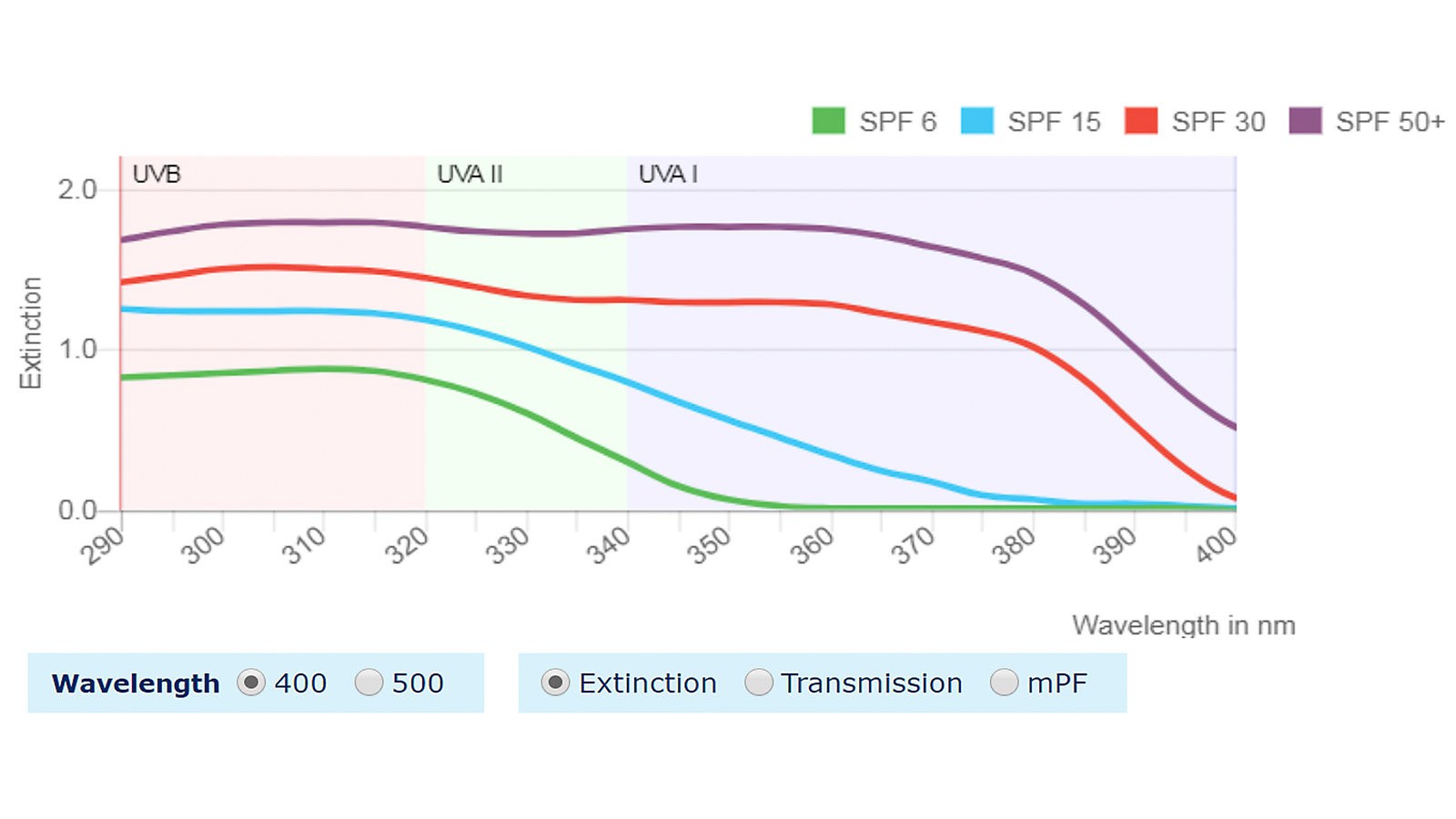
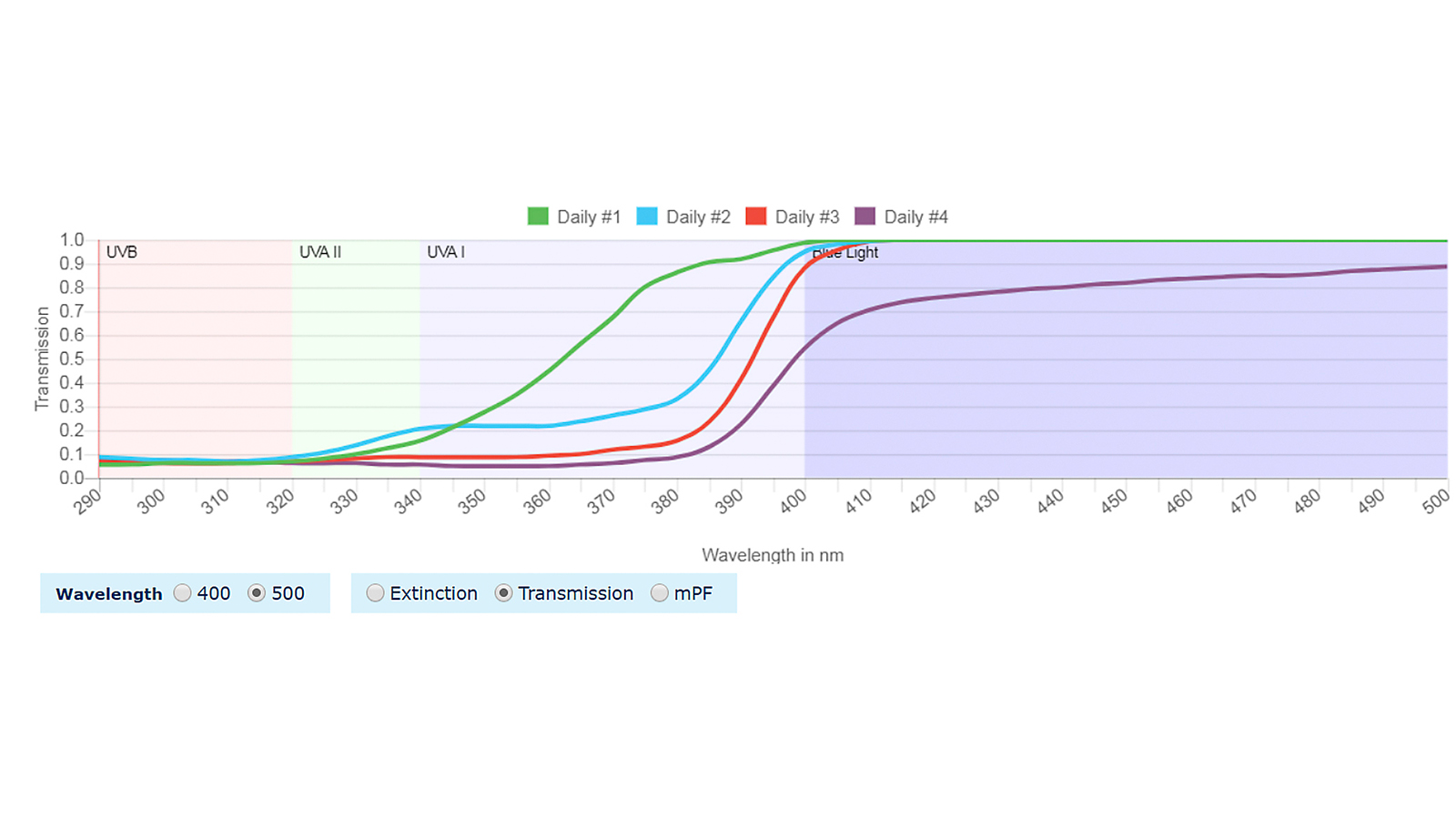
fig. 1: Evolution of sunscreens, from SPF 6 to SPF 60 (50+)
More results can be displayed. The “extra solvent” result (last row) reflects that more solvent is required for SPF 50+, because crystalline UV filters must be used (BMBM, BEMT)
UV Filters used: EHMC (Parsol MCX), EHS (Parsol EHS), OC (Parsol 340), PBSA (Parsol HS), PS 15 (Parsol SLX), BP-3 (Benzophenone 3), BMDBM (Parsol 1789), BEMT (PARSOL SHIELD), MBBT (Parsol MAX)
fig. 2: Not all SPF 15 Day Creams are created equal – Presentation of UV-transmission reveals deficits in UVA protection
UV Filters used: EHMC, (Parsol MCX), OC (PARSOL 340), PBSA (Parsol HS), BP-3 (Benzophenone-3), BMDBM (Parsol 1789), BEMT (Parsol Shield), MBBT (Parsol Max)
In silico methods
In silico methods are the latest type of methods available in addition to in vivo and in vitro ones. In silico calculation has per se no random error component when repeating the “experiment”. The spectra of the UV filters are the heart of any in silico method. The calculation of the SPF uses the same formula as for in vitro SPF measurements, but it replaces the measured transmittance value by a calculated transmittance that considers the overall absorbance of the UV filters and takes the irregularity of the sunscreen film into account7. The simulation algorithm also considers photodegradation properties of the UV filters in the sunscreen composition. Additionally, real-life simulations can be performed when the sun spectrum replaces the spectrum of solar-simulated sun. Besides using such simulations for designing new sunscreen formulations, the calculations also support the understanding of sunscreen performance in general and the effect of combining different UV filter systems. Herzog and Osterwalder summarised in silico determination, including a freely available internet tool8.
In silico SPF methods are becoming increasingly popular; they often provide a conservative, but more realistic result than in vitro methods, because they are directly calibrated with in vivo results, i.e. with the “gold standard” (ISO 24444). In vitro results rely on the often unpredictable interaction of product and PMMA substrate.
Sunscreen development made simple: new simulation tool
The use of DSM’s Sunscreen Optimizer at www.sunscreen-optimizer.com is simple and assisted by tutorials for getting started9. It has been developed with three objectives:
- to improve accuracy of prediction
- to be more versatile and user friendly
- to allow personalisation.
| in vivo | in vitro | in silico | |
|---|---|---|---|
| status | gold standard for SPF (ISO 24444) | research method, attempts to qualify as replacement for in vivo have failed so far, has advantages if substances cannot yet be applied on skin | simulation tool; very popular as starting point for development and optimisation |
| principle | erythema endpoint induced by simulated solar UV radiation on human skin; SPF = energy ratio with/without sunscreen | transmission measurement through sunscreen applied on plastic or quartz plate | simulation of transmission measurement through non-uniform sunscreen film on skin |
More accurate predictions
The photostability of Butyl Methoxydibenzoylmethane is often underrated since suitable UV filters usually stabilise it, e.g. Octocrylene or Bis-Ethylhexyloxyphenol Methoxyphenyl Triazine. This has been taken into consideration in our simulation tool with recent experimental data. Similarly, when compared to small oil soluble organic UV filters, the performance of Polysilicone-15 is often underrated in vitro. Due to its excellent skin distribution, the SPF performance is boosted in vivo. Such performance differences have also been taken into consideration in our simulation. Similarly, adaptations are required for the inorganic UV filters ZnO and TiO2. Their performance parameters are rather conservative in vitro as well, so that more in vivo data are required here for better approximations.
Versatile features
The DSM Sunscreen Optimizer offers features comparable with practical work in a formulation laboratory. It comes in spreadsheet format, allowing to directly compare up to 8 formulas simultaneously. Thus, formulators can now design optimal UV filter compositions step by step to fulfil their briefings. In addition, a graphical visualisation either as extinction, transmittance or mPF (monochromatic Protection Factor) curve is available in real time. This helps to easily compare several UV filter compositions at the same time.
Option to personalise output
The new Sunscreen Optimizer comes with the option to structure the vast input and output data in a personalised form, e.g. by specifying region, UV filter nomenclature as well as by selecting among traditional and advanced metrics such as daylight UV SPF, total UV transmission or blue-light protection factor. Furthermore, an extra calculation provides an estimate of the extra amount of emollients (solvents) required when modern crystalline UV filters are used. Each user is provided with a personal archive to make sure that no calculations are lost.
In a first demonstration example of the Sunscreen Optimizer we show the evolution of the SPF from 6 to 60, i.e. SPF 50+ (fig. 1, page 22). Early sunscreens only contained UVB filters. This was sufficient for SPF values between 2 and about 12. Later Benzophenone-3 with little UVA contribution was added to reach higher SPFs. The sunscreen optimiser demonstrates that some minimal UVA protection is required to reach higher SPFs, because UVA also contributes to erythema1. The latest sunscreens of SPF 50+, i.e. > 60 cannot be created without a substantial coverage of UVA (see fig. 1); even completely covering UVB up to 320 nm only leads to a maximum SPF of around 15. Therefore, any SPF 30, 50 or 50+ sunscreen guarantees some UVA protection.
Whereas the SPF method is globally harmonised (ISO 24444), there are still substantial regional differences when assessing UVA protection. Currently the toughest UVA protection criteria are the BOOTS 5-Star Rating in the UK and the European rule UVA-PF/SPF ratio > 0.33 (EU). The Asian JCIA Rating PA++++ is comparable to the European, depending on the SPF, whereas the Critical Wavelength applied in the US is much less stringent (CW > 370 nm). The criterion that is finally chosen depends on the marketing briefing and regulatory environment, but the good thing is that all relevant metrics are available in the Sunscreen Optimizer.
But how much UVA protection is in fact sufficient? Although we do not yet know the exact degree of UVA radiation in all details, it is advisable to strive for uniform UVB and UVA protection. This holds especially true in the field of day care. Exposure to UVA is more important in the daily average exposure than in the occasional beach situation in summertime. Fig. 2, page 22, demonstrates the extent to which day creams with the same SPF 15 may still differ in UVA protection. The SPF alone as an indicator of UVA protection may lead to a false feeling of safety. Therefore, it is crucial to consider the UVA metrics or even the total UV radiation (UV T, J/m2) that a sunscreen transmits onto the skin (UV T, in fig. 2). Modern sunscreens of the same SPF 15 transmit 3 times less UV radiation onto the skin than traditional UVB-biased day creams. Since in Europe UVA protection is not claimed for day creams, the INCI ingredient list needs to be checked to see if the product contains UVA filters.
The four examples show the evolution of day creams with arbitrary compositions of UV filters. UVA filters (see box page 23) are increasingly used in day creams. The metrics UV T and NUVT dose (total and normalised UV in sun reaching the skin) show that there is scope for improvement beyond the standard UVA recommendation. Particulate UV filters (MBBT, TiO2, ZnO) also contribute to blue light protection (Transmission graph extended to 500 nm).
In Europe, UVA claims should be allowed for day creams. UVA light is the key contributor to photo-ageing. Its presence during the day is much longer than UVB exposure, particularly in winter. Day creams should offer significant UVA protection.
A new era of sunscreen development
DSM’s Sunscreen Optimizer is a new in silico tool with which the development of sunscreens and UV protective day creams enters a new era. The calculations of certain UV filter combinations are more accurate because more in vivo data have been taken into consideration. Especially with respect to UV-protective day creams, the simulation tool can be very helpful as it points out the remaining “total UV transmission”, i.e. the extent to which UVA protection can and should be improved beyond the standard limits CW 370 or 1/3 ratio to finally achieve uniform UV protection. Furthermore, the simulation process has been simplified and allows for direct comparisons that make optimisations easier. Thus, this tool constitutes a convenient “in silico lab” and is a powerful simulation tool at the same time. The development outcome, e.g. sensory properties, has to be validated in vivo. In order to assess sensory properties other tools are available at DSM10. Finally, to establish the claim on the product, an in vivo SPF test (ISO 24444) is required. However, with the help of the Sunscreen Optimizer, the risk of experiencing unpleasant surprises at this final stage of product development is significantly lower. Q
www.sunscreen-optimizer.com/index
| INCI NAMES OF SOME UVA FILTERS | |
|---|---|
| name | concentration |
| Butyl Methoxydibenzoylmethane | max. 5.0% |
| Diethylamino Hydroxybenzoyl Hexyl Benzoate | 10.0% |
| Bis-Ethylhexyloxyphenol Methoxyphenyl Triazine | 10.0% |
| Methylene Bis-Benzotriazolyl Tetramethylbutylphenol | 10.0% |
| Zinc Oxide | 25.0% |



Authors:
Uli Osterwalder*, Scientific Advisor Sun Care,
Anne Janssen, Head of Application Sun Care,
and Alex Schlifke, Head of Synthesis,
DSM, Basle, Switzerland
www.dsm.com*
corresponding author: uli.osterwalder@dsm.com