
Sustainability has become a pressing issue across industries as global leaders strive to mitigate growing environmental concerns and address social inequalities. The cosmetics industry, valued at hundreds of billions of dollars annually, can have a significant role to play in promoting sustainable development. Aligning with the United Nations Sustainable Development Goals (SDGs) provides a strategic and comprehensive framework to guide this transformation. By incorporating sustainability into product design, supply chain management, marketing strategies, and corporate governance, the cosmetics sector can help achieve the global vision of a sustainable future.
The cosmetics industry comprises skincare, haircare, makeup, fragrances, and personal hygiene products, serving a diverse consumer base. With its reliance on natural resources, energy-intensive produc- tion processes, and complex global supply chains, the industry has a significant environmental and social footprint. Addressing sustainability in this sector aligns closely with the United Nations Sustainable Develop- ment Goals (SDGs), which offer a roadmap to balance economic growth, environmental preservation, and social equity by 2030.This paper explores how the cosmetics industry can leverage the UN SDGs to achieve sustainability, focusing on key areas , for example, responsible production and consumption (SDG 12), climate action (SDG 13), gender equality (SDG 5), and partnerships for the goals (SDG 17).1 It also examines challenges, innovative strategies, and the role of stakeholders in driving sustainable practices. The goals have been elaborated upon and explained with examples making them easy to follow even for start-ups.
UN SDG Overview in Relation to the Cosmetics Industry
The UN’s 17 SDGs target diverse global challenges, from poverty and education to climate change and responsible consumption.1 For the cosmetics sector, 6 key goals can be identified to be particularly relevant (Figure 1):
SDG 5: Gender Equality – Empower women throughout the value chain, from production to leadership roles.
SDG 6: Clean Water and Sanitation – Address water usage in production and reduce water pollution.
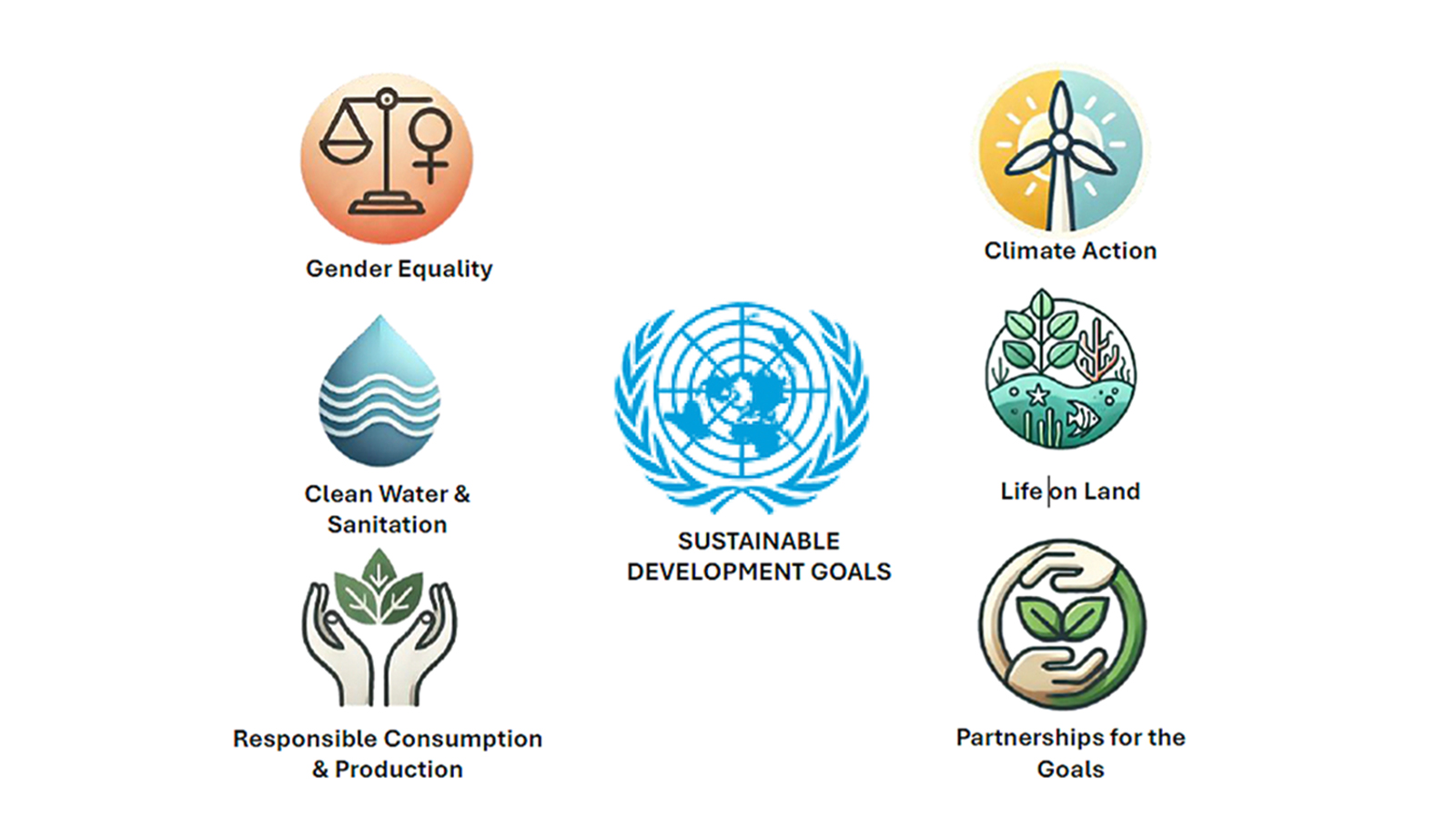
SDG 12: Responsible Consumption and Production – Minimize waste, adopt sustainable materials, and ensure ethical sourcing.
SDG 13: Climate Action – Reduce greenhouse gas emissions and adopt environmentally friendly manufacturing.
SDG 15: Life on Land – Protect biodiversity and prevent deforestation through ethical sourcing of raw materials.
SDG 17: Partnerships for the Goals – Foster collaboration among governments, NGOs, and private entities to advance sustainability efforts.
SDG 5: Gender Equality
Social Inequities in the Cosmetics Industry
While the cosmetics sector predominantly markets to women, it often overlooks gender equality within its own operations. Women in the supply chain, particularly in developing countries, face issues such as low wages, unsafe working conditions, and limited access to leadership roles.
Strategies for Alignment with SDG 5
Empowering Women in the Workforce:
- Provide training and development programs to promote women into leadership positions.
- Ensure equal pay for equal work across all levels of the organization.
Support for Female Entrepreneurs:
- Partner with women-owned businesses in sourcing, manufacturing, and distribution.
- Create microfinancing programs to empower women in developing regions involved in raw material production.
Promoting Inclusive Marketing:
- Challenge stereotypes in advertising by showcasing diverse representations of beauty.
- Engage with communities to understand and address their unique needs.
Ensuring Ethical Labor Practices:
- Audit suppliers to ensure safe working conditions for women in the supply chain.
- Collaborate with NGOs to support female workers in artisanal mining and agriculture.
- Partner with sustainable sourcing programs such as Responsible Mica Initiative – a global coalition working towards eradicating child labour and unacceptable working conditions for mica miners in India.2
SDG 6: Clean Water and Sanitation
Water Usage in Cosmetics Production
Water is a key ingredient in many cosmetics, yet its overuse strains local water supplies, especially in water-scarce regions. Pollution from manufacturing processes further exacerbates water quality issues.
Strategies for Alignment with SDG 6
Water Conservation:
- Invest in water recycling systems for manufacturing plants.
- Develop waterless or low-water product formulations.3
Reducing Water Pollution:
- Use biodegradable ingredients to minimize water contamination.
- Partner with wastewater treatment initiatives to manage industrial discharge.
Community Water Initiatives:
- Support projects that improve access to clean water in communities impacted by industry.
- Educate consumers on minimizing water usage during product application.
SDG 12: Responsible Consumption and Production
Challenges in the Cosmetics Industry
The cosmetics sector generates significant waste, primarily from single-use plastics, overpackaging, and product discard due to inventories, improper storage or end of shelf-life. Additionally, the industry’s dependence on palm oil, mica, and other natural ingredients often contributes to deforestation, habitat destruction, and unethical labor practices.
Strategies for Alignment with SDG 12
Sustainable Packaging:
- Transition to biodegradable, compostable, or reusable materials. Starting July 2022, India has banned 19 single use plastic items including polystyrene used for tertiary packaging, packing films less than 120 microns.4 Sulapac has been leading innovation of recyclable and biodegradable plastic options and use of biomaterials for cosmetic packaging including cosmetic pencils.5
- Invest in refillable containers and packaging innovations that reduce material use. Quadpack introduced a recyclable and refillable jar option made with 50% less PET fitted with PP refill and cap.6
- Use post-consumer recycled plastics to minimize virgin material demand. Epopack, Taiwan offers 100% post-consumer recycled (PCR) PET packaging including premium options with heavy walled glass-like look.7
Ethical Ingredient Sourcing:
- Implement fair-trade policies to ensure ethical sourcing of raw materials like mica and palm oil. RSPO (Roundtable on Sustainable Palm Oil) and RMI (Responsible Mica Initiative) strive to improve working conditions while ensuring ethical utilization of natural resources.
- Partner with certification programs such as Fair Trade International involved with more than 2M farmers and workers globally.8
- Develop lab-grown alternatives to reduce reliance on environmentally damaging resources. Plant cell culture-based extracts produced by Sederma, Croda, for example, Majestem (INCI: Glycerin, Leontopodium Alpinum Callus Culture Extract, Xanthan Gum), a biotechnologically produced extract of a rare and restricted Alpine plant, Edelweiss.9
Circular Economy Practices:
- Promote recycling initiatives such as in-store return programs for used packaging. Sephora and Ulta Beauty have partnered with Pact, a non-profit organization working towards reducing waste from the beauty industry by providing collection bins, assistance in sorting and improving recycling of hard-to-recycle packaging.10
- Extend product lifecycles by offering concentrated formulas or multi-use products. Creating a waterless cosmetic product can help concentrate the formula, make it travel-friendly and more sustainable than their counterparts.3
Consumer Education:
- Raise awareness about sustainable consumption. Brands can conduct awareness programs to share their sustainability practices, suggest eco-friendly cosmetic options and educate customers about recyclability.
- Use labeling systems to indicate carbon footprint, recyclability, and ethical sourcing. Klimato helps calculate carbon footprints for food items and can be used by food industries and hotels to depict the information on packages in a simple and customer friendly manner.11
SDG 13: Climate Action
Environmental Impacts of the Cosmetics Industry
The industry contributes to carbon emissions through energy-intensive manufacturing, transportation, and raw material extraction. Additionally, waste from non-biodegradable materials exacerbates environmental degradation.
Strategies for Alignment with SDG 13
Carbon-Neutral Production:
- Transition to renewable energy sources for manufacturing facilities. Increasing use of solar energy can reduce the burden on conventional energy sources.
- Implement energy-efficient practices and technologies. International Flavors & Fragrances (IFF) deployed an on-site wind turbine at its Tilburg, Netherlands facility, producing approximately 6.5 million kWh of renewable electricity per year, covering up to 30% of the site’s electricity needs.12
Sustainable Transportation:
- Optimize logistics by using local suppliers to reduce transportation emissions.
- Transition to low-carbon delivery options such as electric vehicles.
Eco-Friendly Product Formulation:
- Develop waterless cosmetics to reduce water use during manufacturing and in the supply chain.3
- Eliminate microplastics and maximize use of reef safe sunscreens to help combat marine pollution.13,14
Carbon Offsetting Initiatives:
- Partner with reforestation programs or carbon offset projects. Organizations like The Disposal Company help brands determine their carbon footprint and identify means for offsetting them.15,16
- Invest in carbon capture technologies to mitigate emissions.
Sustainability Reporting:
- Regularly report carbon footprint metrics to track progress and ensure accountability.
SDG 15: Life on Land
Biodiversity Risks from Ingredient Sourcing
The demand for natural ingredients in cosmetics contributes to deforestation, habitat destruction, and the loss of biodiversity. Unsustainable farming practices and illegal wildlife trade for exotic ingredients exacerbate the problem.
Strategies for Alignment with SDG 15
Sustainable Agriculture:
- Support regenerative farming practices to preserve soil health and biodiversity.
- Partner with conservation organizations to ensure ethical sourcing. Rainforest Alliance Certification promotes best practices in farming, fight deforestation, preserve communities and address issues such as child labour, gender inequality and poor working and living conditions globally.17
Protecting Endangered Ecosystems:
- Develop synthetic alternatives for ingredients derived from endangered species.9
- Invest in research and development to reduce dependency on natural resources.
Transparency in Supply Chains:
- Use blockchain technology to trace the origin of ingredients and ensure sustainability.
- Promote certifications such as Organic, Cruelty-Free, COSMOS, NaTrue to assure consumers of ethical practices 18.
SDG 17: Partnerships for the Goals
Collaboration as a Key Driver
Achieving sustainability in cosmetics requires collaboration among various stakeholders, including governments, NGOs, academia, and consumers. Partnerships ensure shared knowledge, resources, and accountability.
Strategies for Alignment with SDG 17
Multi-Stakeholder Collaborations:
- Join industry initiatives such as the Sustainable Packaging Coalition or the Ellen MacArthur Foundation’s New Plastics Economy.19
- Collaborate with NGOs to improve sourcing practices and worker welfare. Bubblenut Wash, a home and personal care brand partners with tribal communities in India for wild collection of bubble nuts, a key component of their products.20
Public-Private Partnerships:
- Work with governments to create policies incentivizing sustainable practices.
- Support research grants for innovation in sustainable cosmetics.
Consumer Engagement:
- Co-create solutions with consumers by crowdsourcing ideas for sustainability.
- Launch awareness campaigns to promote collective responsibility.
Challenges in Achieving Sustainability
While the cosmetics industry has made progress in adopting sustainable practices, several challenges remain:
Cost Barriers:
Sustainable materials and technologies often entail higher upfront costs, which may discourage smaller companies from adopting them. Use of sustainable packaging, responsible sourcing and clean energy increase the input cost which impacts purchase pricing.
Consumer Awareness:
Many consumers remain unaware of the environmental and social impacts of their purchasing decisions. Guidelines on ‘how to recycle’ can help consumers participate more effectively in collection programs.
Regulatory Gaps:
The lack of uniform global standards for sustainability complicates efforts to ensure accountability. Companies rely on sustainability-led certifications to showcase their efforts and improve brand value.
Greenwashing Risks:
Some brands exaggerate their sustainability claims, eroding consumer trust and diluting genuine efforts.
Conclusion
Sustainability in the cosmetics industry is both an ethical imperative and a business opportunity. By aligning with the UN SDGs, companies can drive meaningful changes while strengthening their competitive edge. The integration of responsible consumption and production, climate action, gender equality, and biodiversity preservation into corporate strategies creates a holistic approach to sustainability.However, achieving these goals requires overcoming significant challenges, such as cost barriers, regulatory in-
consistencies, and consumer skepticism. Collaborative efforts among stakeholders, coupled with transparent reporting and innovative solutions, are essential to buil-
ding a cosmetics industry that respects the planet and its people. In doing so, the industry not only contributes to
the global sustainability agenda but also inspires consumers to make choices that align with a brighter, more sustainable future.
References:
1 THE 17 GOALS | Sustainable Development. [cited 2024 Dec 7].
https://sdgs.un.org/goals
2 RESPONSIBLE MICA INTIATIVE. [cited 2024 Dec 7]. RMI.
https://responsible-mica-initiative.com/
3 Cosmetics & Toiletries. 2019 [cited 2024 Dec 8]. Formulating on Trend: Waterless Cosmetics.
https://www.cosmeticsandtoiletries.com/formulas-products/skin-care/article/21835650/sun-chemical-formulating-on-trend-waterless-cosmetics
4 Sustainable Plastics. 2022 [cited 2024 Dec 7]. India bans 19 single use plastic items from 1 July 2022.
https://www.sustainableplastics.com/news/india-bans-19-single-use-plastic-items-1-july-2022
5 Nylanden N. Sulapac receives SCS Global Services certificate for recycled content. Sulapac. 2024 [cited 2024 Dec 7].
https://www.sulapac.com/blog/sulapac-receives-scs-global-services-certificate-for-recycled-content/
6 Quadpack Regula Jar. [cited 2024 Dec 7].
https://www.quadpack.com/news/news/13005702/onwards-and-upwards-follow-regula-jars-sustainable-path/
7 EPOPACK CO., LTD. – About Us. [cited 2024 Dec 7].
https://www.epopack.com/en/about.html
8 What is Fairtrade? . [cited 2024 Dec 8].
https://www.fairtrade.net/en/why-fairtrade/what-we-do/what-is-fairtrade.html
9. Sederma recognised with Green Award at in cosmetics | Croda. [cited 2024 Dec 8].
https://www.croda.com/en-gb/media-hub/news/awards-and-achievements/sederma-recognised-with-green-award-at-in-cosmetics
10 Pact Collective. [cited 2024 Dec 8]. Pact Collective.
https://www.pactcollective.org
11 Science & Data | Klimato. [cited 2024 Dec 8].
https://klimato.com/science-and-data
12 IFF Deploys Industry-First On-Site Wind Turbine at Tilburg, Netherlands Facility | International Flavors & Fragrances Inc.. [cited 2024 Dec].
https://ir.iff.com/news-releases/news-release-details/iff-deploys-industry-first-site-wind-turbine-tilburg-netherlands
13 Beat the Microbead. [cited 2024 Dec 8]. International Campaign Against Plastic in Cosmetics.
https://www.beatthemicrobead.org/
14 www.personalcaremagazine.com. 2024 [cited 2024 Dec 8]. Reef-safe sunscreen: a formulator’s perspective.
https://www.personalcaremagazine.com/story/46137/reef-safe-sunscreen-a-formulators-perspective
15 The Disposal Company. [cited 2024 Dec 8]. https://thedisposal.co/
16 How Deepika Padukone’s 82°E is Changing The Sustainability Game in The Skincare Industry – The Green Vibe. 2023 [cited 2024 Dec 8]. https://thegreenvibe.in/read/how-82e-is-changing-the-sustainability-game-in-skincare-industry/
17 Rainforest Alliance. [cited 2024 Dec 8]. What Does “Rainforest Alliance Certified” Mean?
https://www.rainforest-alliance.org/what-does-rainforest-alliance-certified-mean/
18 Choosing a sustainability accreditation. [cited 2024 Dec 8].
https://www.cosmeticsdesign-europe.com/Article/2024/01/08/Choosing-a-sustainability-accreditation/
19 Plastics and the circular economy. [cited 2024 Dec 8].
https://www.ellenmacarthurfoundation.org/topics/plastics/overview
20 BubbleNut Wash. [cited 2024 Dec 8]. About Soapnuts.
https://bubblenutwash.com/pages/about-soapnuts

Rachna Rastogi
DPKA Universal Consumer Ventures Private Limited, Mumbai, India; Bregma Science LLP, Bangalore, India,
www.bregma.org

Anjali Gholap
DPKA Universal Consumer Ventures Private Limited, Mumbai, India; Bregma Science LLP, Bangalore, India, www.bregma.org