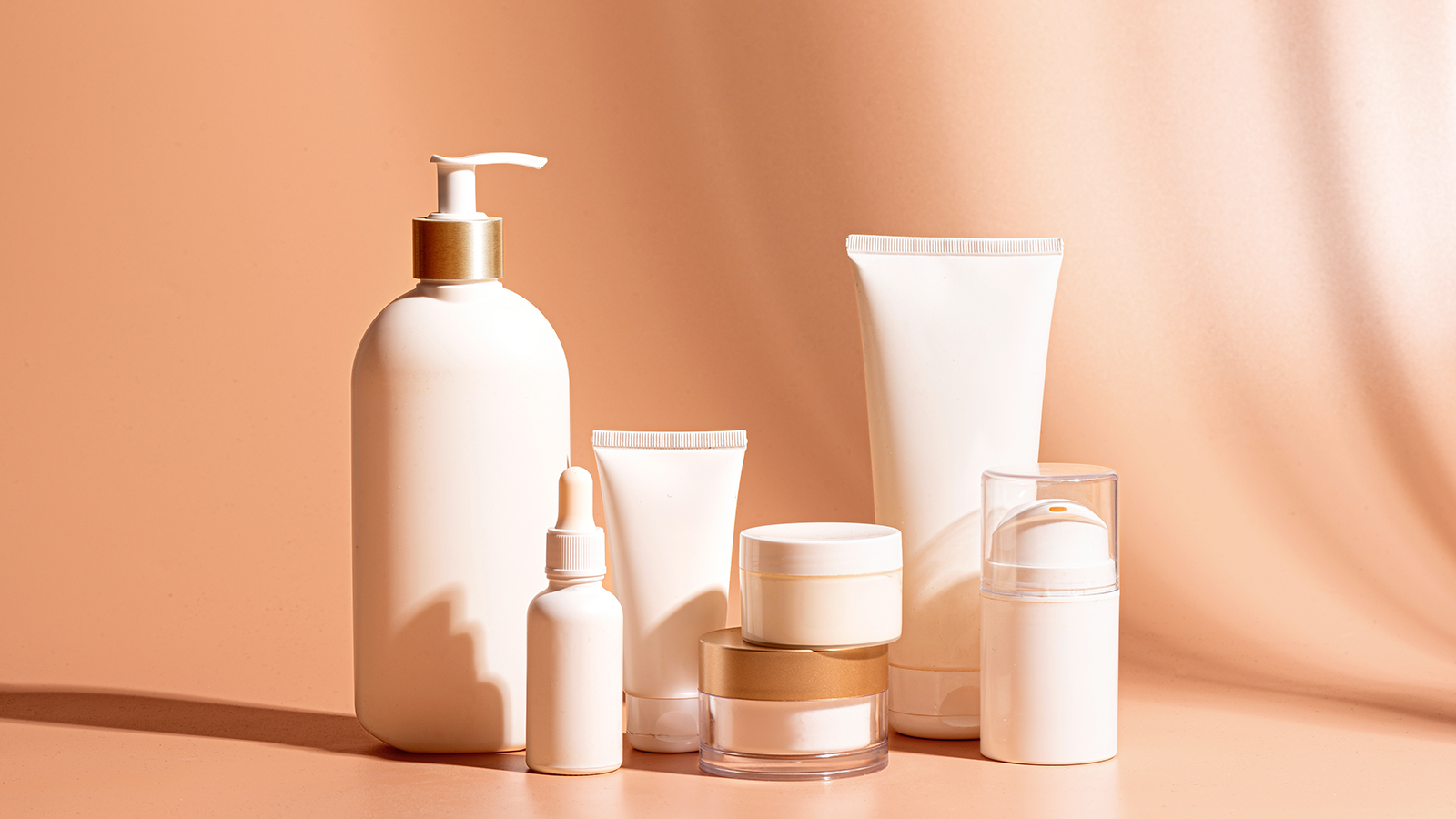
Plastics have long been the packaging material of choice in the cosmetics industry. They offer multiple advantages: being lightweight, formable, cost-efficient, and highly effective in protecting sensitive formulations. Plastics enable creative and functional packaging solutions tailored to a wide range of product needs.
However, the industry is facing increasing pressure from both consumers and environmental organizations. Questions around sustainability, recyclability, and the true ecological footprint of cosmetic packaging are becoming more urgent. Criticism is not limited to the use of plastics in general, but also includes concerns about excessive packaging, the lack of recycled content, and the need for greater supply chain transparency. As a result, cosmetic companies are no longer judged solely on the functionality of their packaging, but also on how well they address ethical, environmental, and regulatory expectations.
Responsible Use of Recycled Materials
Thus, the responsible use of recycled materials in the cosmetics industry is becoming increasingly important. Post-consumer and post-industrial recycled materials are being used more frequently in plastic packaging and contribute significantly to reducing the carbon footprint and promoting a circular economy. With the new Regulation (EU) 2025/40 on packaging and packaging waste (PPWR), the European Union aims to make packaging more sustainable and to significantly increase the use of recycled content. This regulation introduces requirements that will be implemented gradually, and which manufacturers should consider in their planning – especially regarding recycled content, recyclability, and extended producer responsibility. For cosmetics companies, this means that recycled materials must not only meet quality and safety standards but also be used and documented in compliance with current and upcoming regulatory expectations. Acting early can ensure regulatory compliance while demonstrating environmental responsibility and a forward-thinking brand strategy.
Plastics and Microplastics
Plastics are not only used as packaging in the cosmetic industry. Polymeric microbeads have been added for decades to products such as facial scrubs or glitter. These so-called intentionally added microplastics have been found to be a significant contributor to environmental microplastic pollution. This has led to a ban of such applications in the European Union under the Regulation (EU) 2023/2055. Most microplastic pollution nowadays originates from tire abrasion and textile fibers.
Current Plastic System in Cosmetics is Predominantly Linear
When it comes to end-of-life options, landfilling or incineration are the predominant routes. According to Eurostat statistics, 40.7% of plastic packaging waste is being recycled. While there are no specific recycling statistics for cosmetic plastic packaging, it can be reasonably argued that the recycling rate is similar to that of overall plastic packaging waste, as consumers will discard cosmetic plastic packaging along with other plastic packaging waste. Thus, the system follows a linear make-use-dispose logic by majority, although it already displays a considerable circular portion.
Plastics – still A largely fossil-based material
The plastic system relies heavily on fossil-derived hydrocarbons. Upon incineration, discarded plastics release greenhouse gas (GHG) emissions. Plastics account for 4.5% of the global GHG emissions, mainly driven by increasing production of plastic raw materials in coal-based-energy economies like China, Indonesia or South Africa (Cabernard et al., 2021). Applying circular strategies such as reuse, recycling or alternative feedstock lowers GHG emissions significantly. Moving towards biogenic alternative feedstocks and increasing collection volume and recycling yields are crucial steps towards a decarbonization of the plastic system.
Barriers to circularity
Quality aspects: With the aim to recycle, many countries have meanwhile introduced mixed plastic collections. However, plastic packaging from mixed collections will be more difficult to clean and to sort due to the complexity of polymers and additives and the multitude of previous applications. This may lead to insufficient quality properties for use in the cosmetics industry. In particular, recycled plastics from mixed collections may display variations in the visual aspect and release unwanted odors. In addition, mechanical properties may change over recycling cycles as unstabilized plastics may degrade.
Safety considerations: Recycled plastics – in particular from mixed plastic waste streams – may contain substances of concern posing a risk to consumers in cosmetic applications. The main groups of contaminants are additives, polymer and additives breakdown products, and external contamination such as from former fillings. Non-intentionally added substances are referred to as NIAS. For high-density polyethylene (PE-HD) bottles for example, the most predominant NIAS are related to oligomers of the polymer material, degradation products from antioxidant additives, and odorants such as limonene (Welle, 2005). For reusable options, safety considerations cover the effectiveness of cleaning and quality assurance procedures. For in-store refill stations, particular care must be taken to keep hygiene at an acceptable level. In addition, compliant labelling of the reusable receptables must be provided for.
Economic viability: Circular strategies often entail higher cost than virgin-material-based single use products. This holds particularly true in times of low virgin material cost. This makes it hard for secondary (recycled) materials to compete. For reusables, transport and energy cost will weight in.
Collection and sorting or take-back systems – mandatory antecedents to recycling and reuse: Before a plastic product can be recycled, it must be accessible and reach sorting and recycling infrastructure. Thus, collection and sorting systems must be in place. While such systems exist in many countries for municipal waste, they are rarely available specifically for cosmetic plastics. Participation of consumers to collection systems and the availability of state-of-the-art sorting and recycling facilities are crucial to successfully implement circularity by recycling. For reusable options, take-back and reconditioning systems need to be in place.
The road to Circularity – Overcoming the Barriers
The nine R strategies: Potting proposes a framework of nine so-called R-strategies: refuse-rethink-reduce-reuse-repair-refurbish-remanufacture-repurpose-recycle-recover (Potting et al., 2017). They all aim at more resource
efficiency and mitigation of negative externalities. For plastics in cosmetics, many of these strategies can work. However, care must be taken to base any decision on sound scientific data as results may be counterintuitive. For example, a recent study comparing glass with plastic packaging for liquid soaps puts plastics in favor of glass (Meng et al., 2024).
Recycling: the entry-level to circularity: Recycling plastics offers an opportunity to achieve progress in circularity quickly. Hence, plastics in cosmetics come in a vast complexity of shapes, materials and decorations. This complexity is detrimental to sorting efficiency and high recycling yields. Upcoming Design-for-Recycling guidelines to be issued by the European Commission through secondary legislation under the regulation (EU) 2025/40 (Packaging- and Packaging Waste Regulation PPWR) will reduce complexity of input streams and increase recycling yield and quality. In addition, technological advances are taking place at a quick pace. New sorting technology, well-detectable additives such as non-carbon black, as well as improved chemical, physical or enzymatical recycling to complement mechanical recycling are emerging and rapidly climbing on the technological readiness level (TRL) scale. In chemical recycling, 271.000 tons of output capacity is already installed in Europe (Krause et al., 2024).
Keeping the recycling loop safe: The current Cosmetics Regulation (EC) 1223/2009 already requires the packaging to be suitable for the respective cosmetic product. However, no requirements are specified in the regulation. Further
EU documents refer to regulation (EC) 1935/2004 and
regulation (EU) 10/2011, which can usually serve as proof. This does not exclude deviating special cases in both directions, whereby especially Annex II must be taken into account.Therefore, from the point of view of safety assessment, particular caution is required when using recycled material for packaging. Knowledge of the selection and production process should be known or have to be replaced by reliable information from a competent manufacturer. To control the presence of substances of concern, cosmetic packaging made of recycled plastics should undergo an analytical non-target screening by headspace GC-MS and GC-MS to detect any substance extracted from a sample, followed by identification and toxicological assessments. To deal with non-identified substances, the threshold of toxicological concern (TTC) approach offers a good methodology. The Notes of of Guidance for Testing of Cosmetic Ingredients and their Safety Evaluation of the Scientific Committee for Consumer Safety (SCCS) of the European Commission then determine the tolerable exposition per substance class and will allow an assessment on suitability for use in stay-on or rinse-off cosmetics. In 2021, Beiersdorf, Werner & Mertz and the Fraunhofer ivv Institute have published a Cosmetic Packaging Guidance for Post-Consumer Recycling (PCR) materials building on these principles. Also, an industry multi-stakeholder consortium named CosPaTox has been set up to establish toxicological safety guidelines for PCRs in cosmetics. In June 2025, the standard DIN SPEC 91521 “Recycled plastic materials for the packaging of cosmetic and home care products – Suitability levels and analytical methods.” has been published with siginificant contributions from CosPaTox providing further guidance. Alternative biogenic feedstock and CCU–non-fossil plastics: Using biogenic feedstock offers a climate-optimized alternative to fossil-based feedstock. However, care must be taken not to shift the burden from climate change mitigation to biodiversity loss and unwanted land use changes. This particularly holds true when such feedstock is grown in energy crops (Bachmann et al., 2023). Sourcing the carbon from food system residues and waste offers a preferable option. In the future, we may be able to use carbon captured and utilized (CCU) from point sources such as waste incineration plants.
Conclusion
The sustainable use of plastics in cosmetics is achievable. Hence, significant improvements are required in its circularity by a balanced approach combining different circularity strategies, and while always scientifically assessing the environmental effects. A decarbonized energy grid is a further imperative. Moreover, appropriate analytical testing should be in place to maintain consumer safety.
References:1 Bachmann, M., Zibunas, C., Hartmann, J., Tulus, V., Suh, S., Guillén- Gosálbez, G., & Bardow, A. (2023). Towards circular plastics within planetary boundaries. Nature Sustainability, 6(5), Article 5. https://doi. org/10.1038/s41893-022-01054-9 2 Cabernard, L., Pfister, S., Oberschelp, C., & Hellweg, S. (2021). Growing environmental footprint of plastics driven by coal combustion. Nature Sustainability, 5(2), Article 2. https://doi.org/10.1038/s41893-021-00807-2 3 Krause L., Özgen, A., Kern, J., Das, S., Carus, M., Raschka, A. (2024). Mapping of Advanced Plastic Waste Recycling Technologies and Their Global Capacities – Providers, Technologies, Partnerships, Status and Outlook. nova-Institut GmbH (Ed.), Hürth, Germany, 2024-02. https:// doi.org/10.52548/WQHT8696 4 Meng, F., Brandão, M., & Cullen, J. M. (2024). Replacing Plastics with Alternatives Is Worse for Greenhouse Gas Emissions in Most Cases. Environmental Science & Technology, 58(6), Article 6. https://doi. org/10.1021/acs.est.3c05191 5 Potting J, Hekkert M, Worrell E and Hanemaaijer A, (2016). Circular Economy: Measuring innovation in product chains. PBL Netherlands Environmental Assessment Agency, The Hague. 6 Welle, F. (2005). Post-consumer contamination in HDPE milk bottles and design of a bottle-to-bottle recycling process. Food Additives and Contaminants, 2005, 22(10), 999-1011
Patrick Semadeni
Vice President Sustainability, Swiss Plastics Association KUNSTSTOFF.swiss and President of Logo Plastic AG, Pratteln, Switzerland
Michael Pfeiffer
CEO, Pfeiffer Consulting GmbH, Straubenhardt, Germany,
www.pfeiffer-consulting.com
Bernhard Smutek
Director Regulatory Affairs, Pfeiffer Consulting GmbH, Straubenhardt, Germany, www.pfeiffer-consulting.com