One of the main tasks is to act as a central contractual partner, coordinating and aligning dif- ferent process steps. This approach helps to simplify procedures, reduce reaction times, and en- sure consistent quality standards. As a result, complex workflows become more transparent, flexibility increases, and outcomes can be achieved within predictable time- frames.
One of the main tasks is to act as a central contractual partner, coordinating and aligning dif- ferent process steps. This approach helps to simplify procedures, reduce reaction times, and en- sure consistent quality standards. As a result, complex workflows become more transparent, flexibility increases, and outcomes can be achieved within predictable time- frames.
Packaging as a Protective System
Packaging does not only serve logistical purposes; it also plays a key role in protecting sensitive products. This is particularly relevant for cosmetics, nutraceuticals, and natural remedies, whose ingredients can be highly susceptible to external influences. Factors such as light, oxygen, or temperature may compromise the stability of formulations. Among these, exposure to visible light is especially critical, as it accelerates chemical degradation. The consequences include loss of aroma, changes in color, weakened active ingredients, and reduced effectiveness of the product as a whole.This situation creates a challenge for manufacturers: How can natural products be preserved effectively without relying on synthetic stabilizers or artificial preservatives? Packaging design can make a decisive difference by providing a barrier against these stress factors and thereby extending the stability of sensitive ingredients.
Glass as a Primary Packaging Material
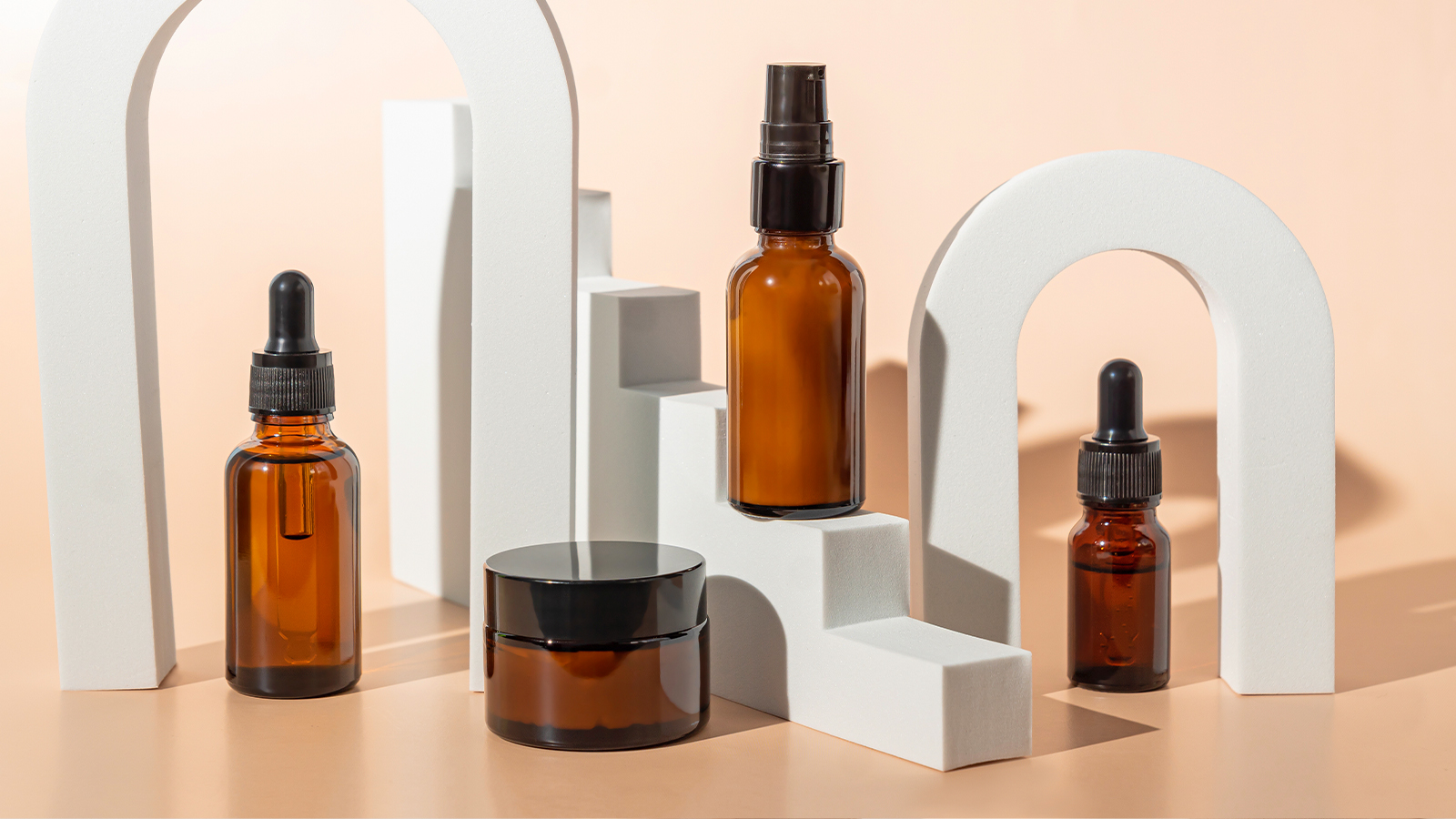
One central area of development involves ampoules and vials made of tubular glass. This material has long been used in pharmaceuticals, where chemical stability, neutrality, and processing flexibility are essential. Similar advantages apply in the cosmetics sector, especially when light protection is necessary to prevent degradation of high-value formulations.Several techniques are available to reduce light exposure. Options include applying opaque coatings, producing fully colored containers, or using partial refinements that shield only certain areas. Black or white ampoules, as well as completely painted variations in solid, non-transparent colors, are examples of these methods. Metallic lacquers or surface metallization also provide effective UV protection. While their main function is protective, these techniques also allow for visual differentiation and tailored design.
Additional Protective Systems
In addition to primary packaging, secondary solutions are also relevant. For example, transport boxes for small glass ampoules help prevent breakage while also reducing light exposure. Some of these containers include integrated opening aids, improving both handling safety and ease of use.Another complementary approach is the use of multi-spray systems that dispense liquid products in a controlled environment. Such systems reduce the risk of light-induced deterioration during application, further extending the lifespan of sensitive formulations.
The Role of Light-Filtering Glass
An advanced option is glass with a violet tint, which functions as a natural light filter. This material blocks specific wavelengths in the visible spectrum that are most harmful, while still allowing selected portions of light – such as UVA and infrared – to pass through. In doing so, it slows molecular degradation while permitting certain beneficial wavelengths to interact with the product.This property has measurable effects on product stability. Essential oils retain their aromatic complexity for longer, teas and spices keep both flavor and color, and vitamins or plant-derived supplements maintain potency over an extended period. The result is a balance between shielding the formulation from harmful light while preserving some degree of natural energy transfer.
Sustainability Considerations
Modern packaging must also be assessed from an environmental perspective. Extending shelf life helps reduce product losses, disposal volumes, and overall resource consumption. This is particularly important for natural products, which are often resource-intensive to produce.Glass offers further ecological advantages compared to many plastics, as it is recyclable and can be reintroduced into the production cycle multiple times. By helping to prevent waste through improved preservation, glass packaging also contributes indirectly to sustainability goals such as reducing food and product waste.
Process Coordination and Logistics
Beyond the technical development of packaging materials, supply chain organization is a critical component. Coordinating material procurement, surface finishing, and logistics requires structured communication among all involved partners. By centralizing these tasks, processes can be aligned more efficiently, reducing the risk of delays and improving adherence to production schedules.This level of coordination is particularly important for companies producing sensitive goods, where consistency, timing, and reliability are crucial for maintaining market availability.
Conclusion
Packaging represents more than just a container. It is simultaneously a protective barrier, a quality-preserving system, and a logistical connector within broader production and supply processes. Developments in light-shielding glass packaging demonstrate that technical solutions can substantially increase the shelf life of sensitive products. The resulting benefits extend from improved product stability to stronger sustainability performance and reduced resource waste.By combining material science, functional design, and coordinated logistics, new opportunities are emerging for the cosmetics, nutraceutical, and natural product industries. The guiding principle is not focused on outward appearance alone, but rather on maintaining the original qualities of products throughout their entire lifecycle.

Wenke Hermanns
Business Development Management,
Lutz Packaging, Wertheim, Germany,
www.lutz-packaging.de