A year-long multi-stakeholder process develops a method for assessing botanical materials. It not only helps fill data gaps and improve decision making for natural ingedients, but also allows consistency and comparability between traditional ingredients and botanical alternatives.
Developed to create an efficient, yet comprehensive, way to characterise the hazard profiles of botanical ingredients and to allow for comparison to other chemicals, including non-botanical chemicals, in the product design process, this v1 Botanicals Assessment Methodology was posted by ChemForward, a science-based non-profit organisation. The methology is based on multi-
stakeholder input and over 12-months of development, testing, and feedback. This comparative methodology helps users to identify and select the safest alternatives.
While restricted substances lists (RSL) are effective at eliminating chemicals that are known to have hazards of high concern, more and more, companies are using comprehensive chemical hazard assessments (CHAs) to inform proactive chemical management and avoid regrettable substitution.
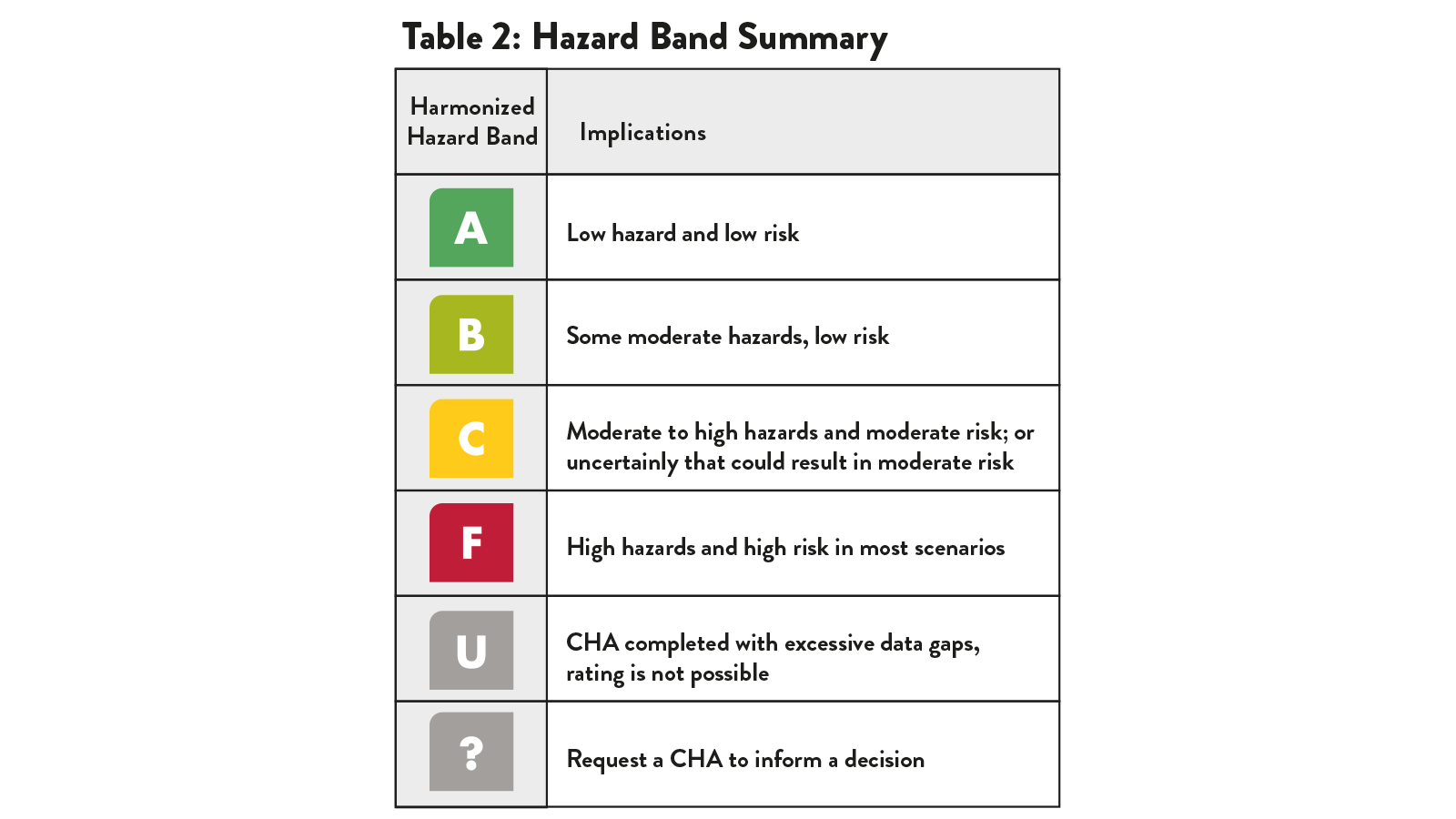
Chemical hazard assessment (see Table 1) is a systematic process of assessing and classifying hazards across a spectrum of human health and environmental endpoints and are essential to ensure safety. This comprehensive approach is key because it takes a lot more information to prove that a chemical is inherently safe than it does to prove that it is toxic. For example, just knowing that a chemical is a carcinogen or that it causes skin sensitisation can be enough to rule it out as a good candidate for product applications. But to be sure that it is inherently benign for its intended use means that data gaps must be filled across multiple human health and environmental endpoints. A lack of hazard data does not mean that a chemical is inherently benign.
Selecting chemicals that are well characterised and fully assessed is critical to avoiding regrettable substitutions. The organisation hosts an online repository for chemical hazard assessments designed to aid users in identifying and selecting safer alternatives. The established methods for hazard classification such as the Globally Harmonized System for Classification and Labeling of Chemicals (GHS) and Cradle to Cradle Certified’s Material Health Methodology provide guidance for the classification of hazards on 24 human health and environmental impacts. These methods work well for traditional chemicals, but challenges still remain in addressing other classes of chemicals, specifically polymers and botanicals.
Uncharacterised Botanicals
Many beauty and personal care brands are formulating with botanical ingredients as natural, safer alternatives, and using those materials to drive safety and sustainability claims. The use of new plant-derived substances is growing much faster than the industry’s capacity to fully understand the impact these can have on the health and safety of workers, consumers, and the natural environment.
The principal challenge posed by botanicals is that, in contrast to synthetic conventional chemicals, botanicals often contain dozens of compounds, which can vary with the source and are influenced by seasons, geography and extraction processes. This magnifies the complexity of assessing their effects and interactions. A standardised approach to assessing botanical materials that is comparable to how conventional chemicals are assessed is imperative to allow for the evaluation of safer substitutions.
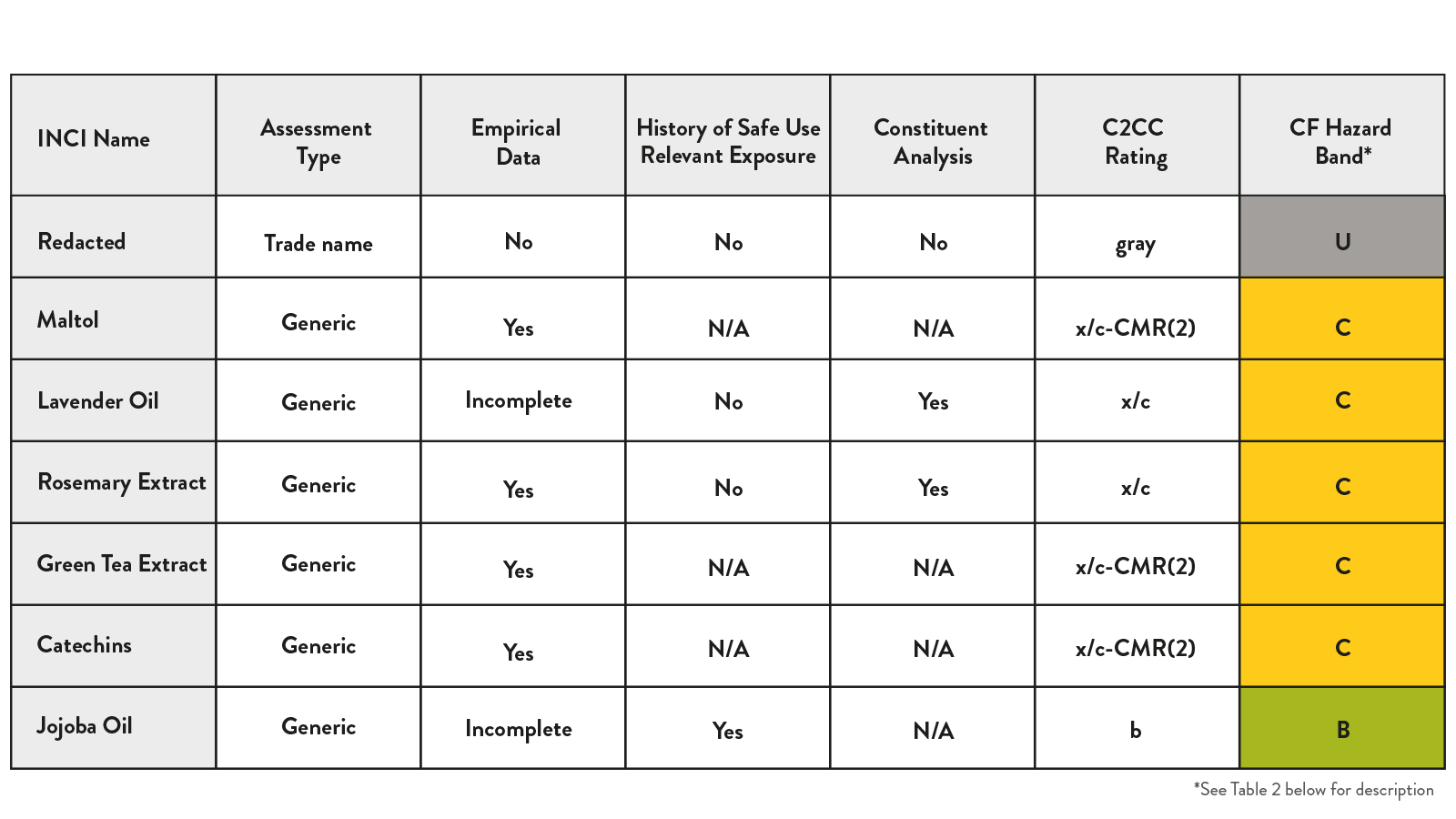
The lack of hazard data for many botanicals creates the potential for regrettable substitution and risk to clean beauty claims. Botanicals are often assumed to be safer than traditional chemicals, but that is not always the case. Botanical materials can be potent skin sensitisers, carcinogens, and endocrine disruptors. With this new botanicals assessment method the company aims to fill data gaps on beauty and personal care ingredients, to help substantiate clean beauty claims, and to help standardise those claims and consumer expectations
The Method
The special methodology was developed to create an efficient, yet comprehensive way to characterise the hazard profile of botanical ingredients and allow for comparison to other chemicals in the product design process, while looking for potential safer alternatives.
The distinguishing features of the method include:
&nb
- Guidance to determine botanical composition prior to the safety assessment, identifying the constituents in a complex mixture
- Comprehensive approach to evaluate individual hazard endpoints for botanical materials as complex mixtures
- Comparability with hazard assessments used for synthetic conventional chemicals
- A refined approach to drawing insight from a history of safe use that is applied for specified exposure routes and concentrations.