Consumers are increasingly demanding skin care that works – yet as individuals, our skincare needs can vary so dramatically. How can you give a consumer personalised skin care yet bulk produce to achieve economies of scale? The answer is customisable facial care formulas: provide a range of concentrated actives to suit specific skin needs that can be mixed in special bases to enhance delivery and ensure customer satisfaction.
To accommodate a variety of skin types, you might find you need to create two base creams: one for oilier/combination skin types, and one for dryer/ sensitive or more mature skin types. The base cream should be formulated using the following principles:
Use non-ionic emulsifiers:
• Ionic emulsifiers can be incompatible with some actives, so using non-ionic emulsifiers will rule out potential clashes with chosen actives.
• Non-ionic emulsifiers are also very mild on the skin, making them suitable for a broad range of skin types.
• Non-ionic emulsifiers are not impacted by the addition of electrolytes or extreme pH to suit various active concentrates that you may want to mix into the base cream.
• Your base cream will need to contain a slightly higher than normal input of emulsifiers to ensure it will maintain stability once the chosen actives have been added. Using non-ionic emulsifiers helps reduce potential soaping effect from this slightly higher input and prevent possible irritation.
• You could further improve economies of scale by using the same non-ionic emulsifier blends in your two base creams.
Use a non-electrolyte sensitive polymer:
• If you use electrolyte sensitive polymers, you could have significant incompatibilities with active ingredients when the active concentrate gets mixed with the base cream. These will most commonly cause the combined concentrate and base to suddenly turn water thin and run from the hand once mixed.
• While a gum or polymer is essential in your base cream for stability purposes, you will need to make sure the gum or polymer will not be impacted by a concentrate of electrolytes as these may be present in your actives.
• Using non-electrolyte sensitive polymers is important because it enables you to add various active concentrates to future concepts.
• Humectants are the unsung hero of skin creams; the
Include a humectant:
• Since they are non-greasy, they are suitable in base creams for oily/combination skin as well as essential in dry/sensitive or mature skin cream formulas.
Include a broad spectrum preservative active over a wide pH:
• Some active concentrates may need to be formulated at a higher or lower pH than normal to ensure bioavailability of the active, which may or may not be compatible with certain types of preservatives.
• If the active concentrate is going to be mixed with the cream and stored for any period of time, you will need to make sure you are using a preservative that is effective over a wide pH range. A couple of other great additions to your base cream, if you have the budget for them, could include:
• Sodium hyaluronate: broadly formulation tolerant, a small input of sodium hyaluronate in your base cream can yield positive skin benefits for every skin type.
• Niacinamide: another broadly formulation tolerant ingredient, it is another addition that has benefits for pretty much every skin type.
• Mixed tocopherols: should almost be considered a staple in all skin creams, as it provides antioxidant protection for the formula with similar skin benefits. Your base cream should also contain selected lipids to suit the skin type of your user and be relatively stable. It needs to be compatible with a range of active concentrates but still needs to be aesthetically pleasing for your target market
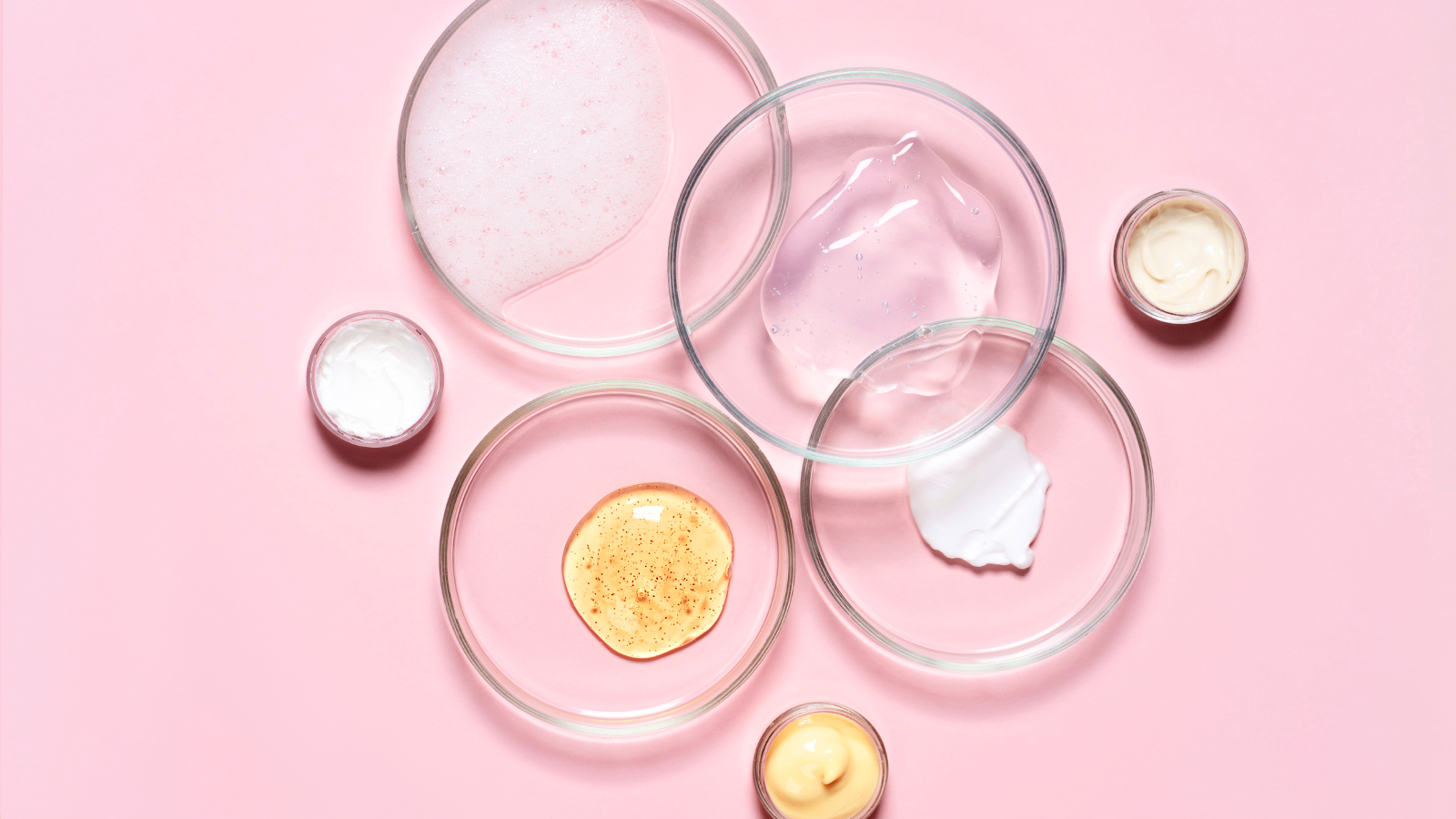
Different skin types call for different textured facial care products.
How to formulate customised active concentrates
The active concentrates are to be mixed with the base cream. The active concentrates will need to be packaged in such a way as to avoid dosage issues by consumers: using too much could be potentially irritating or even hazardous to their skin; while not using enough won’t give them the results they are hoping for. Here are two common scenarios for the active concentrate:
• The active concentrates could be provided as serums with a relatively high quantity of active mixed in a gel-serum base so it can be easily mixed with the base cream; if using this type of active concentrate, make sure a non-electrolyte, easy mixing gum or polymer is used to ensure compatibility and homogeneity when added to the base cream.
• Other active concentrates are provided at an extremely high active input for almost direct mixing with the base cream but have the potential for consumer misuse. Their packaging and dosing applicator must be chosen very carefully to ensure consumer safety. Once you have the packaging sorted, it’s time to focus on how you put the active concentrate formula together:
Choose 1 – 2 high performing actives and calculate the mixing proportions carefully:• This is the most important step – you need to calculate how much of the active concentrate will be mixed with the base cream to then work out the required input of the active ingredients in the concentrate.• For example, if the efficacy data for your chosen active needs it used in a face cream at 5% twice daily, you will need to make sure your dosage applicator from the concentrate enables a consumer to measure out what they need to mix with the base cream quickly and easily – this will depend on whether you are choosing to provide the active concentrate as a gel-serum or almost drop-by-drop active.
Add some stable herbal extracts:
• Natural ingredients are favoured by consumers and can give your cosmetic brand a marketable point of difference.
• These types of herbal extracts are typically the ones extracted in glycerin without specific efficacy data.
• Simple herbal extracts like this can be added in small quantities to a gel-serum without issue. Once you’ve created the stable base cream and active concentrates, it is then essential to give your consumers good guidance on how to select, mix, match and blend the two products together to suit specific skin needs. Creating easy to follow flow charts and ensuring accurate dispensing of actives through clever packaging design can give your consumers truly customisable skin care. The best news is that by using these formulation tips you can also easily incorporate trending actives into an ever-growing customisable skin care range later.

Belinda Carli
Director of the Institute of Personal Care Science, Brisbane, Australia,
www.personalcarescience.com.au