
As sustainability considerations increasingly drive consumer purchasing decisions and public pressure mounts, the cosmetics industry is challenged to find innovative approaches with lasting impact. With “Responsibly Active”, BASF has committed to making sustainable practices a priority in its bioactives business, protecting the planet and its resources, and empowering people across the value chain – beyond corporate responsibility and out of personal conviction. Two years into the programmeme, we spoke to Lucilene Veira Nunes, Head of Business Management for Bioactive Ingredients, EMEA, about the progress made and the challenges ahead.
In 2022, you launched the sustainability programme for your bioactives business. What has happened since then and what does “Responsibly Active” stand for today?
From day one, “Responsibly Active” has expressed the spirit of breaking new ground in sustainability and consistently integrating it into our daily operations. After all, plants are at the heart of our bioactive business, and biodiversity is our reservoir of innovation. So, obviously, “Responsibly Active” stands for the importance of protecting our planet and its natural resources, but it also stands for respecting and empowering the people across our value chain. Because sustainability is much more than “just” environmental stewardship. In these first two years of the program, we have learned that sustainability is not an easy task, but rather an ongoing process that requires constant adaptation and improvement. We have scrutinized our processes to ensure that they meet the highest standards of sustainability, and we have forged new partnerships to further enhance our efforts.But the most important aspect of “Responsibly Active” is the contribution of everyone involved – our “Active Heroes”. Every day, they go above and beyond to bring our sustainability programme to life. Their passion, dedication and commitment are key to our success. Today, “Responsibly Active” embodies our belief that through collective effort and collaboration, we can create a sustainable future.
Given the size of your bioactives portfolio, that sounds like a mammoth task. How do you ensure and measure the success of your programme?
“Mammoth task” is a great way to put it. We know that our customers trust us to take concrete actions that reflect our ambitions. So, we wanted to integrate our sustainability goals into everything we do. And frankly speaking, this is an ambitious undertaking. That’s why we have cascaded our goals into every single unit of our organisation, with clear KPIs and metrics to measure our progress. For example, a new product must meet all of our sustainability criteria from the outset, such as organic certification, naturality, responsible sourcing, and so on. If it doesn’t, we drop it.We integrated the programme into our EHS-Q (Environment, Health, Safety and Quality) Management Policy and established a cross-functional steering team that embodies our commitment to sustainability at the highest level. And, speaking of accountability and ownership, the “Active Heroes” of this programme include our employees. With a programme of this scale, it is essential that they fully support it, understand their role, and are committed to delivering. Our progress is based on strong internal communication, but above all on the intrinsic motivation of all our colleagues.Finally, we are committed to communicating our efforts transparently on an annual basis. In this way, we can ensure that our key stakeholders are kept up to date on how we are implementing our defined actions, share best practices with them, and reinforce the integrity of our environmental, social and governance journey. We have just recently published our 2023 update.
What was your personal highlight this past year?
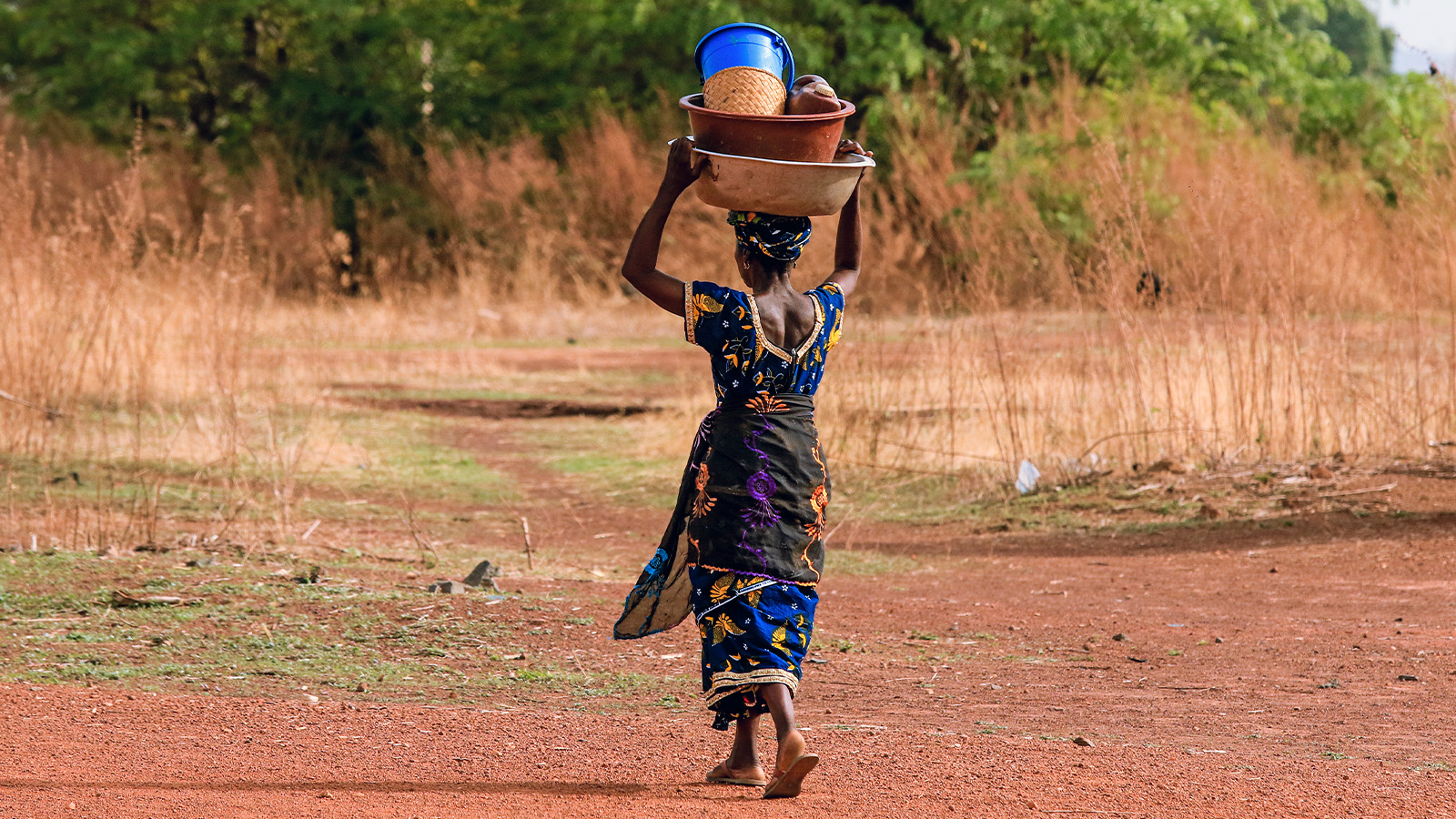
For me, one particular highlight was the development within our Bixa Orellana supply chain. Bixa Orellana seeds are the core of our pore-refining active ingredient Bix’Activ®. They are sustainably cultivated by farmers and then sorted by a group of rural women in Burkina Faso. In 2022, we partnered with the NGO Fair Match Support West Africa to initiate a three-year action plan supporting diversity, equity, and inclusion. It’s great to see how the project has evolved since then to benefit even more people.We started with measures to ensure a fair living wage throughout the value chain. In 2023, we expanded to include training for farmers on cultivation methods, as well as how to ensure better transparency and traceability. I’m proud that we expect the number of farmers participating in the programme to double this year. In addition, a group of 20 rural women are currently receiving entrepreneurship training and microfinance. This will enable them to develop new sources of income and help them to lead more independent, self-determined lives. I’m very happy about what we’ve already achieved together, and I’m looking forward to where we go from here.
You mentioned considering your sustainability goals when developing new products. What about your existing portfolio?
Actually, our sustainability journey began already some 30 years ago and, since then, we’ve never settled for the status quo, and are constantly re-evaluating our existing products and processes to become even better. A good example is the relaunch of our active ingredient Laricyl®. It’s based on the mushroom Fomes officinalis. The harvesting of wild mushrooms for cosmetic use has raised environmental concerns, which is why we have moved from traditional wild harvesting methods to certified organic cultivation through solid-state fermentation. We can carefully control growth conditions and mimic the mushroom’s natural habitat. At the same time, we minimise any negative impact on the natural population. We benefit too, because controlled and reproducible production conditions ensure a consistently high level of quality. And the new version of Laricyl has even shown improved pore tightening efficacy. I think this is a great example of how we can combine sustainability, performance, and quality.Another lever we’re constantly working on is to maximise the use of renewable resources for our products – a growing demand from environmentally conscious consumers. To reach our goal of 95% of our raw materials being bio-based or derived from abundant minerals, we’re investing in product reformulation, for example by replacing synthetic preservatives with plant-based alternatives. We currently offer more than 80 preservative-free actives, 40 of which are 100% from natural origin, as defined by ISO 16128. We’re working hard to expand this offering, but to be frank, this is quite challenging, for example, in terms of stability and often increased costs associated with the limited availability of these natural adjuvants. But with innovation at our core, we’re confident that we can meet these challenges and support our customers as we move forward.
| "There were some challenges, some unexpected, some predictable." |
|---|
Were there any other unexpected challenges along the way and hence things you would have done differently?
There were some challenges, some unexpected, some predictable, but no less demanding. One major challenge is achieving full traceability in our supply chains – the only way we can assess their sustainability. The key is to engage our suppliers and make them a long-term partner, not just a resource provider. We also need to build a bridge between the expectations of our local suppliers and those of our customers to align on common goals.Another challenge is meeting quality and certification standards, which requires a lot of training and qualification. If there’s one thing that we’ve learned, it’s that lasting impact requires long-term commitment. Ultimately, however, I also see it as an opportunity to improve the skills of all partners in the value chain.When it comes to our operational footprint, results on recyclable packaging have so far fallen short of our expectations. But that only motivates us to work even harder. We are currently focused on identifying new suppliers of fully recyclable packaging and expect to make progress in renewable materials, space, and weight savings. Despite this setback, I wouldn’t change a thing. Of course, we could have set less ambitious packaging goals. However, it’s not just about checking off items on a to-do list, it’s about making a real difference. And to do that, you sometimes have to face uncomfortable challenges and accept that the road is longer and rockier than you originally thought.
Well said. We’ll keep our fingers crossed. So – what’s next?
Post-update is pre-update! Although we’ve just published our 2023 results, we’re already working on exciting new projects. One that I’m particularly looking forward to is the launch of a new skin care active ingredient. It’s inspired by traditional Chinese medicine by harnessing the power of Lysimachia cristinae. And it’s a great example of how we’re integrating our sustainability goals right from the start. Before embarking on this R&D project, we studied the plant to ensure that its valorisation would go hand in hand with its preservation. We decided to work with a long-time supplier and certify the supply chain to the fair wild standard to guarantee that Lysimachia is sourced and harvested in a socially and environmentally responsible manner. It respects the regeneration rates of the wild plant through strict collection guidelines and training, and ensures a neutral or positive impact on the collection area and the wider landscape. What’s more, collectors benefit from long-term contracts, an income above the local minimum wage, and a fair premium.I am excited that this new ingredient adds another product to our portfolio that not only meets our high expectations for performance, but also our ambitious sustainability goals. And there’ll be more, I promise.

INTERVIEW with
Lucilene Veira Nunes
Head of Business Management Bioactive Ingredients EMEA, BASF, www.personal-care.basf.com